There’s an old saying ‘may you live in interesting times’. When someone said that to you it was seen as both a blessing and curse, because to live in interesting times means to deal with danger and opportunity, to embrace simultaneous breakdown and breakthrough. Which is exactly what this trilemma of social, economic and environmental crises is asking, is demanding, of us.

Our tried-and-tested modes and methods, our constructs and constrictions, the very habituations and acculturations we have become so inured in, are melting amid the alchemic heat of the moment. This metamorphic moment is now. This is humanity’s hour of reckoning. Each of us is being called to act as conscious conspirators, catalysts in this chemistry.
The ancient Greeks referred to such a time as Kairos, a supreme moment which is not adequately acted upon may pass us by.
The good news is, myriad disciplines at the forefront of Western science – such as quantum physics, facilitation ecology, depth psychology and neurobiology – are discovering with increasingly sensitive instruments and sophisticated experiments the innate inter-relationality of life, the weave-and-weft of the world, the intricate sacredness of nature. The hand of science is reaching out to shake the hand of spirituality once again.
This of course is not new. This discovery of inter-relationality is as fresh as it is ancient. The timeless prophets, philosophers, poets, seers and shaman throughout the ages have long understood this innate interconnectedness of life.
How to Embody Teal for Real – Part 2
In Embodying Teal for Real – Part 1, we explored the importance of love rather than fear underpinning our thoughts, words, and deeds, and also identified the importance of 1) self-awareness and 2) self-inquiry, as we take small steps of love on our journey of embodying Teal. In this article we will take a deeper look at self-awareness and self-inquiry, and describe how these practices of embodying Teal are especially suited for leaders developing from Green to Teal-consciousness.

The quality of ‘beingness’ resulting from the practices below is not new; it’s as fresh as it is ancient. Just as the ancient Greeks and Egyptians had the words ‘Know Thy Self’ over the doorways of their temples, so we find that embodying self-awareness and self-inquiry is the life-blood of today’s Teal organisations.
The reality of our human condition is that in a fast-paced working environment, we react to situations with well-trodden habit-paths. The more our behaviours are ingrained, the more difficult they are to acknowledge and transform. While these well-trodden behavioural paths might give a certain security and consistency in our persona, they can undermine our personal development. They can also undermine our relations, as our defensiveness, judgemental perspective, impatience, and reactivity actually undermine the potential for synergy that could result from relational tensions in our day-to-day life.
Hence, personal development is intimately entwined with organisational and societal development. And, to a large extent, our context influences and affects our own ‘beingness’. For instance, having just returned from a week of non-stop travel, including flights, airport hotels, speaking at conferences, running workshops and sleeping badly in stuffy and noisy hotel rooms, it is easy to revert to well-trodden habits or reactive behaviours of frustration at train delays or long queues. So the ‘small steps with great love’ become more challenging, as beingness becomes more uncentered.
Hence, the first step in mastery is ‘self-awareness’
This means that actually taking notice of when we are getting frustrated, impatient, tense, reactive, distracted, or overly-excited is the all-important first step. We take notice, pause, sense into these feelings arising, and observe them.
Without this first step of noticing the feeling emerging, we are but lost in the reaction—trapped, enslaved by our own personas. Our reactions manifest in our outer behaviour or we merely suppress these reactions while providing an artificial façade of acceptability. As a result, the situation unfolds in a manner that is no longer coming from love, but rather from control, fear, frustration, impatience, or inauthenticity, and some variant of passive/aggressive emotional reactivity. This reaction pollutes our environment in varying degrees, rather than enhancing it; we dance out-of-tune with life. Synchronistic pathways dissipate; we grasp and grab rather than flow-into and participate-with. We become life-denying rather than life-affirming.
Yet, this slip-up is learning in itself, if we have the self-awareness to notice our reaction and the effect it has on our environment. Perhaps we might pause and reflect, sensing into what happened and the feelings that welled up. This can provide the insight for real transformative learning to take place.
In this regard, each day and each tension provides our learning forum for embodying Teal.
To summarise, self-awareness is a vital tool; we cultivate this tool by regularly sensing into how we are feeling in our body, and gaining insight—rather than judgment—on the feelings. We notice and sense into any feelings of tiredness, distraction, aggravation, fear, impatience, judgment, frustration, or anger, within our body.
The more we’re able to sense coming from a place of loving responsiveness, the more we can learn to notice the difference from when we are being reactive rather than responsive. The more we practice sensing into the body, the more our self-awareness enhances.
A tip here is not to try to suppress feelings of impatience, constriction or frustration, but rather open up awareness into them, noticing and embracing them, like a friend. This way, the feeling will not subsume us into the reactive behaviour it provokes (no matter how mild it seems on the outside, e.g. interrupting someone hastily, or projecting our own fears or needs for acceptance on to the other person, snapping at someone with a barbed comment, positioning ourselves with an egotistical edge, etc.).
Loving self-awareness shows the way we get trapped by our fears, desires, ego-whims, and angers, then we are able to make conscious steps to learn and develop.
Then comes the second step – ‘self-inquiry’
Cultivating self-awareness by learning to pause, sense-in, feel, and reflect throughout the daily busyness, we start to notice our habitual reactions, and our patterns of conditioned behaviours.
Some of these will have been cultivated through past experience of life, perhaps for good reason to start with, for example, to defend and stabilise us during harrowing times at school or at home as a child, or as we embarked on our first career steps. All of these habitual reactions will contain a blend of fear and love within them, for example, a fear of being alienated or thought of as ‘a loser’ is blended with a need to be loved and accepted.
Spending time at the end of each day—say ten minutes in bed before sleep, or ten minutes on the journey back from work—we can start to get used to self-inquiring into difficult interactions and tense moments that arose
The more relaxing and natural the space for this self-inquiry the better, as then we can be more gentle, nurturing, and open with ourselves, as we inquire deeply into the feelings of the day and what lies beneath these reactions. Nature has been proven to relax body and mind, enhance inter-hemispheric brain integration as well as head-heart-gut coherence, so a walk in Nature can aid reflecting and self-inquiring.
Remember, this is about love: learning to love ourselves, foibles and all. As we inquire, it’s best to hold an attitude of gentleness and openness as we sense into the tensions, emotions, and trials we have experienced.
In this way, we learn to become gentle and open not just with ourselves but also in how we perceive others and their challenges. We recognise that we all are struggling with fears, concerns, and frustrations, each in our own way, whether consciously or unconsciously. We are all learning to love.
This practice of reviewing the day just gone is in-and-of-itself very powerful. It helps us practice self-awareness. While we are scanning through the day’s events from morning to evening, we might sense in our body when certain relational exchanges and situations create constrictions and emotions.
We can then inquire into the feeling, what is triggering it, and sense when we are seeking to judge or blame the other or the outer situation and then sense deeper into the feeling beyond blame with loving insight. Here in this deeper self-inquiry are golden nuggets that provide insight about our own learning, about our habituations, and deep-seated fears. Within our base-emotions, we can reveal gold, to help cultivate compassion and wisdom.
Self-awareness and self-inquiry enable greater self-agency and responsibility, enhanced relational authenticity, and deeper embodiment of life-affirming service and purpose. This transforms ourselves, our relationships, our team dynamics, our organisations, and the world; it is this that our humanity needs now more than ever.
How does this love-based beingness help Green-stage leaders and organisations reach beyond into Teal?
At the organisational and personal levels, within the Spiral Dynamics framework Green is characterised by empowering self and others through ways of relating, and a widening of perceptual horizon from the narrow Orange focus on specific goals such as task-outputs, profit and shareholder value. This comes with an increasing recognition of the value and impact our activities and relationships have not just within our immediate sphere but also through the wider eco-system of inter-relations (human and more-than-human). Cultivating a more empowering, equalitarian, and stakeholder-value-based culture is central to Green, moving beyond the narrow goal-oriented focus of Orange.
Teal moves beyond Green by recognising the importance of the individual’s self-realisation (or ‘individuation’ to use Carl Jung’s phrase).
Wholeness of the individual and the community through more soulful, purposeful, compassionate, and wise relations with self-other-world is all-important here. Hence, a connection with soul or ‘higher Self’ comes hand-in-hand with the ‘taming of the ego’, along with a strong resonance between the individual’s purpose and the organisation’s purpose. This allows for a coherence within the organisation’s living-field to cultivate so that the burdensome hierarchic structures, rules, and values charters of the Green stage can be let-go of.
A more soulful wisdom emerges in Teal-consciousness, within individuals and through their relationships. People can viscerally sense when an interaction is out-of-kilter. This dissonance is not then ‘judged’, but seen as an opportunity to learn, to take responsibility for our own learning journey while also contributing to collective learning. We sense into the synchronicities as we learn to follow the flow of life, the ‘Way of the Tao’.
The metaphor for the Green organisation is ‘family’, and the metaphor for the Teal organisation is ‘living system’. A key characteristic of the living organisation is ‘emergence’. Emergence spawns from the ‘divergence’ of empowering self-organising ways of working balanced with the ‘convergence’ of an evolutionary sense of purpose that seeks to serve life. What enables this to work in practice is a spirit of love, openness, authenticity, and wisdom. Through love, our very being transforms the world around us. It is here that the living organisation becomes regenerative; it tends towards harmony with Life.
It is in this shift from Tier One consciousness (including Orange and Green) into Tier Two consciousness of Teal, that we open up more deeply to our true nature as human beings within an innately interconnected more-than-human world. Whereupon we realise that
‘What is within us is within everything. Once we understand this truth, we step outside of the parameters of our individual self and come to realise the power that is within us. This shift in awareness is a very simple step that has profound consequences’ ~Llewellyn Vaughan-Lee, mystic
Part Three of this series on Embodying Teal for Real will explore some tips to help us walk this path of love.
To explore ‘the new paradigm’ further, join the Face Book community here
Giles Hutchins is a thought-leader and adviser on the future of business. His latest book, Future Fit, can be found on Amazon; see a short video about it here. He is Chairman of The Future Fit Leadership Academy
Meditations on Metamorphosis, Soul & Spirit – Finding our True Nature & Letting it Flow
‘There is a soul force in the Universe, which if we permit it, will flow through us and produce miraculous results.’ Mahatma Ghandi, activist
‘The seat of the soul is there where the inner and the outer worlds meet’ Novalis, poet
‘The true ground of all being is the infinite, intangible, spirit that infuses all living beings’ David Bohm, physicist
‘This divine ground is within and all around us. We need to create a sanctuary within ourselves to listen to its guidance’ Anne Baring, psychologist
‘Beyond our day-to-day world, beyond our usual human experience, lies a vast and fathomless world. Sometimes we call this the Tao, sometimes Source, sometimes Consciousness. But, whatever we call it, we find it wise, powerful, deeply intelligent, compassionate, and loving. The spiritual journey is about gaining access to this vast world, harking to it and finding it, and about what it entails in our everyday life.’ Professor Brian Arthur, Stanford scientist and Santa Fe Institute Founder
The Great Spirit, Tao, or That Which Cannot Be Named, flows within and all about us. We each have souls, intelligent apertures that open up our psyche to this Spirit pervading reality.
Within our psyche lies the ego, which orientates and polarises much of our daily awareness.
Sigmund Freud defined the ego as a ‘reality function’ in that it brings our awareness into the sharper space-time dimension from the more intangible, fluid depths of the largely unconscious imaginal realms, where our soul, as the source of our essence, resides.
Carl Jung refers to this soul as the Self, the unconscious depths that the ego brings to light in our everyday consciousness as it seeks to comprehend our deeper perturbations, intuitions, imaginal dream states, reveries, mythopoetic images, emotional sensations, heart and gut knowing’s and other somatic and soulful sensations. And yet the ego often seeks to grasp, control, manipulate, repress or split-off from these unconscious depths within us due to a combination of fearing historic wounds and insecurities, desiring certainty and security, planning for what hasn’t happened yet, and seeking conformity to cultural norms and daily routines. We may notice how much of our daily interactions are pervaded by projections, judgements and perspectives that filter what is deemed useful or what ought to be resisted. This filtering is an important part of what makes us human, and a well-developed ego is a useful part of good leadership, and yet we need to ensure the ego is readily open to and informed by the insights and wisdom of the deeper soulful Self.
A central aspect of advanced spiritual leadership development is the cultivation of a healthy ego-soul relationship, where we learn to sense into our soulful depths and bring this insight into our everyday experience. This allows us to manifest our dharma – our right path – and become authentic leaders while realising our destiny.
Transformative times can invoke fear, a desire for control and a search for certainty and security. And yet such times can also be emancipating as they can provoke us to open-up, dig-deep and reach beyond the limiting norms of the day while pioneering into the future.
Frederic Laloux’s timely and important work around Teal gives us guidance on the style and tenor in which we can embrace the future for those of us courageous enough to break-rank and prototype the new in these times of change.
The three principles of Teal can act as guidance for us as we learn to transform ourselves and our organisations amid these choppy VUCA waters:
- Evolutionary purpose – what is our purpose at personal and organisational levels, and how do we best allow this sense of purpose to deepen and evolve as our context and learning-journey inevitability deepens and evolves?
- Authenticity and wholeness – how do we create the conditions, both inside ourselves and within our organisations, for a deeper quality of authenticity and wholeness to emerge within us and through our relationships with others?
- Self-management – as our relations and organisations become more purposeful and authentic, we are required to transform our command-and-control mechanisms into governance dynamics that empower and ignite rather than control and predict. How do we best embody these self-organising methods within ourselves while deepening our personal responsibility, sense of purpose and wholeness, and bringing this into our inter-personal relations and team dynamics during day-to-day tensions and emotionally charged situations?
These are challenging questions, and are the body of our learning journey towards Teal.

In my experience as a field practitioner engaging with all sorts of different shapes and sizes of organisations embarking on this ‘path beyond paths’, I often witness how easy it is to unwittingly apply the very same logic to our learning-journeys that created the very challenges we are trying to move beyond. Einstein’s well-hackneyed insight about being unable to change systems with the same consciousness that created them is all-too-pertinent here.
In our desire to get-on with making Teal our new reality, we look for tools, frames of reference, methods and structures outside of ourselves – cultural values charters, mission statements, decision making protocols, holacratic methods, for instance. This has its place of course, and yet there is often an overly eager tendency to find solutions to our problems ‘out there’; that with the right toolkit we can ‘fix it’. This is part of the inherent problem of our current paradigm, an imbalanced focus on the ‘outer’ at the expense of impoverishing the ‘inner’. And then, we ‘show up’ with this impoverished ‘inner’ while attempting to make hip-and-cool ‘outer’ initiatives work well in the midst of our daily stresses-and-strains. The business world is now littered with examples of wounded organisational cultures that have embarked on painful out-of-kilter paths of transformation. We can take learning from this.
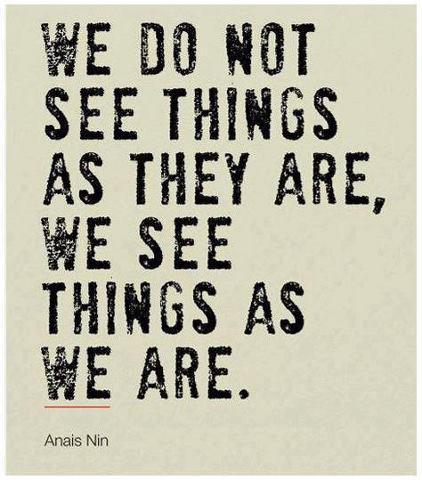
First, we need to recognise this tendency to seek solutions ‘out there’ to our problems. This can encourage too much of a focus on fixing the symptoms downstream from the underlying causes, while often leaving the root causes inadequately addressed. We see this tendency manifesting in all areas of our socio-economic system from leadership and organisational development, political activism, management education, health and well-being, combating climate change, corporate responsibility, you name it.
Future Fit leadership: Sensing into our Emerging Future Today – Synchronicity and Beyond
Today’s leaders and leadership teams are facing an unprecedented level and pace of change, with many of the business challenges we face being quite different in their systemic nature from those before.
There is now a dawning realisation amongst forward-thinking leaders, organisational specialists and leadership experts that our traditional methods and modes of organisational learning and leadership development are inadequate for the business environment we now face.
A new way of learning, adapting and evolving as leaders and organisations is now demanded by our business context.
‘In order to do well in the emerging new business environments, organisations and their leaders have to develop a new cognitive capability, a new learning capacity for sensing, embodying and enacting emerging futures: ‘presencing’. Presencing means to use your ‘higher Self’ as a vehicle for sensing, embodying and enacting the future as it emerges.’ – Peter Senge, Otto Scharmer, et al, leadership specialists at MIT and the Society for Organisational Learning
Leaders able to master this new cognitive ability are the leaders that will be fit for the emerging future. Leaders also need to host learning spaces for others within their organisations to master this new learning capability. It is these leaders and organisations that will be the ones that not just survive but thrive in the increasingly challenging times ahead.
What does this mean in practice?
Welcome to the Paradigm Shift of the Century
The way we relate with ourselves, each other and the world around us is metamorphosing in front of our very eyes.
‘A paradigm can be thought of as a constellation of concepts, values, perceptions and practices shared by a community, which forms a particular vision of reality’ – Fritjof Capra
Human science disciplines over the past four decades have been preoccupied with the way these concepts, values and practices shape how we see ourselves in the world and the stories we tell ourselves. If these stories are taken for granted and never questioned then they tend to be reproduced over and over again. The social and scientific revolutions in modern, early modern and even ancient ages have left their legacies with the modern mind and ultimately the ‘stories’ it unwittingly defaults to.
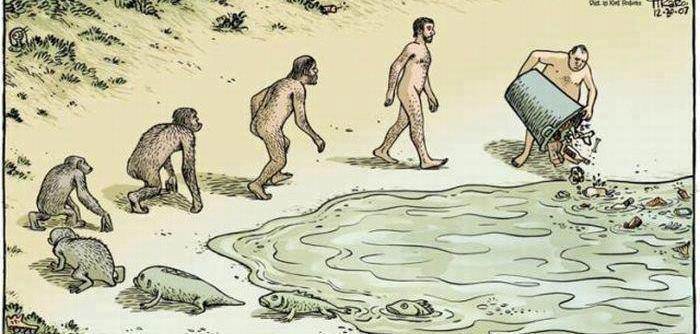
For example the early modern period, in the Renaissance and the Enlightenment, saw major revelations in scientific discovery and philosophy from Copernicus, Galileo, Newton, Descartes, and Darwin, which greatly influenced the modern western view of the human in the wider cosmos and universe. Man powerfully became an external actor disconnected from the very fabric of the natural systems to which he had previously been a part. Interestingly these events were both profoundly liberating for human societies, but also enormously disenchanting. Other major transformations in rapid industrialisation and urbanisation continued to reinforce a sense of separation between society and nature, human and non-human worlds, lived-in lands and pristine Edens. It is arguably this sense of separation that has enabled society to capitalise on the fruits of science, industry and global economics. Conversely it is also what underwrites the parallel dysfunction and destruction of our social and ecological systems.

The ecological, social and economic crisis now upon us is as much a crisis of spirit as it is a crisis of resources. Indeed part of the crisis of spirit is because modern society and industry tends to perceive the Earth as a set of resources, and values it as such. What scope is there therefore for this paradigm to change in order to perceive the Earth as an animate, living system in which humans play a constructive, not destructive, part?
Indeed we may see how the politics of human-nature relations relates to the politics of human knowledge systems. Increasingly we are questioning what an overly mechanistic and reductive logic obscures from view and how it conditions our knowledge. Other knowledges of Nature exist outside of a modern western philosophy, for example ones related to holistic science and practices by traditional cultures.

Advances in science have allowed humans to manipulate, manage, interpret, document and indeed now literally create life with technology (with developments in synthetic biology). Science in its mechanistic form has revealed an ecological crisis, but the question of whether it is wholly equipped to reverse this crisis is doubtful. The solutions are social, cultural and economic, not just technical. This perspective doesn’t propose to undo science, yet asks that it is reflective of its own limits. It is equally crucial to pose challenges such as ‘how far’, ‘how fast’; ‘which way’, ‘who says’ and ‘why’; not a question of balancing a ‘pro’ and ‘anti’ position.

The same reflexivity is just as important in business. Since what is required is a radically new way of doing business – one that honours and values intrinsically (rather than financially) the global nexus of social and ecological systems – we could also argue that this is only one (yet important) factor within a much wider transition in collective consciousness.
In 2010 The Royal Society of Arts, a British Enlightenment institution founded in 1754 coined their new strap line, a 21st Century Enlightenment. Matthew Taylor, the RSA Director proposes that the core ideals, values and norms that the initial Enlightenment enabled may no longer be adequate or ‘fit for purpose’ for the contemporary challenges society faces. In order to live differently, he argues, we must think differently, and this relates to the way that we see ourselves in the world. Change may not be so much an act of will, but a consequence of a subtler shift in fundamental scientific, cultural, philosophical, and even spiritual factors. The push and pull forces for such a shift are as likely to be a series of positive and negative cyclic feedbacks across the social, technological, scientific and political fields, in much the same way as they have been in historical transitions.
If these inclinations do point towards something meaningfully transformative in respect to the nature of reality, ways of being and collective thinking then the question is how do we begin to interpret, explore and promote radical thinking in the fields in which we work, be they business, education, environmental governance or social policy? Cultural communicators in diverse fields and institutions seem to point in the direction of radical transformation in some shape or form.

There are many profound questions facing us. This blog and the articles offered here touch on some of the root causes – specifically the relationship between human-nature and nature in a business context – yet does not try and answer them; more it explores the challenges business is now faced with, the limitations of our prevailing business paradigm and approaches to help individuals and organisations positively adapt in the face of these challenging times.
(This article is based on a section co-written with Louise Carver)
Giles Hutchins latest book is the much acclaimed Future Fit
The world of business is changing and fast. Complex, inter-related challenges now face all our enterprises. Future Fit is a response to this: a workbook full with practical tips and case studies, suitable for anyone who is involved in for-purpose enterprise, whether an entrepreneur or seasoned business executive.
‘Essential and timely’ Dr. Scilla Elworthy, Author and Founder of the Oxford Research Group
‘A must-read’ Bob Willard, Author and Speaker, Sustainability Advantage
‘Inspiring, uplifting, superb’ Euan Smith, former COO, Sky Deutschland
‘Unique and insightful’ Oliver Greenfield, Convenor, Green Economy Coalition
‘A treasure-trove’ Professor Peter Hawkins, Henley Business School
‘I cannot recommend this powerful work highly enough’ Dr Lynne Sedgmore CBE, CEO of Centre for Excellence in Leadership
‘Brilliant’ Norman Wolfe, CEO Quantum Leaders
‘A masterpeice’ Mark Drewell, CEO Globally Responsible Leadership
For a 3min video on Future Fit see here https://www.youtube.com/watch?v=YzAtglvBNmM
To explore ‘the new paradigm’ further, join the Face Book community here
Radical Business – The Power of Love
Linear thinking and its rationalising objectification provides an important tool for us, helping us abstract our thinking from the here-and-now for analysis, planning, forecasting, scientific empirical examination and material exploitation. This thinking has helped us construct our civilizations. No problem, unless this way of attending begins to dominate and so crowds out our other ways of knowing (sensing, feeling, embodying, intuiting).

The ‘thinking tool’ has a grasping tendency that, if left unchecked, usurps our attention to such an extent that we lose touch of the deeper wisdom within and all around us – we perceive only the abstractions of our analysing mind, missing the wood for the trees.
‘We have created a sufficiently strong propensity not only to make divisions in knowledge where there are none in Nature, and then to impose the divisions on Nature, making the reality thus comfortable to the idea, but to go further, and to convert the generalisations made from observation into positive entities, permitting for the future these artificial creations to tyrannise over the understanding.’ Henry Maudsley
With this come out-of-kilter perspectives that bring us out of conscious attunement with life’s rhythms and wisdom. We begin to find it harder to align with our deeper sense of self-other-Nature. And so our relations warp from the inherently empathic, biophilic, compassionate nature of Homo sapiens into portraying only the self-absorbing egotistic-traits of selfishness, greed, competition and narcissism. So caught up in our own self-reflexive ego-chattering illusions we become, that we increasingly numb ourselves from embodying the deeper intrinsic inter-relational reality of life.
Alas, this is what is happening on a global scale with deleterious consequences for all life on Earth. Any meaningful transition towards a more sustainable and civilized future for humanity needed to involve our re-membering a more balanced way of attending to life: yin/yang, receptive/responsive, open/closed, flowing/specific, dynamic/objectified, presencing/abstract, intuitive/rational, feminine/masculine, and so forth.
‘The intuitive mind is a sacred gift, the rational mind its faithful servant. We have created a society that honours the servant and has forgotten the gift’. Albert Einstein

This re-balancing allows us to contribute to a rebalancing in our organisations, communities, socio-economics and ways of governing.
There are a great variety of ways to enhance a more balanced yin-yang, receptive-responsive awareness in our lives. For example: bringing more stillness into our busy minds by sitting quieting, feeling the space between our heart-beats, feeling the in and out breath in our nostrils, meditating, chanting, drawing, playing a musical instrument, dancing, reading or writing poetry, practicing somatic awareness, yoga, Qi Kong, T’ai Chi, etc. And there are ways to bring this more embodied awareness into the workplace too – hence the work on Steps Towards a Deeper Ecology of Business we explored recently at Ashridge Business School.

For me, I like immersing myself in the natural world, finding stillness within the movements of Nature, along with some gentle T’ai Chi and yoga movements. The more I develop this deeper sense of presence the more noticeable it is when my rationalising, abstracting and often distracting ego monkey-mind interferes and so the more conscious I can be in allowing my rational mind to serve as a useful tool rather than trying to dominate.
Feeling the creative energy within my bodymind helps me re-member that I (like all expression of Nature) am energy. This energetic presence within (and all around me) is receptive and responsive. I can enhance this receptivity and responsiveness by attuning my bodymind through developing what is often referred to as ‘heart-awareness’ due to our bodyminds finding their centre-of-awareness in the heart area.
The Heart – A Powerful Organ of Perception
Much research has been undertaken into the heart as an organ of perception (along with the gut and brain, also increasing scientific recognition that each and every cell in our bodies contains mind-matter aspects with capacity for sentience and memory). The heart is the body’s most powerful electromagnetic sensor and transmitter, continually decoding the vast array of electromagnetic and quantum signals radiating in our lived-in environment. 65% of the cells in the heart are neural cells which are wired into the nervous system, gut and brain.
The heart governs our bodymind’s sensory, neural, nervous and instinctual systems. There is now scientific evidence pointing to the heart perceiving and decoding intuitive information from our surrounds first and foremost (‘direct perception’) and then updating the brain and gut, which then respond to this information – hence, intuitive feelings, premonitions and also ESP phenomena are detected through the direct perception of the heart (see one such scientific study here).
Natural Business: Conscious business the way Nature intended
Our understanding of how life works is undergoing a transformation. And with it, so is our understanding of how organisations find resilience in times of volatility.
Recent findings indicate that life is intricately inter-related, deeply sentient and purposeful.
Whether it’s the cells within us, our human bodies, the wider socio-economic and ecological ecosystems we live within, or the organizations we attend for work each day – all these living systems display specific characteristics and traits.

Life abides by the way of Nature. The more we understand Nature’s principles, relating them to our own organizational living systems, the more we allow our living organizations to thrive in time of volatility and uncertainty.
Nature’s principles applied to business are: resilience, optimizing, adaptive, systems-based, values-led, life-supporting. Integrating these principles into our organizations enables us to become future-fit.

Yet, underpinning these ‘ways of doing’ is an underlying strategic and operational intent, a leadership mind-set that creates the nutritious soil and safe space for our team dynamics and ways of working to come alive.
To cultivate this nutritious cultural soil, we need an approach to leadership that is quite different from the traditional leadership development and managerial approaches many of us have been trained and practiced in: A ‘new norm’ of leadership.
The most fundamental shift facing our leaders and managers today is a shift in our way of being, knowing and thinking. This shift is foundational to any meaningful transformation towards a resilient, life-affirming business.

This shift is a worldview shift that at one level is a shift from seeing the organisation as a machine to recognizing the organisation is a living system; at another level this is a shift in our sense of place and purpose in the world – from seeing ourselves as separate individuals and organizations vying for control through mechanistic management techniques and meeting protocols, to recognizing ourselves, our teams, organisations and stakeholder ecosystems are all inter-related, co-participatory and emergent, unfolding and evolving beyond our control. Rather than control-based hierarchic logic and fear-based carrot-and-stick approaches, as leaders we have the humbling responsibility to create the conditions conducive for life to flourish through empowerment, local attunement, self-management, humility, love, respect, courage and authenticity. Read more…
Soul Business for a World in Transition
‘What the caterpillar calls the end of the world, the master calls the butterfly.’ Richard Bach, author
Since the industrial revolution, we have achieved great feats of economic, social and technological advancement. The structures and strictures of old have served us well in many material ways. But, as Bob Dylan would say, ‘times they are a changing!’
We now face increasing volatility on numerous fronts: enter the world of commodity spikes, resource scarcity, widespread environmental degradation, social inequality, economic turbulence, population and migrant pressure, changing demographics, the internet of things, disruptive technologies, climate change, and more.
Over half the world’s population is now younger than 30 years old. Two generations have now grown up with the internet. It doesn’t take a degree in anthropology to notice that the world is very different today than it was 30 years ago.
In 2010, 1.2 billion people were online globally. By 2020, that number will reach 5 billion. Nearly 4 billion more people, along with their collective intelligence, will be available for value creation via smartphones, tablets and internet cafes. The capabilities being unleashed are unprecedented.
Uber, the world’s largest taxi company, owns no vehicles; Facebook, the world’s most popular media owner, creates no content; Alibaba, the most valuable retailer, has no inventory; Airbnb, the world’s largest accommodation-provider, owns no real estate. The institutional and ownership powers of old are being challenged by the empowering effect of the network.
The best people do not want to work in bureaucratic organizations. They want to be in an environment that is creative, exciting, empowering, purposeful and passionate. They want to feel a meaningful connection with the value they create, rather than feeling like lost corporate cogs enslaved in the monolith of machine mentality.
What many of us crave for are more meaningful moments and life-experiences. More time to spend following our curiosity; to feel alive and explore our authenticity. More time to build nourishing relationships; to really experience the world as well as what is around us here and now. More time to enjoy the simple things in life; to be present with our loved ones, with our friends, acquaintances and strangers we meet along the way. Yet much of the time our working life starves us of what is most precious to us, the time and space to become who we truly are: social, curious, playful, creative, loving and purposeful humans.
So let’s cut to the chase. The root cause of our carcinogenic corporate mind-set is a corrupting logic that sets us apart from, and in competition with, our own true nature, each other and the world around us. We have become inured in a flawed philosophic and socio-economic worldview which pervades our daily consciousness to such an extent that much of our collective activity assumes it to be just-the-way-life-is.

What we consider normal business practice is often pathological. We struggle to see beyond this pathology, caught up in our own illusory hall of mirrors creating what Albert Einstein called an optical delusion of consciousness. We are engaged in a kind of deluding neurosis with devastating implications for human society and the wider fabric of life on Earth. And, our ingrained approaches to education, economics and organizational management are, in the main, infected by this neurosis, exacerbating the acculturation of our insanity.

Time is not on our side. If we wish to ensure anything resembling a successful outcome for our organizations, wider socio-economic systems and general civilization, we need to get radical and deal with root causes while also attending to downstream effects.
Such a shift challenges us at deep and partly unconscious levels. It challenges powerful and complex influences within our own psyche and cultural consciousness. It challenges the status quo structures of governance, engrained patterns of power relations, and dominant ways of leading, managing and operating within our organizations. It challenges the very way in which we relate as human beings in our more-than-human world.
Let us pause for a moment.
Recall a recent conversation at work, and reflect on how we were listening and sharing. If we are brutally honest here, we may well be able to recall when we were not actually being our authentic selves, perhaps skewing the conversation through our judgements, personal agendas, defensive positioning, desires to get our point across, manipulating our presentation in a way that ‘sells’ our view in the best light. In some respects this is normal human sociality, yet if ‘over done’ it hinders the emergence of deeper soul-to-soul improvisational sharing.
To be vulnerable, undefended, open-hearted and free from ego-encroachments requires our conscious attention, determination and courage. And when we do open up whole-heartedly and put our agendas and judgements to one side, the other person (consciously or unconsciously) will sense this and feel more able to open up themselves, inviting in an opening for soulful sharing. The life-blood of our firms of the future is this soulful sharing through the day-to-day conversations, the adhoc feedback, the listening intently, the corridor chat, the collaborative gatherings, the stillness within meetings, and empathic email responses.
‘To be here requires attention, listening, and gazing deeply without assaulting each thing seen with a conclusion. The silence here is not just in the ‘what has been’, it is most deliciously waiting, too, in the ‘what will be’.’ Cheryl Sanders-Sardello, phenomenologist
The continual challenge is to remain grounded and centered as situations unfold. A loving interest in each unfolding moment provides for an active creativity which is calm yet energised, patient yet passionate, devoted yet tolerant.
Amid these times of upheaval and challenge, we are midwifing the birth of our authentic selves, simultaneously midwifing a metamorphosis of our humanity within our organizations, global community and more-than-human world. And birthing always comes with surrender, pain and then the beginning of a deeper, wider vista of remembering why we are here: to live in love and wisdom.
‘Awakening to the original seed of one’s soul and hearing it speak may not be easy. How do we recognize its voice; what signals does it give? Before we can address these questions, we need to notice our own deafness, the obstructions that make us hard of hearing; the reductionism, the literalism, the scientism of our so-called common sense… For the soul is not a measureable entity, not a substance, not a force – even if we are called by the force [of its] curious thought, devotional feeling, suggestive intuition, and daring imagination.’ James Hillman, psychologist
Giles Hutchins is a thought leader, speaker and adviser on the future of business. Recently, Global Sustainability Director for Atos, and previously a management consultant with KPMG, he has helped transform a wide range of organizations (corporate, third sector, public sector and start-up) and is author of the books The Nature of Business and The Illusion of Separation. His latest book is Future Fit, watch a short 3 minute video about it here.
To explore ‘the new paradigm’ further, join the Face Book community here
The Illusion of Separation – the cause of our current crises
‘I regard the grooves of destiny into which our civilization has entered as a special case of evolutionary cul-de-sac. Courses which offered short-term advantage have been adopted, have become rigidly programmed, and have begun to prove disastrous over longer time. This is the paradigm for extinction by way of loss of flexibility.’ Gregory Bateson.
What has become widely referred to as ‘Western civilisation’ has brought great technological advancement and social change over the millennia. Its underpinning scientific-philosophy is now the dominant paradigm in most parts of our world, regarded by many as the only viable way ahead and a panacea for all our ills.
The cultural belief has grown that, with enough time and money, all problems can be solved through this science and technology. One has only to be reminded of the great strides we have made in, for instance, computing, manufacturing, medicine and food production to recognise the attraction of this creed.
Yet something is amiss. We seem to be facing increasingly insurmountable social, psychological, economic and environmental problems of epic proportions. Many are now recognising that these problems run deep and wide. These are pivotal times for humanity. And yet the regular reaction to our plethora of problems is to find scientific, monetary or technological fixes way downstream from the inherent problems themselves. All too often these downstream fixes actually exacerbate the underlying problems. As the scholar Joseph Milne notes, ‘There is a tendency in our age to rush to change the manifest effects of wrong actions without seriously considering the root causes’.
Have we become addicted to a pathway that undermines our very evolution? Are our sustainability initiatives optimising inherently unsustainable strategies? Would it not be wiser to take sufficient pause to explore and reveal the root causes of our many crises and remedy them there rather than trying in vain to deal with their ever deepening, spreading and complicating down-stream ramifications? By stepping back to ponder, we can start to identify the ensemble of intrinsic, culturally embedded problems within our social, economic, scientific and philosophical Western paradigms – for convenience referred to collectively herein as the ‘Western paradigm’.
Far from our Western paradigm being the grand solution-provider to all our ills, many prominent thinkers in business, politics, education, society, the arts and sciences point to its role in actually fuelling the multiple crises. For instance, the much admired award-winning former Chairman and CEO of Interface, Ray Anderson explained,
‘We have been, and still are, in the grips of a flawed view of reality – a flawed paradigm, a flawed world view – and it pervades our culture putting us on biological collision course with collapse.’
Christine Lagarde, Head of the International Monetary Fund points out that
‘we are currently subsidising the destruction of our planet on an enormous scale.’
And contemporary writer C.J. Moore notes that:
Many of our accepted practices and beliefs have brought us, and our planet, to a place of extreme vulnerability and dire ugliness … Governments and institutions that should have been protectors of society and landscape, have played into the hands of commerce and short term profiteering.
While this Western paradigm has brought much material betterment (details of which are well versed) it has an insidious, cancerous quality causing it to undermine our very existence. Its historic tendency has been to colonise new lands and ’markets’ in a way that is fundamentally destructive of its host, like cancer does. Put bluntly, our prevalent way of attending is systemically anti-life. There are ample books, research papers and scientific studies exploring in detail the damage inflicted by modern humanity upon our biosphere and it is assumed the reader is either aware of, or can find out with ease, the current demise of life on Earth which goes far deeper than the hot topic of climate change.
For instance, bio-diversity loss on Earth is now assumed to be happening at a rate of somewhere between 100‒1000 times faster than background rates. Another obvious warning sign is the gigantic ‘plastic islands’ now coalescing in our oceans. The one in the Pacific Ocean known as the ‘Great Pacific Garbage Patch’ is thought to be larger than the size of France and growing by the day.
This systemically anti-life behaviour begs the questions, ‘Are we able to change our way of living to one that is supportive of, rather than destructive to, life? If so, how and how fast?’ These are pivotal questions for our time. This book takes us on a journey upstream to find root causes and then sets about exploring ways of attending to life that could overcome these corruptions.
Clearly a small book cannot hope to provide definitive answers if there were such things – and indeed, as we shall explore, the quest for certainty through definitive logic is at the root of our present difficulties – yet in The Illusion of Separation we provide an accessible exploration of:
- How the Western paradigm developed in the way it has done and what the root causes of this carcinogenic way of attending may be (by ‘attending’ is meant our overall experiencing of life – analysing, perceiving, relating, engaging, and embodying);
- Ways to rectify these root causes at source;
- A way ahead which does not constrain itself with the same thinking that caused the problems in the first place.
In Part One we start from the present day situation of consumerism which we seem so hopelessly dependent upon in the West. We explore how the Freudian desire to control the irrational aspects of our psyche influenced a perceived need to manipulate society through consumerism.
Then we take a step upstream, back in time, to Darwinism and the way in which we came to view the world through the lens of competition. We explore how this perception originates with the abstraction of separating content from context and how this goes hand-in-hand with capitalism and the desire for control through socio-economic systems.
From here we go further upstream to the Scientific Revolution of the sixteenth and seventeenth century. We explore how our Western mind became predominantly materialistic, whereupon Nature was perceived as a collection of objects to be controlled and manipulated.
From here we venture yet further upstream in search of the formation of Western philosophy in ancient Greece. We also explore the rise of Christendom in Europe during medieval times and its effect on our way of perceiving life.
Then finally, we forge further upstream to the springs of civilisation and the invasions of Neolithic Europe in search of how domination and control came to pervade Western culture.
Having identified potential root causes and their restrictive effects, in Part Two we start to re-view life beyond these restrictions, unshackled as it were from ingrained cultural habituations. We start off by exploring Nature’s myriad ways of relating.
Then we take a brief look at the exciting discoveries of quantum physics and how our perception of space, energy and matter can deepen beyond mechanistic materialism. This leads us on into exploring some interesting Western theories about the relation of consciousness and matter.
We then explore some profound developments in Western thought which point to life beyond the tidy confines of objectified science: phenomenology, process philosophy, participatory consciousness and ecological psychology.
Then our own psyche and conscious awareness is explored within a journey of self-realisation. This leads us on to a deeper perspective of our imagination, heart and soul. And then, the ancient yet timeless wisdom of indigenous cultures is related to all that has been understood so far in our explorations.
Finally, the concept of a ‘paradigm shift’ is discussed along with what leadership capabilities this may call upon. Having explored Western conceptual thinking, we can then dive into a new way of embracing life in Part Three.
You can find independent reviews about The Illusion of Separation on Good Reads here
Here is a short 2 minute video about it:
The Illusion of Separation can be found on Amazon across the globe – here is it on Amazon.com

