Nature’s Wisdom: Reciprocation
There are proportions and patterns running throughout our world and cosmos. It is as if there is a grammar of harmony running through all of life which we would do well to become conscious of.
As HRH The Prince of Wales notes in his book Harmony, ‘The closer we dance to the rhythms and patterns that lie within us, the closer we get to acting in what is the right way.’
 The Golden Section (also referred to as the Golden Ratio) is one such reciprocal relationship we find throughout Nature. The Golden Section is where the smaller part stands in the same proportion to the large part as the large part stands to the whole. The reciprocity of this relationship is found in music, architecture, flowers, our bones, credit card design, you name it. Where it exists, it provides something naturally pleasing to the human senses – a harmony. The harmonics in music derive from this same reciprocal relationship. This is also where the Fibonacci Series originates and the Golden Mean, Phi. It frequents organic growth, as if the emergence within life itself follows this harmony.
What is sometimes overlooked in seeing these harmonious patterns is that there is a communion of complementary but differing rhythms within these proportions and patterns; for example, the relationship between the major and minor scales in music, the relationship of the sun and moon, yin and yang, etc. This communion of differing relationships is vital to life – an opposing yet synergistic energy that drives organic growth. This is what Gyorgy Doczi in his book The Power of Limits refers to as Dinergy (his own word created by combining the Greek dia- meaning across, through, opposing – and energy) rather than Synergy, as it is the attuning of differing tensions which create this Dinergy. 
This goes directly to the root of one of life’s perplexing paradoxes exploring why we have a yin and a yang duality in life. The creative tension between these seemingly opposing forces is what drives organic growth and breathes life.
The word harmony has its root in the Latin ‘harmonia’ meaning ‘to fit together’. Diverse influences integrate in a way that creates the harmonious ‘music of life’ – a pleasant attuning of differences. The attuning rhythm or blend these harmonising tensions provide triggers the experience of beauty within us. Doczi insightfully recognises that it is the limits within Nature, the perceived boundaries or thresholds, which allows for these proportions and combinations to create. As Hunter Lovins put it, ‘Nature uses limits as the crucible within which it creates’. It is what Doczi calls the ‘power of limits’ – the force behind creation. In sharing one’s limitations with another we complement each other, in turn creating diversity, which breeds and supports more life. In other words, limitations are both restrictive and creative. Nature, operating within restraints, creates limitless varieties – from thresholds comes creativity, from restrictions comes diversity.
Doczi notes, ‘When we share our own limitations with the limitations of others, as we do in the golden relations of neighbours, we complement our own and others’ shortcomings, creating thereby living harmony in the art of life, comparable to the harmonies created in music, dance, marble, wood and clay. It is possible to live in this way because the proportions of reciprocal sharing, nature’s own golden proportions, are built into our own nature, into our bodies and minds which are, after all, part of nature.’
And so we can understand that the creation of beauty is through the dynamic communion of reciprocal influences powered by limits.
Just as ‘dia’ means across or through boundaries, it is the relationship across these tensions that makes for our reality. There is no binary either/or, rather there is only the challenge/opportunity to find the right harmonic within, across, in-between, through the tension. In certain life situations a little more yang than yin may be useful, in others a little more yin than yang. It is only when one side of the reciprocal relationship begins to undermine the reciprocity in trying to maintain dominance over the other that the dinergic relationship becomes dis-harmonious.
In our desire to dominate Nature (including our own human nature) we have created monocultures. The environmentalist Vandana Shiva points to a ‘monoculture of the mind’ that poisons our culture, which in turn destroys our natural environment. Monoculture and monopoly equals control. In seeking to homogenise Nature for commercialisation, we set about dissecting the inherent grammar within life and so creating dis-harmony rather than harmony.
HRH The Prince of Wales notes,‘Nature displays a tendency towards variety and away from uniformity and yet we seem to be heading in the opposite direction.’

Biodiversity and cultural diversity have shaped one another over the millennia, as we curtail diversity through elitist competition and control we undermine our culture’s resilience. Life ought to be about celebrating diversity: creativity powered by limits is the wisdom of Nature. Nature’s inspiring fecundity is to be attuned with not dominated and enslaved.
As Seneca noted many centuries ago, ‘True wisdom consists in not departing from Nature and in moulding our conduct according to Her laws and model.’
To explore a radical re-view of reality in more detail you can watch this Youtube video
To explore ‘the new paradigm’ further, join the Face Book community here
Business beyond competition
How come ‘competition’ is seen as the key driver in business behaviour? We so often hear business leaders say that they embrace sustainability or new ways of operating because it provides ‘competitive advantage’. Is business life all about competition?

‘Competition’ as a word used to mean ‘striving together’ yet now it seems to refer to working against each other, separation and self-interest. Cooperation that refers to working together and forming relationships where each can benefit – is this also not what business is about, working together for mutual interest? Are not successful business models ones that work with partners, suppliers, customers, stakeholders and the like? We all know the importance of healthy relationships in business, yet overly-competitive self-interest can undermine the relationships we need to survive and thrive in these turbulent business times.
It would seem business (or our prevailing paradigm to business) has become rather unbalanced in its focus on competition at the expense of cooperation. 
Perhaps this unbalanced view of competition goes hand-in-hand with our unbalanced view of what business and the economy is for. Traditionally business was about value-creation – creating value for others and so benefiting oneself: mutual interest and self-interest working together in balance. These days, with the focus on ‘maximisation of short term shareholder returns’ it would seem that ensuring ever increasing returns becomes the goal rather than value creation for customers, hence self-interest becomes the over-riding factor rather than how business contributes to the wider economy and society.
So often we hear of business goals being to ‘become Number 1’ or to ‘beat the competition’ or to ‘increase market share by x%’. While these may be useful targets, they are not exactly missions to galvanise people to work together, especially in challenging times. As Satish Kumar says in Resurgence:
‘The purpose of the economy is not just making profit for one group at the expense of another but to create the personal, social and cultural wellbeing of all humankind’.
Working for an organisation ought to enhance the organisation, the individual and the people it seeks to serve, not simply ‘maximise the return for the shareholder’.
Business relationships are enhanced through reciprocity, mutuality and cooperation. In fact, many insightful business people have correctly pointed out that it is collaboration (not competition) that helps organisations succeed in these challenging times.

Just as we need to balance economies of scale with economies of scope, it is sensible to balance competition with cooperation.
The prevailing business paradigm of monoculture and self-interest is weakening its own resilience; hence the time is now ripe for more diversity, cooperation and reciprocity in business to help a ‘redesigning for resilience’ in business and beyond.
View a presentation on ‘A Radical Review of Reality’ here
To explore ‘the new paradigm’ further, join the Face Book community here
View a short video clip on business inspired by nature here
Business Inspired By And In Harmony With Nature
“Look deep into nature and you shall find the answers.” (Albert Einstein)
It has become patently clear to many that business is undergoing a metamorphosis. Due to a perfect storm of social, economic and environmental factors, organisations have little option other than to seek out opportunities in these volatile times, adapt and evolve to what the book The Nature of Business refers to as ‘firms of the future’ – businesses more akin to living organisms than mechanistic monoliths designed for the Industrial Era. Nature offers helpful lessons to support the firms of the future in multiple ways.
- People: Nature influences positively how we engage, empower and encourage our people to build resilience within their diverse stakeholder group. Eco-psychology and natural leadership are emergent approaches to help people deal with complexity and unpredictability.
- Places: Nature inspires intelligent buildings that sense and respond to their internal and external environments, making them effective, vibrant and healthy places to work.
- Processes: Nature shapes business processes such as industrial ecology and symbiosis, business ecosystem mapping, systems thinking, eco-literacy, circular processes, closed-loop economics and cradle-to-cradle.
- Products: The imitation of nature – biomimicry – is a well-established practice in assisting the designing of sustainable products.
- Purpose: Nature teaches businesses that being sustainable means creating the conditions conducive for life, rather than merely reducing the harm inflicted. Therefore, instead of focusing on the reduction of negative social and environmental impact, forward-thinking businesses move toward ‘reaching beyond-zero impact’ and strive to become restorative and net-positive.
 As Professor Michael Porter stated when addressing business leaders in New York in 2012, “we are witnessing a paradigm shift in business from hurting to helping”. Forward-thinking businesses look to nature for inspiration. Collaborative, innovative, networking, emergent, dynamic firms of the future are more akin to living organisms, hence gain great inspiration from how nature has been dealing with dynamic change for over 3.8bn years. Take a few points by way of illustration of what business can possibly learn from nature:
- Successful species and ecosystems in nature are resilient, whereby living beings collaborate, forming niches within diversity.
- Whilst the strongest man-made material is Kevlar – made at around 1000C in a complex chemical and energy intensive process – spiders make webs stronger than Kevlar at room temperature with no pollution.
- Nature does not have waste and pollution: what is waste for one part of the ecosystem becomes food for another.
 How do we shift the prevalent understanding of business – and of human society too – from the illusion of being apart from nature to the realisation that we are a part of nature? The answer comes from the three R’s: re-design, re-connect, and re-kindle.
- Re-design: Developing new ways of operating and innovating that ‘do good’, i.e. shifting from the ‘take-make-waste’ economic paradigm to a regenerative approach that heals society and creates life, rather than destroying both in the name of short-term gains. A good example is the Kingfisher Group aiming to be a ‘net positive’ force for good in the world.
- Re-connect: Reconciling our relationships with ourselves, with others and with nature through education, authentic leadership and eco-psychology. A great example is the Co-Founder of Natura, Pedro Passos, who encourages a business culture that understands our interrelatedness with our community and nature.
- Re-kindle: Working with the grain of nature and operating following the rules of life on Earth, i.e. enabling businesses and societies to thrive in the future by practicing the wisdom offered by life, such as symbiosis, ecological thinking, permaculture, business inspired by nature, indigenous knowledge, etc. An inspiring example is Weleda, which applies bio-dynamic and holistic approaches to all aspects of its business.
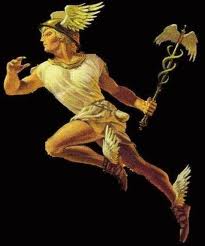 In these challenging – yet pivotal – times for business and humanity, we must realise that to become truly sustainable, human and business life has to become scientifically inspired, emotionally connected and spiritually entwined with nature and Gaia. Nature and business (as with nature and humanity) must be symbiotic and operate in mutualism to achieve successful outcomes. The sooner business realises the opportunities that come with being connected to and inspired by nature, the better for humanity and the interconnected fabric of life.
For more on this see kindle or the book ‘The Nature of Business’. This was a guest blog written by Giles Hutchins for Akasha Innovation
No answer required….
‘When light falls upon the leaves, it falls in many ways. It dapples, streaks, shimmers, blotches, discovers, reveals what lies beneath. In just this way in the heart of the forest the light fell upon the leaves and upon what lay beneath them. It fell upon the speckled bird elucidating his mysterious presence. And it fell upon the ground beneath the tree wherein the bird was perching. There on the ground, on the carpet of forest plants that the light dappled and shimmered. And thus the toad was revealed. There he sat, blinking his prehistoric eyelids, wrinkled and warted, and looked at the speckling bird in the branches above his head. And he too was speckled. He blinked again and the light was speckled.
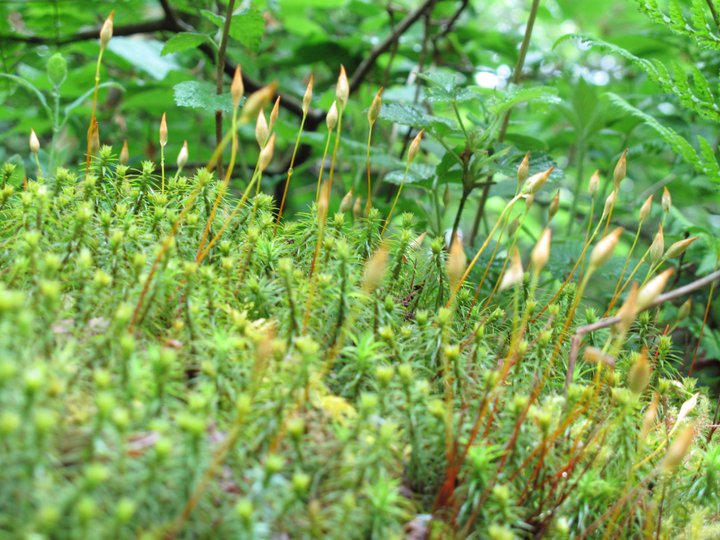
‘In this place,’ he considered, ‘the admixture of darkness with light is particularly pleasing. Here everything is wonderfully warted, wonderfully variegated.’
He gazed up towards the branch where sat the bird. He gulped, and stretched out his three-toed hand in salutation.
‘Greetings, O bird.’
‘Greetings, O toad,’ the bird replied.
There was silence. No more was said. The toad had come there with a purpose. He had come there with a question. ‘What’ he thought ‘is my purpose? What is my question?’
As he sat there blinking it was as if he could not remember. Perhaps his question and his purpose had been left behind in those other places on the way. Or had they melted away into the dappled shadow and light of the place? The toad had come thinking that he wanted an answer to something or other, but in the place where he now was no answer seemed to be needed. His protuberant eyes mirrored the eyes of the bird.
‘This is unquestionable‘, he nodded to himself.
‘Greetings, O bird,’ he said again.
‘Greetings, O toad, ‘ the bird replied.
Again the eyes of each mirrored the eyes of the other.
(ref: Thetis Blacker, the Place, extract. Cited p67-8 Temenos vol 13 )
The New Paradigm is Inspired by Nature
The economic, social and environmental volatility in our midst means organisations have to operate in a dynamically transforming landscape. Here is a repost of a guest blog I wrote for Akasha Innovation that can be found here
The nature of change itself is transforming. Organisations are now increasingly exposed to dynamic change: change upon change upon change – while dealing with one change, another affects us, then another, and so on. This dynamic change upsets the traditional mechanistic business paradigm we have been working to over the last few decades.
Paradoxically, inspiration for the current pressing challenges is all around us in nature. Nature has been dealing with dynamic change for over 3.8bn years, and the more we explore nature’s ways the more we find inspiration for operating in a dynamically changing business environment.
Our understanding of nature has evolved over the last few decades, from viewing it as a battleground of competition to one of dynamic non-equilibrium, where an order within chaos prevails due to unwritten natural patterns, feedback loops, behavioural qualities, interdependencies and collaboration within and throughout ecosystems. The more we grapple with the challenges our businesses now face, the more we realize that nature’s patterns and qualities inspire approaches and qualities for our own evolutionary success in business and beyond.

Organisations inspired by nature are resilient, optimising, adaptive, systems-based, values-based, and life-supporting.
The ‘New Paradigm’ is actually ancient, yet flowing with fresh spontaneity; whether it be sustainable business inspired by nature, organisational transformation inspired by nature, societal evolution inspired by nature or ‘human nature’ inspired by and in harmony with nature through an awakened heart-felt empathetic relation with life.
While there are many noble endeavours to transform within as well as revolutionise beyond our collective paradigm, many of today’s ‘solutions’ largely overlook the root cause: our human-nature relation. Any vision that overlooks the root cause of our multiple crises will be doomed from the get-go.
It is time to transform, and that transformation is within, through and all around us: to see more clearly the way of nature, remembering our destiny as conscious co-creating participants – a community of subjects. As Hunter Lovins says, look to nature, and the deeper we look the more we realise far from nature being about dog-eat-dog competition or individualistic selfish genes, it is much richer, more relational and diverse, it is transformation itself. We are beginning to realise the wave is very much part of the ocean, and the ocean is Nature.
For more on this visit the Facebook page of ‘The Nature of Business’.
The space between and through the notes allows them to dance – the co-creative unfolding
The quietness between soundings; the preparation for what is to come from what has already been; the out-breath dies into still, receptive presence before the energetic in-breath impregnates.

The word poetry derives from the ancient Greek word ‘poiesis’ which means an unfurling, creative revealing, bringing forth or presencing of reality.
‘All poetry is a matter of giving sensory form to ideas and finding the images that take us unhindered into the heart of things.’ Roger Scruton
‘The great works of art have about them the quality of a reminder. They fix that which is fugitive: the cooling shadow of an oak on a windless, hot summer afternoon; the golden-brown tint of leaves in the early days of autumn; the stoical sadness of a bare tree glimpsed from a train, outlined against a heavy grey sky. At the same time, it is forgotten aspects of our own psyches to which paintings can seem mysteriously conjoined. It can be our unspoken longings that surprise us in the trees, and our adolescent selves that we recognise in the hazy tint of a summer day.’ Alain De Botton

‘There are two aspects of things – the outward and the inward…. The outward has no meaning except in so far as it helps the inward. All true Art is thus an expression of the soul. The outward forms have value only in so far as they are the expression of the inner spirit of man…To a true artist only that face is beautiful which, quite apart from its exterior, shines with the truth within the soul. There is no beauty apart from Truth… Truly beautiful creations come when right perception is at work.’ Ghandi

True poems I call fingerprints
That show upon their grain of skin
Those delicate labyrinths within
Which are the essential her or him.
Yet poems are like footprints too,
Precise across a field of dew
To lead us on some echoing trail
To where that hidden trove, the secret source
Of resonance, can be hailed:
A frozen gleam, a buried seal of gold,
This unseen watermark upon the page.
(ref: Jack Herbert, extract from ‘A Scroll of Fern’)

To see a world in a grain of sand,
And a heaven in a wild flower,
Hold infinity in the palm of your hand,
And eternity in an hour.
William Blake – Auguries of Innocence
‘Silence is an ocean. Speech is a river.’ Rumi
‘The river is within us; the sea is all about us’ TS Eliot
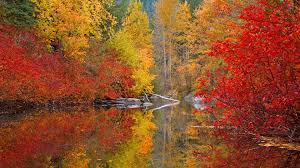
“The minute I heard my first love story
I started looking for you, not knowing how blind that was
Lovers don’t finally meet somewhere
They are in each other all along” Jalal ad-Din Rumi
Wishing you a very merry festive celebrations and happy new year 2014.
With love, Giles.
Where’s the vision for the future…what’s the new paradigm?
There is a lively discussion here on GSB about how the sustainability movement will fail without a compelling vision of the future. I have been prompted by Anna Pollock on the Facebook page of ‘The Nature of Business’ to write a comment, for which I am thankful. Here is my comment below, I welcome your views:
The ‘New Paradigm’ is actually ancient, yet flowing with fresh spontaneity; whether it be sustainable business inspired by nature, organisational transformation inspired by nature, societal evolution inspired by nature or ‘human nature’ inspired by and in harmony with nature through an awakened heart-felt empathetic relation with life.
The answers to our pressing challenges are all around and within us, what is lacking is the will to go deep. Essentially we are struggling to over-come the shallowness of our dominant ego-consciousness (techno-fixes for symptoms, short-term profiteering through private ownership of ideas, tentative policies that tweak rather than transform, etc.). Our collective paradigm is dominated by our ego-consciousness – capitalism, materialism, rationalism, individualism, patriarchy, and so on.
While there are many noble endeavours to transform within as well as revolutionise beyond our collective paradigm, many of today’s ‘solutions’ largely overlook the root cause: our own heart-felt empathetic relation with life: ourselves, each other and Nature. The reality is that life is so much greater, deeper and more profound than anything our rational ego-minds can fathom, yet we continue to attempt to solve problems with the same mind-set that created them – unwise.
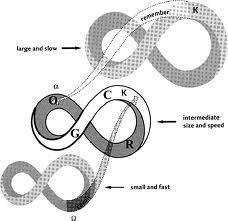 By example, the discussion of growth and its polarised opposite ‘no growth’ can over-look the deeper insight we find in nature. Growth is part and parcel of life: innovation, growth, conservation, re-configuration, rebirth, innovation, growth and so on through spirals of nested ‘panarchies’. Growth is an important attribute of what makes us who we are, yet to focus on one part of life (whether it be ‘growth’ or ‘conservation’ for instance) while blinkering ourselves to the deeper spiralling vortexes of life is akin to a childish teenager not yet able to see beyond its own ego ‘I’ reflection. Nature beyond the tidy yet artificial confines of our rationalistic ego-consciousness embraces death and rebirth, embraces change and transformation and embraces the co-creative wildness within, through and all around us.
Any vision that overlooks the root cause of our multiple crises will be doomed from the get-go. So let us get back to basics, back to nature, back to our oceanic presence flowing through every moment beyond the narrow blinkers of our rationalistic ego-mind. This is something all wise people throughout the ages agree on and it is more relevant now than ever. Then we can begin: masculine and feminine, yin and yang, rational and intuitive, science and sacred, human nature and more-than-human nature. Yes this requires courage (from the root word ‘coeur’ meaning heart) as the solution is deeply within and through our relations with each other and all of life. We can all en-courage ourselves and each other through our ways of being and doing.
Biomimicry, ecopsychology, indigenous wisdom, regenerative and circular economics, and so forth all take inspiration from nature, yet to envision without this deeper presence is to miss the mark. It is time to transform, and that transformation is within, through and all around us: to see more clearly the way of Nature, re-membering our destiny as conscious co-creating participants – a community of subjects. As Hunter Lovins says in her comment above, look to nature, and the deeper we look the more we realise far from nature being about dog-eat-dog competition or individualistic selfish genes, it is much richer, more relational and diverse, it is transformation itself. We are beginning to realise the wave is very much part of the ocean, and the ocean is Nature.
The Guardian and GSB provide a great space for such to be discussed and shared – this is so very important. A big thank you to Jo and the team, with love, Giles
To explore ‘the new paradigm’ further, join the Face Book community here
View a short video clip on business inspired by nature here
View a presentation on ‘A Radical Review of Reality’ here
Authentic Leadership for Radical Transformation
Radical transformation is heart work; transforming how we perceive, attend to and engage with our inner and outer worlds – the ever-changing context we find ourselves in whether it be personal, family, organisational, community, societal.
‘The salvation of this human world lies nowhere else than in the human heart’ Vaclav Havel

To breathe life through the eye of the heart is to transform through our own becoming. Being authentic within the moment is being and becoming through our hearts. It is where our soul attunes through its participatory relationship with life. Here is where our authentic Self (our true Self beyond the ego) opens up and co-creates with the world around us. This is the sea of synchronicity full of eddies, under-currents, storms and summer breezes. Accepting the present moment with our full presence – this is leading with heart, with courage (its root ‘coeur’ meaning heart), beyond fear, beyond control. It’s not for the faint-hearted, nor the ones desiring an easy path through life.
It is worth noting that the root word of ‘leadership’ is ‘leith’ which means to cross the threshold, to let go of the old in order to embrace the new – so fundamental to any transformation. Deeply ingrained within our current paradigm is a ‘rationalistic abstraction’ which seeks to polarise the creative tensions inherent within life. Rather than seeing continua to dance through, our rational mind accentuates and then polarises life into binary dualities: good-evil; black-white; rich-poor; human-nature; subject-object; self-other, conscious-unconscious, space-matter, and so on. The boundless and spontaneous wildness of reality is dissected, atomised and fenced-off; resulting in the fragmenting of our self-other-Nature reality in turn fracturing our inner self from our outer self, our conscious mind from our unconscious mind, ourselves from each other and from our other-than-human kinship; hence the separation, scarcity and status anxiety rife in our Western culture. This abstract polarisation may help us define things and box them up into neat and tidy arrangements of control, yet it ends up extracting us from the lived-in flow of reality. It is the root source of our collective inauthenticity; a fearful way of attending to life that is inherently unsustainable.
‘Fearing weakness I strive to control…If there is present awareness, fear is seen clearly as an abstraction…a future anxiety born from memory’s blueprint…investing in an illusory concept about right or wrong in order to avoid that which is absolutely beyond both…In separation, no matter what happens I feel separate. In presence, the self is no more and there is simply that which is.’ Tony Parsons
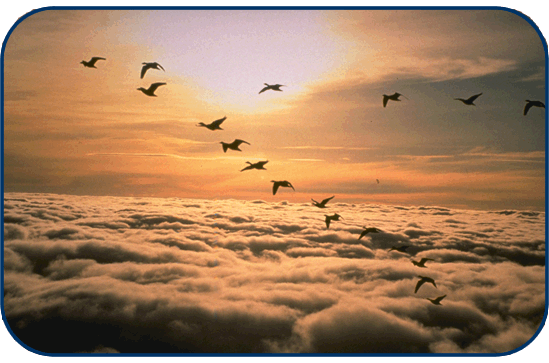 As leaders, we not only open ourselves up to our full becoming through ‘presencing’, but we also help others open up to too. Authentic leadership is giving others the space, time and courage, through en-couragement, to find their inner Self, their true voice and resonance (or tune). In this way, leading can be seen not as orchestrating or conducting but rather as facilitating the ability of others to tune themselves. Leading helps facilitate the co-creative journey of becoming our true selves while honouring the mystery beyond pre-defined outcomes. As Parker J Palmer insightfully points out through his important work, leaders serve as midwives to a birth of consciousness that can only come from within. Hence, the emergence of the new paradigm in our midst requires authentic leadership. Our collective and individual shift in consciousness requires space, time and courage, through en-couragement, to take root and grow, ever-transforming, ceaseless unfolding.
The art of presencing has been applied to organisational transformation and business leadership through the great work of Peter Senge and Otto Scharmer. Their work at MIT and SoL in partnership with businesses around the globe, highlights the need for leaders in organisations of all shapes and sizes to intimately connect with their evolving authentic Self. Presencing is relevant for all transformative situations we find ourselves in.

Authentic leadership, therefore, is courageous leadership rooted in the heart. It is less about the theory of an idealised leadership model and more about the practical ability to navigate a journey of authenticity, inspiration and love; energising and equipping oneself and others to make the right choices for the situation at hand. Each and every one of us plays our part by helping others to co-create through love.
Love is…
‘Love is the only emotion that expands intelligence.’ Humberto
Love is what enables us to give to ourselves and others. Love is mutually beneficial and always creates conditions conducive for life – love feeds on and grows from love. It breeds positive virtuous cycles. Leadership and organisations of the future are more about love than profit – now here is a new business paradigm in the making, and one that does not need an ‘ism’.
Much has been written about the importance of love in leadership. Sadly, love is not a word we hear much of in business circles these days. It has become a much misunderstood and misappropriated word in our Western consumerist culture of fast paced pleasure.
As Tim ‘Mac’ Macartney, Founder of Embercombe in his beautiful book ‘Finding Earth Finding Soul’ notes:
‘Love inspires leadership…It is the finding of love that will bring forth the leaders we need. It is with each one of us and we only need to let go of our fear and she will be known to us.’
In the words of Gerald May:
‘Love cannot be a means to any end…Love is an end in itself a beginning in itself. Love exists only for love…The real commandment of love is an invitation born in our own yearning, not an externally imposed ‘should’….the invitation of love is to be consciously, energetically alive, and involved in love. This is the real meaning of invitation: living into, being alive within.’
Take a walk on the wild side…through the wisdom of the heart
 An important aspect of becoming an authentic leader is learning to love ourselves whole-heartedly, which means embracing our shadow and our wildness – that which our cultural conditioning has taught us to suppress. We need to let all of ourselves come out and play. “Everyone carries a shadow,” Carl Jung wrote, “and the less it is embodied in the individual’s conscious life, the blacker and denser it is.” Our over-active ego attempts to control our inner and outer worlds, often suppressing much of our psyche into our unconscious ‘shadow’. Whilst the ego is an important and valuable assistant for the trials and tribulations of any transformation, it is the heart where the real transformative potential lies.
Much research has been undertaken into the heart as a physical organ of perception and knowing. Stephen Harrod Buhner, in his book ‘The Secret Teaching of Plants’ explores the wisdom gained through the heart. He points out that ‘between 60 and 65% of the cells in the heart are neural cells’ which are wired into the nervous system and brain. The heart is the body’s most powerful electromagnetic sensor and transmitter, continually decoding the vast array of electromagnetic signals radiating from our lived-in environment. It would seem the intuitive mind is very much in the heart. It is through the heart (and then subsequently our brain and nervous system) in conjunction with our sensory perception that we find ourselves living in continual and participatory dialogue with the world around us.
Out of Control – Beyond Boundaries
‘If consciousness can abandon its mad, quixotic quest to control reality, a radical lessening of anxiety follows…our domestication becomes rebalanced with our wildness. This is an enormous and life-changing relief.’ Nick Totton
 Through the embodiment of our inner and outer worlds (intellectual, emotional and spiritual), we begin to realise that life does not need to be controlled. When it boils down to it, it’s all about relationships – how we relate with our selves (ego-Self) with each other (self-other) and with our wider kinship (human-nature). In business and nature, everything works through flows of relationships. Trust is the soil from which healthy vibrant relationships take root. Control is the opposite of trust and relationships struggle to survive without trust. Trust requires mutual respect and understanding, a reaching out beyond oneself that allows for a flow of sharing through relations; a reciprocation. Trust is what allows a relationship to unfold unbounded by the narrow constrains of what we think things ought to be for some pre-defined outcome.
To be spontaneous while co-creating with others is to have innate trust in the relationships while letting go of control. In this way, trust allows an opening up to the present moment – a ‘presencing’ where upon we en-courage an aliveness to flow through all we are co-creating. Authenticity and spontaneity are dancing partners in transformation.
The wonderful dynamism of our participatory co-creative engagement – our cosmic dance – with life is magic in itself, and its flow is laced with its own balancing and self-righting abilities if only we learn to let go and let love, only then we will gain confidence and trust in how things really are, beyond the tidy yet artificial confines of control. From here, within this moment of authentic presence, we live beyond contradiction, beyond separation, beyond scarcity, we transform, we metamorphose. Just as it seems inconceivable for the caterpillar to contemplate dancing upon the wind, so it seems inconceivable in today’s short-term output focused, quantity obsessed organisations to lead without control. The transformation to a new paradigm, first-and-foremost, asks us to let go of our pre-conceived notions, our cultural conditions, our rigid mental maps and tidy definitions in order to cross the threshold.
An easy way to experience life beyond contradiction is by dancing with another. When both dancing partners relax into the dance, when the ‘leader’ has let go of control and is attuned with the ‘follower’, then true co-creative tango flows, with an ease and magic far beyond the realms of control or rationality. ‘I’ll see you all at the Dance said she’.
To explore ‘the new paradigm’ further, join the Face Book community here
The nature of Nature : Natural co-creation through natural inclusion
A story of Being and Becoming (extracts with permission from Alan Rayner’s paper on Natural Co-creation )
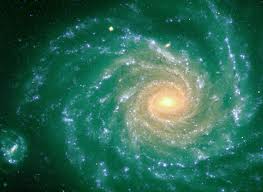
In the becoming was the void. And the void was good. She said, ‘let there be light!’ And there was light. And the void included the light and the light included the void. They loved one another as they danced life into exuberantly flowing form, inspiring and expiring as an ever-transforming array of whirls within whirls within and around the creatures of the Earth.
 But One light-embodied form of darkness arose, which became self-conscious of its own image. It grew alarmed by the painful prospect of its own expiration and sought the security of sovereignty over all others whilst taking the liberty of doing as it pleased by claiming its own internal purpose and drive. It formed the word that fortified itself against the void by calling her bad names and rallying armies to deny her nurturing presence. It gave names to all the other forms, fixing them too within hard lines of definition that severed their communion with the void. And so the void was exiled from her offspring and made to suffer in the background of all that she had danced with her partner to life. Love became divided between loyalties, each denying the other in vicious circles. Light hated darkness and darkness hated light in a sharp dichotomy between black and white, to no good purpose. Pain stalked the Earth and no one knew what to do about it.
Into this place of grief there came many men of substance, who took it upon themselves to give instruction concerning the ways of the world. And they called the Places where they stood solidly on the basis of their Authority by great names: School, Academy, Church, Cathedral, University, Parliament, Senate, to name but a few. But all they could do was repeat themselves in ever more expert ways. They converted the creative spirits of unadulterated minds into uniformed reproductions of themselves by caging them in cubical cubicles of standard curricula and wielding stick and carrot to keep them on track. Above All they worshiped the One great outsider and insider that could multiply by dividing into many, adding to sum and taking away from mothers. And they called this One infinite and infinitesimal, whilst leaving aside the void that they loved to avoid suspended in vacuum, somewhere ineffable. Nature is square they had to declare, even if only as an approximation. It must be so, for, to be sure, in a world with no corners, where on Earth can we fix its centre?
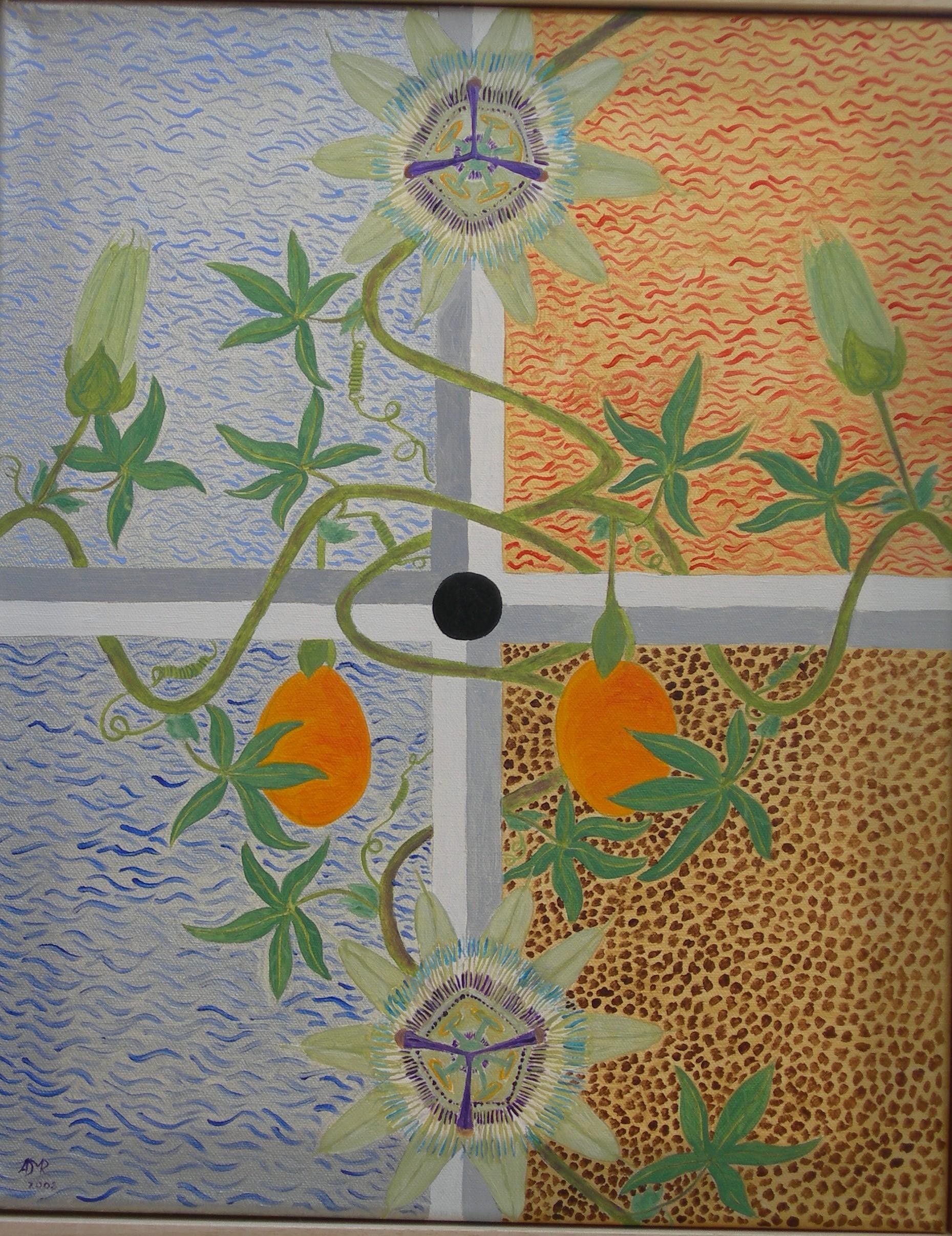
The newly self-conscious forms soon grew weary of wandering around, hunting and gathering whatever the Earth provided for their sustenance, ever refreshing herself as they moved on in preparation for their return. They yearned to settle in One Place where they could make themselves comfortable, self-contained and protected from the vicissitudes of their natural neighbourhood. Helped by those regarded as wise, they learned to build walls and fences to keep what they desired most in and what they desired least out. They became expert at removing resident wildlife and replacing it with whatever individual kind of form they selected and bred to suit their consuming interests. One thought to be wise even proclaimed, with deeply furrowed brow, this to be the way Life Itself evolved, by discarding her own variety in favour of whoever competed best in the struggle for her selective attention. So the vast forests and moorlands and marshlands and grasslands were converted to fields and farmyards and factory housing, each ever more densely and uniformly stocked with plants and animals whose only purpose was to grow and reproduce as fast as possible, so that ever more could feed ever more. Eventually, the self-conscious began to treat themselves in the same way as their stocks, to be managed as commodities by departments of human resources. And when at last the stocks began to flag under pressure of disease and stress, unable to supply the growing demand, the demand did not lessen but sought instead to replace the genes from which they’d been bred, with something better.

Having settled for this penned in, staked out world the scene was set for claims of sovereignty over each fragmented plot. The size of plot depended not, as in other creatures’ natural territories, upon what was needed to sustain the life within its dynamic local within non-local boundaries, like a river’s banks within its watershed. Rather it relied on some estimate of enforced power, measured out in square units that ignored the lie of the land. And so the adverse square Law became the right to rule by might; an overarching pyramid of numbers called the State – in honour of its permanent fixture – with One at the Top. Yet each State in its concrete setting sold itself short of what lay out of reach beyond its self-imposed walls, in States nearby and far away. Interstate Highways became imperative to allow transactions between the imperial powers. But on these roads betwixt fixed abodes, there was always the danger of meeting a stranger who dealt unevenly in monetary cubicles of divided loyalty, creating mistrust to disrupt the exchange and open the way for invasive force.
As the struggle for power grew more intense, so too did the desire to forge more and more from what could be mined from the Earth’s natural resources. Coal, oil and forest provided heat and flux to serve the fabrication of dazzling inventions that raced ever faster across the globe. But in the wake of labour-saving, pain-freeing device, raced also the spread of exhausted spirit, of lives serving time in office and factory, and rising residues of burnt fossil fuel.
With hard lines drawn betwixt and over all, the view of the self-conscious became stifling. No-one beyond the boundaries of self-definition could possibly be trusted, so all became threatening opposition, the epitome of all that one stood against by dint of what one stood for. Ideology, above and beyond the care of natural resources, became the ground for endless dispute whose only final solution lay in the elimination of the opposition, by fair means or foul. War became the chief way of rallying power to one’s own side, a game in which the gathering, ever more inventive, killing forces of science and technology became willing or unwilling collaborators, coerced by punishment and rewarded financially. Common sense whimpered on the sidelines, barred from intervention, desperate for a hearing in some silent space beyond the din.
Can our rational pursuit; Serve any better purpose; Than to chase what we seek; Further; And further; and further; Away? If we were only to loosen; Those unforgiving means and ends; The hardline limits of denial; By which we close down on our prey; We could release the life that loves; Our child’s play; That pools us all together; In the recreative communion; Of our natural neighbourhood.
Seven S’s for Leadership In Transformational Times
The Seven S’s of leadership in these transformational times:

- Silence – A quiet mind helps ensure a successful outcome. Be still and allow the mind to quieten as often as possible throughout the day. From silence the mind is more able to identify the right choices for the road ahead.
- Sense – Be in the moment. Learn to really ‘listen’ to yourself and others. The local environment provides vital feedback, ‘feel’ this feedback, tune-in and act/adapt accordingly.
- Strategy – Ensure clarity of direction for the meandering path ahead. What are your instincts saying? What really turns you on? What makes your heart sing? Why are you doing what you are doing? Follow your heart with a clear mind. Allow it to navigate your transformation with passion and conviction.
- Small steps – Each step provides chances to make positive change happen. Endeavour to take each step, each interaction and intervention with authenticity.
- Stakeholders – Recognise, engage and empower the interested parties. Tensions may be uncomfortable and energy/time consuming, yet they are inevitable and can help hone right navigation for the path ahead. Through stakeholder engagement, tension can become a constructive force stimulating learning and development; where ‘dinergy’ leads to synergy.
- Systems – Transcend perceived boundaries to see connectedness; the interconnected systems of relationships and resources.
- Solutions – Problems and challenges abound and the glass can often seem half-empty in challenging times. Explore solutions, the art of the possible; what can be done (rather than what cannot) through solution creating, collaborating, proto-typing and experimenting. Channel energy from fear and worry to solution exploration.
To explore ‘transformational leadership’ further, join the Face Book community here
View a short video clip on business inspired by nature here , this blog is an extract from the book ‘The Nature of Business’ see here for North American version or click on the ‘About The Book’ tab above.

