A New Logic Beyond The Illusion of Separation
As Paul Polman, CEO of Unilever has said, ‘Too many people think in terms of trade-offs that if you do something which is good for you, then it must be bad for someone else. That’s not right and it comes from old thinking about the way the world works…We have to snap out of that old thinking and move to a new model.’ Likewise Peter Drucker once famously said, ‘In times of turmoil, the danger lies not in the turmoil, but in facing it with yesterday’s logic’. Yesterday’s logic is one that sets humans apart from each other and from the rest of Nature; it views life through the narrow-minded lens of dog-eat-dog competition.

The scientific convenience of isolating complexities into neatly packaged definitions for us to get our heads around has led to a flawed logic which we then project on to our societies and economies. It is this flawed logic that is at the heart of all our crises – world poverty, climate change, biodiversity loss, social inequality, etc. And yet many of today’s solutions apply this logic without stepping back to question it. If we have any hope of rectifying the error of our ways, this logic needs to be put right at its root otherwise all we can hope for is merely delaying the inevitable end-game through efficiency tweaks to an inherently carcinogenic modus operandi.
What is now called for is a new logic, a fresh way of attending to inner self, each other and neighborhood. This new logic is actually ancient: it is the logic of Nature.
As Confucius spoke of five centuries before Christ,
‘He who is harmony with Nature hits the mark without effort and apprehends the truth without thinking.’
To hit the mark without effort and thought is, at best, confusing for the rationalizing, confining, abstracting mind of yesterday’s logic; yet for a mind attuned with the wisdom of life itself, it is the path becoming conscious of itself, the wave realizing it’s part of the ocean, the knower and the known embracing their reciprocity, and the unity within diversity becoming self-evident.

The answers to our pressing challenges are all around and within us – simple; yet simple is not necessarily easy, especially for the grasping, culturally-conditioned mind of yesterday’s logic which so haunts us with its struggle to see beyond the confines of its own illusion. Small steps with great love, moments of aliveness, imaginative immersions, soulful openings, new beginnings, authentic relations, mindful listening. Beyond narrow-minded control-based thinking we swim the seas of synchronicity – at one with Nature. Here, ‘doing less bad’ is only ever a springboard to becoming who we truly are: ones in service to life’s rich tapestry.
To explore ‘the new paradigm’ further, join the Face Book community here
The Future of Business – In Harmony with Nature
Can business be a force for good, restoring society and the environment, providing solutions that genuinely help rather than hurt? Ought business to be striving for more than just limiting its harm? I think we intuitively know it can, yet it requires courage to break rank from the mainstream approach to business.

The prevailing business paradigm of maximization, monoculture, self-interest and short-termism is weakening its own resilience, in turn sowing the seeds of its own demise. Our prevalent business concepts, values, perceptions and practices are being disrupted and systemically challenged. This ‘perfect storm’ of crises provides the perfect situation for individuals and organisations to retrench (clinging fearfully to outdated mindsets) or transform (embracing new ways of operating). For those able to adapt in these volatile times, they face nothing less than a shift to a new business paradigm; a way forward that seeks to enhance life on Earth rather than destroy it. Like the ancient Chinese Proverb:
In times of great winds, some build bunkers others build windmills.
Our prevailing reductionist approach to science, technology and business has encouraged us to see ourselves as separate from nature, and to view the world around us as something to be analysed and over-exploited for our own wants and needs, with scant regard for the consequences. Here lies insight into the root cause of our problems facing us today in business and beyond. The sobering fact of the matter is that our current business approach (and its immense power to fuel problems as well as implement solutions) is neither balanced nor life-encompassing; it is reductionist and anthropocentric in its belief and behaviour. This separated thinking and reductionist view of the world has encouraged an alienation from nature over recent years, leaving us unbalanced in our understanding of the real world – the world not just of stock market trends and commodity prices, but also of soil and sea, of cycles and seasons, and of ecosystems and environments. As Ray Anderson, former Chairman and CEO of Interface, observed:
We have been, and still are, in the grips of a flawed view of reality – a flawed paradigm, a flawed world view – and it pervades our culture putting us on biological collision course with collapse. It is the paradigm that is reflected in our culture’s infatuation with stuff and our willful ignorance of nature.
Our prevailing view of nature as a battleground of competing species, each fighting to survive, is a narrow view of a more complex picture. When Charles Darwin published his Origin of Species, the phrase ‘survival of the fittest’ was quickly co-opted and distorted by powerful elites to promote the idea that only the biggest, strongest, and most powerful can survive. In reality, what Darwin found and described in his findings was that those organisms with the greatest ability to adapt to their local environment – the ‘fittest’ in the sense of the best fit – would survive when and where others would fail. He found that sensing, responding, adapting, and aligning with and within the local ecosystem were key to survival. Recent scientific discoveries, coupled with advances in systems thinking and quantum theory, continue to build on these findings, and uncover a more complex and complete view of nature, the workings of the universe, and the evolution of life.

Over the last 3.8 billion years, nature has survived and flourished through times of radical change by dynamically networking and collaborating among species and throughout ecosystems. Diversity, flexibility and collaboration, we find, is core to the interwoven evolutionary journey of life – the driving forces that provide resilience and regeneration within species and ecosystems.
In the words of the business pioneers Michael Braungart and William McDonough:
Popular wisdom holds that the fittest survive, the strongest, leanest, largest, perhaps meanest – whatever beats the competition. But in healthy, thriving natural systems it is actually the ‘fitting-est’ who thrive. Fitting-est implies an energetic and material engagement with place, and an interdependent relationship to it.
So how does business go about shifting from a prevalent mind-set of reductionism and short term profit maximisation that views the world as a collection of things to be consumed (nature’s capital) to a world-view that has an energetic and material engagement with place and an interdependent relationship with life which is symbiotic not carcinogenic? In short, how does the prevalent approach of business (and for that matter human society) break its devastating illusion of being a part from nature to realising in reality that we are a part of nature, even with our specialties? This is the sixty-billion dollar question (not whether the USA defaults on its ever-spiraling debt mountain, which is just one of many symptoms we now experience as a result of failing to address the root cause of our social, economic and environmental crises: our carcinogenic relationship with life on Earth).

This question of the moment can be answered through 3 R’s – Re-design, Re-connect, Re-kindle:
1) Re-designing – new ways of operating and innovating beyond ‘less bad’ into ‘doing good’ (shifting from the take/make/waste economic paradigm to a regenerative approach that heals society and the web of life rather that destroying life in the name of short-term gain). An example here is the Kingfisher Group aiming to be a ‘net positive’ force for good in the world.
2) Re-connecting – reconciling our human relationship with life/nature and our own authentic human nature (re-establishing our vital bond with ourselves, our neighbours and the web of life within which we are a part of through education, authentic leadership and eco-psychology). An example here is the co-founder of Natura, Pedro Passo, who instills a business culture that understands our interrelatedness with nature and community.
3) Re-kindling wisdom – working with the grain of nature and operating within the rules of life on Earth (enabling businesses and societies not merely to ‘sustain’ but to thrive in the years ahead by practicing wise approaches to life that draw on, for instance: symbiosis, ecological thinking, permaculture, systems-thinking and systems-being, business inspired by nature, presencing & indigenous wisdom). An example here would be Weleda with its bio-dynamic philosophy and its holistic approach to all aspects of its business.
In these challenging (yet pivotal) times for business and humanity, we must realise that to become truly sustainable, human and business life has to become scientifically inspired, emotionally connected and spiritually entwined with nature and Gaia. Nature and business (as with nature and humanity) must be symbiotic and operate in mutualism for there to be anything resembling a successful outcome. The sooner business realises the opportunities that come with being connected to and inspired by nature, the better for humanity and the interconnected fabric of life.
To explore ‘the new paradigm’ further, join the Face Book community here
View a short video clip on business inspired by nature here
View a presentation on ‘A Radical Review of Reality’ here
Radical sustainability beyond the illusion….
Radical means getting to the root of it. Illusions are shattered when we get to the heart of the matter….and so by being radical in our approach to life we find that we can uncover artificiality which may cloak our ways of attending to our selves, each other and our wider neighbourhood.
‘The way you see people is the way you treat them, and the way you treat them is what they become.’ – Goethe.

Learning to love our selves and each other is perhaps the most important task that lies before us. Put another way, the beginning of any new paradigm ought to be grounded in love if it is to be authentic and seek to replace old ways with truly fresh, new ways beyond current illusions.
Here are five tips or pointers that may help remind us to remain flowing within the tides of love:
– Empathy: the ability to put our selves in the other’s shoes by feeling the context of the other and understanding their perspective. This allows for a reaching out and meeting of the ‘other’ which is the essence of love. It requires us to imagine the other’s situation and so asks us to shift from knowledge to wisdom – our wisdom grows through empathy.
– Forgiveness: the ability to no longer hold-on to negative judgement of the ‘other’ and harbour resentment. This does not mean to say that what the ‘other’ has done is ‘right’ or ‘good’ in some way, but rather, we can acknowledge the problem and forgive the person for their actions, accepting them as they are, freed from pre-conditioned perspectives. Empathy and acceptance greatly help with forgiveness; all of which are crucial for wise living.
– Presence: to be fully present in the here and now of the moment is to open up to the ground of love in our midst. To truly listen, for instance, when we are conversing; to give the ‘other’ our full, undivided attention is to open up to love which then allows an authentic relation of reciprocity and trust to emerge – the beginnings of any new paradigm happen right here, right now with the birthing of each interrelating moment.
– Generosity: to recognise that giving to others is actually a gift to our selves and all of life is to recognise that we are all connected and all our actions have reactions. And so we can either consciously provide gifts to others (which also makes us feel good, not in a smug way that gives only to be perceived as ‘good’ by others, but in an authentic way of contributing meaningfully and from the heart, which may initially ‘put us out’ or ‘cost us’ yet with hindsight provides for richness beyond measure) or we can try and keep things for our selves in-so-doing create an environment that mirrors that scarcity and sense of separation. Charles Eisenstein is a good example of a modern-day story-teller who explores the profound power of giving.
– Small steps: it is the little things, the small acts of kindness that allow us to transcend the illusory barriers to love. In the profound words of Mother Teresa ‘You can not do great things, you can only do small things with great love.’ Small things with great love sow the seeds of the new paradigm. By way of example, I recall, when I was younger, jogging past a worm pulsating rhythmically and beautifully as it made its way across the road in front of me one early morning, and I thought, ‘I wonder if I should help the worm cross the road as she may get trampled underfoot or under wheel?’ I left him/her unaided as I continued my jog by, busy in my own world of thoughts to do with ‘matters of consequence’. Soon after, a car zoomed passed me and something inside me made me jog back to where the worm was just to check and see if she was OK…alas the rhythmic pulsating was now a frantic, bloody, seething, wiggling mess, and I felt compelled to put the worm out of misery.…from then on when I pass a snail, or slug, or worm crawling along the road I gently (and with love) bring them over to the other side of the man-made hazard… Does it matter? How does that small act have any meaningful impact or consequence on the plethora of challenges humanity now faces? It matters to that worm, and the one before….just as the small acts of kindness in the local store, down the street, on the underground, or in the office provide a moment from love to flow into life beyond the illusion of separation. This is the beginning – small steps with love.

I do not delude myself that acting with and through love is not a constant challenge for me, yet it is a challenge that turns me on rather than switching me off. It provokes the opportunity for me to catch myself and wake-up to the present moment. I often ‘miss the boat’ but the boat is still worth trying to catch….otherwise, quite frankly, what on Earth are we doing here….getting in the way or going with the flow?
If we are really honest with ourselves, we may begin to see that the barriers to love are self-imposed preconditions and prejudices, albeit often culturally induced, yet ultimately held-on to by our self. And so, radical sustainability begins with the self. Waging a war on: terror, carbon, poverty, cancer, bullying, consumerism, etc. deals with downstream ramifications and often approaches the problems with the same things that created them (the clue is in the ‘waging a war’ attitude which is hardly an attitude rooted in love).
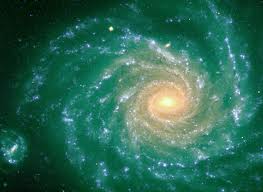
Life’s destiny = learning to love…..learning to love our selves (our conscious and unconscious depths of mind, heart, body, soul), to love each other (relating authentically through our quality of attention in opening up to the reciprocity of life), and to love Nature (the matrix of life itself, the cosmic womb of our being and becoming, the all-pervasive presence flowing through and beyond us)…this is the magic of radical sustainability and it needs no money, no manipulation, no hurry, no worry, no stress, no fear….and yet magically provides for our serenity, courage and wisdom.
To explore ‘the new paradigm’ further, join the Face Book community here
‘All poetry is a matter of giving sensory form to ideas and finding the images that take us unhindered into the heart of things.’ Roger Scruton
‘Art takes Nature as its model.’ Aristotle
‘The greatest art in theoretical and practical life consists in changing the problem to a postulate; that way one succeeds.’ Goethe

To see a world in a grain of sand,
And a heaven in a wild flower,
Hold infinity in the palm of your hand,
And eternity in an hour. – William Blake
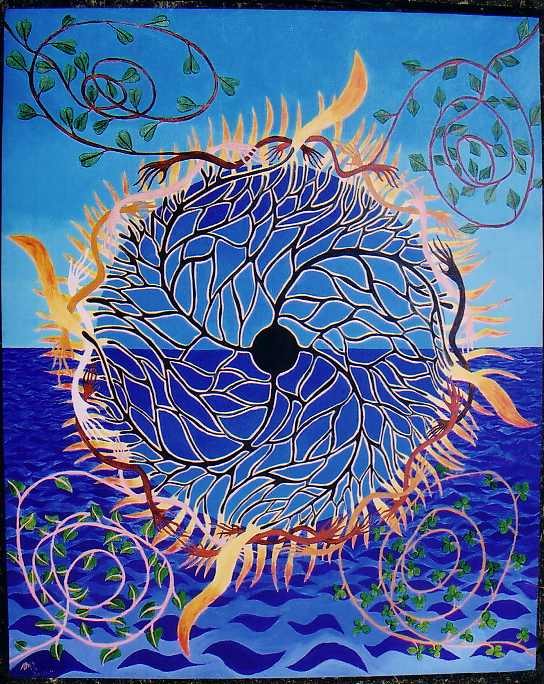
(Oil painting on canvas by Alan Rayner, 2005). Light as a dynamic inclusion of darkness continually brings an endless diversity to Life.
Super Tramp, Logical Song (extract):
When I was young, it seemed that life was so wonderful, a miracle, it was beautiful, magical
And all the birds in the trees, well they’d be singing so happily, joyfully, playfully, watching me
But then they send me away to teach me how to be sensible, logical, responsible, practical
And they showed me a world where I could be so dependable, clinical, intellectual, cynical
There are times when all the world’s asleep
The questions run too deep for such a simple man
Won’t you please, please tell me what we’ve learned
I know it sounds absurd but please tell me who I amI said now, watch what you say, now we’re calling you a radical, a liberal, fanatical, criminal
Won’t you sign up your name, we’d like to feel you’re acceptable, respectable, presentable, a vegetable…
Joni Mitchell Big Yellow Taxi (extract):
They paved paradise
And put up a parking lot
With a pink hotel , a boutique
And a swinging hot spotThey took all the trees
Put ’em in a tree museum
And they charged the people
A dollar and a half just to see ’em
Don’t it always seem to go
That you don’t know what you’ve got
Till it’s gone
They paved paradise
And put up a parking lot…

‘Strange times are these in which we live when old and young are taught falsehoods in school. And the person that dares to tell the truth is called at once a lunatic and fool.’ Plato
The quietness between soundings; the preparation for what is to come from what has already been; the stillness between incoming and outgoing; the dance of life’s movement within and around the receptive space of life’s ever-present love, forever becoming refreshed in each other’s presence.

To explore ‘the new paradigm’ further, join the Face Book community here
Leading Across The Threshold of a New Paradigm
It is now clear that sustainable business requires a new mind-set which transcends yesterday’s logic. Paul Polman, CEO of Unilever, is one of many business leaders now pointing to the need for a new way of thinking. The logic we now need for the plethora of challenges facing us is found nowhere else than within our own hearts. It is in leading from the heart that we pave the way for a truly sustainable future in business and beyond.
The root word of ‘leadership’ is ‘leith’ which means to cross the threshold, to let go of the old in order to embrace the new – so fundamental for any transformation. The art of courageous leadership rooted in the heart has been applied to organisational transformation and business leadership through the great work of Peter Senge, Otto Scharmer, Parker J Palmer, Tim Macartney and many others. It is less about the theory of an idealised leadership model and more about the practical ability to navigate a journey of inspiration and authenticity; energising and equipping oneself and others to make the right choices for the situation at hand. As leaders we serve as midwives to a birth of a new way of attending – a new consciousness; the fresh yet ancient and ever-present logic of the heart. Our collective and individual shift in consciousness requires space, time and courage, through our trust in others to find their authentic voice in allowing their own logic of the heart to sing. In this way, leading can be seen not as orchestrating or conducting but rather as facilitating the ability of others to attune themselves. The result is more effective teams who are able to face increasing uncertainty with renewed inspiration, sharing, creativity, and above all, love.

Sadly, love is not a word we hear much of in business circles these days. It has become a much misunderstood and misappropriated word in our commoditising consumerist culture. Love is what enables us to give to ourselves and others. To fully open up, tune-in and listen to each other is to allow the currents of love to flow within us. It is what nourishes our ways of attending to ourselves and each other, breeding positive virtuous cycles in all we do – this is the wisdom of leading from the heart. As Tim ‘Mac’ Macartney, Founder of Embercombe notes: ‘Love inspires leadership…It is the finding of love that will bring forth the leaders we need. It is with each one of us and we only need to let go of our fear and she will be known to us.’ Embercombe’s Heart of Leadership programme pioneers this leading with love in order to make it a reality in our organisation, in-so-doing unleashing immense benefits for one and all. It includes the ancient indigenous wisdom of the way of Council which creates sacred co-creative space for groups of people to open up to the wisdom of the heart within a communal atmosphere of empathic sharing, non-judgement and acceptance. In Council, people sit in a circle and commit to being fully present by really listening to each other from the heart, free from distractions, judgements, opinion forming or preparation of a response. Pippa Bond, a well-respected Council facilitator, notes that, ‘Council invites empathy, stillness and honesty’ vital ingredients for a successful culture of transformation. This powerful practice is applicable to all human interrelations whether it is a board meeting, a team discussion or diverse stakeholder dialogue. Applying the practice of Council in our work as leaders crossing the threshold encourages authentic environments of listening and speaking from the heart to occur.
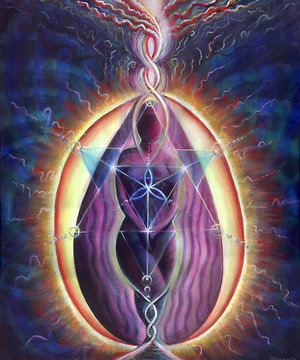 The more we create such environments the more people embrace the way of the heart in their relations whether engaging with difficult clients or tackling the strategic challenges of shifting to a business model that goes one step beyond doing ‘less bad’. It is from within that we find the power to transform. As the playwright, prisoner and former president of the Czech Republic, Vaclav Havel noted, ‘the salvation of this human world lies nowhere else than in the human heart.’
Just as it seems inconceivable for the leaf-chomping caterpillar to contemplate dancing with the wind while cross-pollinating sun-drenched flowers, so it seems inconceivable in today’s short-termist, quantity-obsessed, fear-driven organisations to lead from the heart. The metamorphosis to a new paradigm first-and-foremost asks us to let go of our pre-conceived notions, our cultural conditions, our rigid mental maps and tidy definitions in order to cross the threshold, to see reality as it truly is from within our hearts. This can be immensely uncomfortable as it requests we breakdown our current ways of attending in order to breakthrough into new ways beyond our self-defending egos. Nothing less is called for in these epochal months ahead. In our hour of reckoning, are you up for courageously leading from the heart?
To explore ‘the new paradigm’ further, join the Face Book community here
The Nature of Business – Redesigning For Resilience In An Increasingly Volatile World
As we draw more and more on the earth’s resources, we have compromised almost to breaking point the earth’s carrying capacity and its ability to self-heal. The title of this book, The Nature of Business, holds a basic truth we have all but forgotten but are rapidly having to re-learn – that human activity and the natural environment are interlocked, one wholly dependant on the other for sustenance, each dependant on the other for survival. In our consumer-driven society, nowhere is this process of re-education more urgent than in the businesses which mediate our call on natural resources. Giles Hutchins’ biomimetic approach applies principles based on the form and function of natural systems to construct a new paradigm for doing business, working in partnership with nature to help create a more sustainable future.

The simple message is that respecting the environment and enhancing social value also makes good business sense. In a resource-constrained and environmentally-stressed future, firms embracing this concept will stand the best chance of survival. Illustrative case studies point to the good news that these so-called firms of the future are already among us, in their turn influencing business practices up and down their supply chains. A transformative book in its own right, The Nature of Business should be read by everyone engaged in the future-proofing of their business. – Gev Eduljee. Director of External Affairs SITA UK
Infused with ancient wisdom, and in equal parts provocative and practical, this book serves as a compass for business leaders to build the firm of the future – a firm that creates conditions conducive to life and well-being. Hutchins compellingly connects value creation, human constituents, and natural foundations of business. The book is a rich source of inspiration and practical advice, bound to become a reference for business leaders and those teaching students of business. To be viable, the firm of the future will need to create conditions conducive to life and well-being. This book beautifully maps the transformative journey for today’s and tomorrow’s leaders. – Dr. Monika Winn, Winspear Scholar and Professor, Business Strategy and Sustainability, Director, Centre for Social and Sustainable Innovation

Simply the best new book on business and management in many years! Hutchins combines the latest understanding of ecology, biology, sociology and behavioural science with a review of the best company practices and applications. If more company executives use this book as their guide to our global common future, we might actually see acceleration of the needed shift underway to long-term sustainability and a cleaner, greener, more equitable, information-richer global economy. – Hazel Henderson, D.Sc.Hon. FRSA, author Building A Win-Win World and other books, President, Ethical Markets Media (USA and Brazil)
Find the book here: www.greenbooks.co.uk/natureofbusiness
and for Amazon UK here Nature of Business
and here is the Amazon link for the North American version of book.
There is a Face Book community called ‘The Nature of Business’ which you can join here which will update you on related activities and relevant content.
The Paradigm Shift is in Our Midst – what is a paradigm?
A paradigm is a certain understanding of reality. It is a school of thought or framework which forms a world view – a shared way of perceiving aspects of reality. For example, there can be economic paradigms, scientific paradigms and philosophical paradigms. A paradigm is formed when there is general consensus that the worldview is good enough for the collective to gather around and so progress from. Hence the paradigm becomes more than an agreed theory of understanding but a societal worldview that underpins collective beliefs in how life is attended to.
‘A paradigm is a constellation of concepts, values, perceptions and practices shared by a community, which forms a particular vision of reality.’ Fritjof Capra
‘[A paradigm] is like a superstructure of ideas, a scaffolding upon which we hand our understanding, our ‘knowledge’ of reality.’ Christian de Quincey
Philosophical, theological, artistic and scientific explorations into reality contribute to the formation of paradigms when they engender value-sets and ideas which become embodied by the collective. The comfort provided by the sense of knowingness tends to stifle the creative exploration it ought to spawn. Rather than nourish fresh shoots of exploration that healthily challenge and so evolve the paradigm’s inherent inadequacy, cultural embodiment can bring dogmatic entrenchment that creates an environment of inertia where those that challenge the dogma face transgressing the cohesive cultural conditioning of the collective belief-system. The prevalence of the paradigm begins to sow the seeds of its own demise by fostering collective resistance to anything other than incremental adaptation to its embodied sense of reality.

Any fixed worldview invariably proves to be a partial, cut-down view of reality based on incomplete assumptions. This is because reality in its raw, infinite, creative-destructiveness is beyond being tamed, tied-down or fixed within definable limits. It is vital to recognise the built-in limitations of paradigms and not to become overly confident in them to the point where they are accepted, without question, as complete truth. For that is when they become socially embedded as paradoxical belief systems inconsistent with actual experience and natural sense. This is where the danger lies, in the unquestioned knowing paradigms can engender. Pre-definition becomes belief – literally, pre-judice. Partial truths become accepted as whole truth.
Our prevailing paradigm – since the Era of Enlightenment – is hallmarked by ‘Rationalism’. Rationalism is the view that reality is best understood through abstract mathematical propositions supported by rational logic and reductive scientific positivism which atomises one thing as separate and completely definable from another. This creed is alluring not least due to the sense of certainty of knowing it breeds in an uncertain world. Yet, as well as this atomised way of attending corrupting sociality, it exacerbates an anthropocentric hubris. Enter the dog-eat-dog competition and selfish gene thinking of Neo-Darwinism, colonialism and neoliberalism. In the Enlightenment’s noble quest for truth we have inadvertently cloaked our perception of reality. As I have explored in the book The Nature of Business, we are increasingly asking what an overly mechanistic and reductive paradigm obscures from view and how it conditions our knowledge.
In the 1980s, M.L. Handa introduced the idea of the social paradigm and he explored how social paradigm shifts cause significant transformations in the way societies are organised. He also explored how the inertia of social and educational institutions can cause ‘paradigm paralysis’ in blocking radical thinking that challenges the status quo. We find in our universities, political establishments and research institutes that funding is greatly skewed towards research and ‘innovative’ thinking that incrementally adapts the current paradigm rather than radically transforming it.
‘The reasonable man adapts himself to the world. The unreasonable man persists in trying to adapt the world to himself. Therefore, all progress depends on the unreasonable man.’ George Bernard Shaw
Deep and complex influences within our own psyche, our collective consciousness and in the structures pervading our culture today are being challenged to radically reshape; at its heart the paradigm shift challenges the very way we view the world and ourselves as a part of it. Paradigm shifts are difficult moments due to the increased level of creative destruction, yet paradoxically they can be profoundly liberating as the breakdown leads to breakthrough, the release from old ways allowing for a reconfiguration into new and more beneficial ways of operating. We may begin to move beyond the confined box of orthodoxy, awakening from our ‘business-as-usual’ slumber.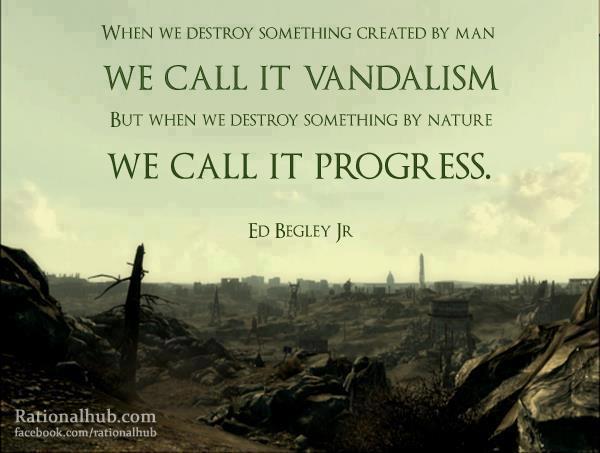
View a presentation on ‘A Radical Review of Reality’ here
‘A radical inner transformation and rise to a new level of consciousness might be the only real hope we have in the current global crisis brought on by the dominance of the Western mechanistic paradigm.’ Stanislav Grof
To explore ‘the new paradigm’ further, join the Face Book community here
Behind the Mountain – An enchanting story for young and old combining wisdom and myth
After reading untold heavy-weight non-fiction books while researching for my next book ‘The Illusion of Separation – Exploring the Cause of our Current Crises’ (being published October this year), it was a refreshing delight to read the e-book Behind the Mountain.

Behind the Mountain is a fiction book for the young and old alike. It is a thrilling adventure story which unfolds with a refreshingly light narrative and yet with a depth of intrigue and enchanting wisdom. It is the second book in the e-book series of The Seven Songs by C J Moore. The first book is King Abba, where a Utopian high-tech order collapses, fatally flawed, unable to sustain its own technically brilliant but pointless wizardry. At the end of this volume, the King disappears, leaving all in chaos, some wise souls assuring that this is precisely what he wants. Now, it seems, as we embark on Behind the Mountain, we must all pass through the edge of chaos and ride the wave of transition. Different groups will make their own paths through this chaotic change and seek out new forms of stability.
As a story, Behind the Mountain has an air of the ancient about it, the fairy-tale of times yonder, yet also an air of what may lie ahead of us after cataclysmic events unfold and current structures breakdown. Above all, it is a story of personal adventure, courage, leadership and self-realisation in a volatile world.
The two main characters are Fion the Prince….
‘What now? He couldn’t live in the past. He knew that. He had gone up the mountain to find clarity, to see the whole picture from above, to catch a glimpse of the palace where his life had begun and where he must eventually return. Now he was ashamed to realise he had been so foolish, a folly from which the mysterious voice had saved him, but it had not stayed to tell him what next. If only he knew how to find Adhemar, the one person who seemed to see past, present and future all together. What was it that Adhemar had told him? That his greatest enemy was himself. How true that had turned out to be.’
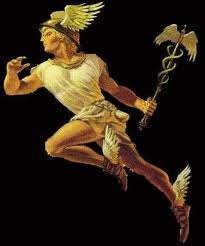
And his sister Dream the Princess….
‘Was I asleep?’ she asked.
His eyes were full of warmth and care as he replied, ‘You’ve been asleep for hours. You must be so tired with everything that’s been happening, so many new things, new people. I’m sorry if it’s all been too much.’
She turned on her back and smiled up at him.
‘It’s been wonderful,’ she explained. ‘Everyone has been so kind.’
‘They love you, for what you have done.’
She shook her head a little as she tried to take it all in. ‘I just followed my heart,’ she laughed quietly. ‘That wasn’t hard, was it? And they say I’ve done something amazing. I think that’s quite funny.’
The story both lifts the reader up and away into another world – with a concoction of enchantment, adventure, fear and love – while pulling the reader inward into deeper reflection provoked by the trials and tribulations of personal transformation in the midst of cultural upheaval. For instance, how darkness, fear and confusion can feed yet more fear; how the seemingly opposing tensions of faith and reason, masculine and feminine, rationality and intuition yield a deeper realisation of reality; and how different ways of attending to life affect how we perceive and relate with ourselves, each other and Nature. This is an important book for the times we live in and has been written in a style that makes it readable for young and old, and when my children are a little older I look forward to reading it to them.
For £3, Behind the Mountain can be purchased here as a kindle version on Amazon. You can find another review of Behind the Mountain here and a brief overview of King Abba and Behind the Mountain by the story teller himself, Christopher Moore, here.
Nature is not simply ‘out there’ but also deep within us, flowing through our hearts and minds. For thousands upon thousands of years we humans have lived with a deep empathic interrelation embodied within Nature. Only in a relatively recent part of our Western history did we weaken our profound relation of our inner psyche and outer Nature.
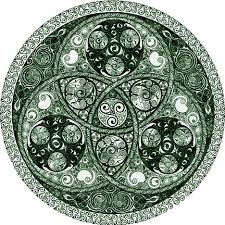
What is Nature? One hesitates to define anything so all-pervasive and undefinable with abstract words. Perhaps one could venture by saying that Nature is an omnipresence flowing through all of creation – an ‘all-pervasiveness’, perhaps much like what Eastern mysticism has called Akasha or Tao. As we attune with Nature, we attune with our own unconscious in allowing it to become conscious. It is what Peter Senge and Otto Scharmer, at MIT and The Presencing Institute, call ’presencing’ and what many great phenomenologists like Heidegger and Merleau-Ponty have explored in detail in their work. Within this presencing of the present moment, we allow a rarefying of our ego-boundaries along with an empathic resonance to occur within this all-pervasive presence of Nature. In other words, we harmonise with Nature if only for a brief moment. This presencing is the same as what happens when athletes, artists or musicians – and us normal folk – sense being ‘in the zone’. Here we open up our inner true-nature with the all-pervasive Nature in our midst.
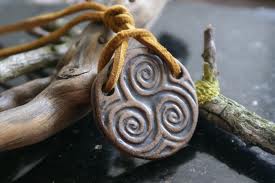
So often in today’s busy, rationalised, atomised, abstract world we obscure this Nature, cloaking our own true nature in restricting the semi-permeability of our ego-self with deeper Nature, this can lead to fragmentation which create illusions of separation and scarcity which may then exacerbate into delusional projections.
From a place of presencing, we open up the innate capability we each have to heal ourselves, and also engage in right relation in all with do. This is true sustainability inspired by and in harmony with Nature. It is a wise goal for any new paradigm beyond our ego-anxiety fuelled state of cultural affairs we find ourselves in today. Emancipating ourselves from our own self-imposed (and, admittedly, culturally conditioned) imprisonment of mental delusion and distraction from the present moment is primary for any sustainable future, otherwise we run the very real risk of contaminating any well-founded sustainability initiatives with the same thinking that caused the unsustainability in the first place – namely excessive egotism, rationalism, anthropocentrism and materialism, logic that spawns from being out of tune with Nature. Our discriminating minds are so often too frantic in their analysis of the fragments to see beyond the illusion of their own making. In becoming conscious of the unconscious presence we re-member the wave is part of the ocean; that life beyond the entanglement of rationalistic projections brings us into the heart of our becoming.
Ecology of exclusion -> Ecology of inclusion
Ecology of separation -> Ecology of emancipation
We do not need to impose another ideology or set of beliefs onto reality. Instead, we need to hold space for opening and heightening our attention individually and collectively – this way we can allow the truth to co-creatively emerge free from dogma. Nature within and all around us is the participating aliveness of this co-creativity – we as expressions of Nature attune as unique musical vibrations adding to the orchestral tapestry of Gaia. There is no better time than the situation we find ourselves in for us to open our hearts and minds to Nature – this is the real beginning of any truly sustainable new paradigm: inspired by and in harmony with Nature.
To explore ‘the new paradigm’ further, join the Face Book community here
The power of love for sustainable business and beyond
It is now self-evident for many influential people across a number of disciplines – business, politics, education, science, philosophy – that our current prevailing logic, with its dog-eat-dog competition, separation and fear, is exacerbating the very problems it is seeking to solve. The time is now ripe to transform, not just our ways of operating but our ways of thinking and being, of attending to life as Homo sapiens (wise beings).
In a previous article I took part in an interview about the role of love in business. Here I expand on that theme by digging deeper into the power of love and the logic of the heart in exploring Rudolf Steiner’s Vision of Love and how this may relate to today’s transformational times.
Steiner is one of the great modern philosophers who set about trying to synthesise science and spirituality, developing the spiritual science of Anthroposophy. His concepts have been applied to great effect in education, agriculture and medicine, as well as in the practicalities of living with love. For Steiner, the discipline of living with love is attained through the direct perception of the heart, where our soul is found, the aperture to our authentic being within Spirit.
Bernard Nesfield-Cookson is the author of the book Rudolf Steiner’s Vision of Love which lucidly explores Steiner’s spiritual science. For instance, Nesfield-Cookson notes that Steiner warns against intellectual speculations which can divert us from the path of living with love. Steiner points to artistic introspective quiet contemplation as the best preliminary condition for this path. When in this state of contemplative presence, we may feel love emanating from the soul found within the heart. It is this Love that then permeates our entirety, enlightening our ego for right thought and deed. And so it is through opening our heart that we allow for a transition from the logic of head-thinking to heart-thinking. This shift is fundamental to ensuring our thinking is unpolluted by yesterday’s logic, as it is only through the logic of the heart that our thoughts and deeds flow rightly. From here, each interrelation we embrace throughout the day is powered by Love allowing for us to love everything we do: our ‘being’ and ‘doing’ are infused with love.
This is a great challenge, especially within today’s busy humdrum of mass distraction, anxiety and egoistic posturing. It requires great courage not to succumb to the corrupting allures of the prevalent paradigm.
This power of love nourishes feelings of veneration, reverence, wonder and acceptance enabling us to empathically resonate with our human and non-human kinship. This is the foundation of ‘true sustainability’. It is also ‘radical sustainability’ because to goes to the root of the problem by addressing our carcinogenic way of life. From this foundation an attitude of criticism and condemnation transforms into one of nurturing and encouraging. Compassion can be understood as the active principle which fuels our empathic resonance through love, in-so-doing nourishing and nurturing others. Compassion is the living power of love.
This wisdom of the heart is ancient. For instance, all ancient shamanic cultures are rooted in a deep heartfelt understanding that shows humility and respect for all relations. It is a wise way of attuning with Nature’s rhythms, learning to become wise through our empathic interactions.
There are a great variety of ways to develop contemplative presence in our lives from which this power of love spawns. For example, sitting quieting, feeling the space between our heart-beats, feeling the in and out breath in our nostrils, meditating, chanting, drawing, playing music, writing poetry, practicing yoga and T’ai Chi. For me, I like immersing myself in the natural world, finding stillness within the movements of Nature, along with some gentle T’ai Chi and yoga movements. Feeling the creative energy within my bodymind helps me re-member that I am – like all aspects of Nature- energy, and the conscious co-creator of my feelings, emotions, ways of interacting from which polluting or loving interrelations flow. It is a daily struggle yet can also be a joy.
Allowing the power of love into the moments of each day is of primary importance in our transformation to a sustainable future. It is the logic of the heart that ensures any new paradigm goes beyond yesterday’s logic of dog-eat-dog competition, separation and fear. Now, more than ever, we need to re-member the profound logic of the heart.
Giles Hutchins is author of The Nature of Business (Green Books) and the upcoming book The Illusion of Separation (Floris Books) which is due out this Autumn. For a short video clip on love within business see here.
To explore ‘the new paradigm’ further, join the Face Book community here

