What’s biophilia? Are you biophilic?
How do you view the natural world around you? Is it ‘capital’ for human utilization? Is it something wild to be tamed?
Our Industrial Revolution manifested a socio-economic context born out of rapidly expanding industrial growth and imperial power. This not-to-distant past has shaped a culture that believed in the forward march of progress and civilization, in the ability of humans to harness the power of nature through science and technology. God had given humans (or at least Christians) dominion over nature – it was there to be controlled and exploited for human ends.

In this guest blog, Nadine Andrews explores a fundamental clash of values and ethical perspectives when it comes to our relationship with nature.
Biophilia values + intrinsic
On one side there are people who recognize that nature has intrinsic value, in and of itself, regardless of its usefulness or otherwise to humans. They care about individual plants and animals as much as they do ecosystems. People feel psychologically connected to and part of nature and seek to live with it. This has been called ‘biophilia’. Wild nature is to be revered; it is awe-inspiring and full of mystery. Read more…
Shifting from a ‘take-make-waste’ paradigm
Business has historically operated a ‘take-make-waste’ philosophy, but a radical transformation is now needed.
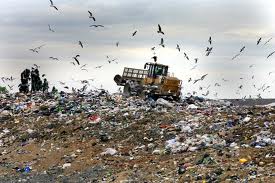
Whatever form business takes as it negotiates out of the current conundrum, it must operate within the limits of a finite world. While relatively cheap labour in the developing world may fuel growth and feed increasing rates of consumption, pressure on natural resources means manufacturing (and the economies that flow from it) need to radically transform be fit for purpose today and in the future.
The birthing of a new dawn?
Here is a guest blog-post by Pete Takacs exploring the emergence of a new way of viewing the world.
I like to revisit the YouTube depiction of the Industrial Revolution during the opening ceremony at the 2012 London Summer Olympics. It is such a spectacular artistic expression of our sustainability dilemmas today, not simply because it was masterminded by an ingenious director Danny Boyle, but because it captured the 200-year-long history of the British industrial growth in just under 5 minutes. This skilful video made it possible for many a spectator to appreciate, just in a matter of a few minutes, the important role that industrial change in Britain played in the birth of sustainability around the world today!

Seledom are modern sustainability dilemmas associated with the distant past. Yet, I was impressed by how Danny Boyle managed to make a skilful invitation to this though. His memorable depiction of the Industrial Revolution during the 2012 Olympics opening ceremony begins with a snapshot of the best of UK’s natural environment – its pastoral fields sprinkled with red poppy flowers and enlivened by sheep and fathered by shepherds. Suddenly, a radical transformation overpowers this bucolic landscape: the Earth shatters and opens up to make way for magnificent grey chimneys, which sever the Earth’s crust and soar into the sky. The pastoral fields fade away and industry is created! The stupendous size of the man-made structures dwarfs all natural surroundings, including the hills and the mountains as well as the structures’ creators – people.
Success! What’s success?
What is success?
Is it competing and winning?
Is it doing better in some way than those around you?
Is it making a lot of money?
Is it being recognised by your peer group or wider society for what you doing with your life?
The current prevailing paradigm tends towards quantifying success through money – a fat bank account equals success in the eyes of many. Does it matter if in earning that money one has polluted oneself, society and the wider web of life? Is a City trader taking home millions in bonuses more successful than a nature reserve warden or midwife taking home a below average income?

So often these days we ask people ‘what do you do?’ as if that is the best way to effectively measure the integrity of the person. And often we are impressed by people who are financially wealthy due to what they do, regardless of what true value it serves life. For instance, a senior executive working at Goldman Sachs maybe viewed by society as more ‘successful’ than a primary school teacher.
In the name of ‘success’ (or a perverted societal perception of success) many of us find ourselves bringing great stress upon ourselves and those around us, often leaving a trail of damage in our wake. Due to prevalent cultural norms and their power for steering human behaviour, life can become little more than tireless striving towards ever escalating stages of perceived success.
Prevalent cultural notions of what success is tend to be concerned with the outcome of what one does. The idealised destination – whether it is a fat bank account or recognised status among others or a ‘get away’ holiday home in the Med – becomes the goal rather than the act of ‘doing’ itself. Often, alas, the destinations are goals based on freeing oneself from the ‘doing’ of the work needed to attain the destination. The ‘doing’ of the action is seen as a means to an end. The destination and not the journey is what is seen as important.
We run up hills so we can enjoy the views, yet we seem so singularly focused on the successful outcome (which may take much struggle to realise) that the act of doing is perceived as laborious, un-joyful and often a stressful means to an end. There are of-course some who work for the love of it, yet many work for attaining distant horizons of freedom ‘if only I could have some more money, then I could be happier’ many of us say in the midst of the laborious, slaving away between weekend to pay the bills and budget for the next holiday. Let’s buy a lottery ticket; better still let’s buy one each week and wish our moments away until we win! Oh, how life will be better when we getting to the destination.

On your death bed, how will you judge the success of your life?
In our pursuit of success (or happiness and freedom) we often focus on the doing, the outputs, the rationalisation of what makes success in the societal perception of it. While realising ones potential is important to attaining personal development along with happiness and success, often we a) get so enthralled with attaining perceived success that we know not what success means for our unique self; b) get so entranced with the doing of the tasks ahead of us on the ladder of success we isolate ourselves from the present moment of actually enjoying the doing by being in love with what we are doing at any given moment. In turn we dis-connect ourselves from what really matters and so incur unhappiness in the pursuit of happiness. Such actions (which focus on the ends and not also the means) can lead us to do things in ways that are stressful and toxic to ourselves, our neighbours and life in general. Put simply, our life mission could be to ‘help heal the world’ but if we do not undertake each action and interaction with love then we often add more to the problem than to the solution. No matter how noble the destination, the journey is vital.
It’s not WHAT you do; it’s the WAY that you do it.
The road to hell is paved with many good intentions.
That is not to say that we ought not push ourselves and strive for personal betterment, and in so doing challenge our own comfort zone and so incur personal stress through fear of the unknown. Such personal betterment is vital if we are to realise our own unique creative potential in this life. It is not shying away from ‘doing’ per se, more it is exploring how we can encourage our doing to become infused with our being – our daily actions also being successful in their own right as well as moving us forward towards personal betterment. Take each small step with love.
‘Don’t let a mad world tell you that success is anything other than a successful present moment…sense of quality in what you do, even the most simple actions’ Eckhart Tolle
 When the doing is aligned with a sense of being – that is success. This is when the present moment flows with universal abundance. This is when you realise your full potential within that moment (whether it be making a cup of tea, swinging a golf club, teaching a child, selling a car or trading financial derivatives). Often we are our own worst enemy in realising success, as our rational, analytical mind (over-excited by cultural norms that breed status anxiety) interrupts our state of ‘presence’ with a stream of chattering thoughts often in the form of energy draining worries.
Yet, the doing (paradoxically) can bring about the state of being present if we allow ourselves to consciously connect with what we are doing; then the chattering rational mind quietens as the present moment engulfs us and we enter ‘the zone’ which is our element : the moment where success is realised without the need for toxic activity.
Being while doing.
Being in your heart while doing with your head and hands.
This comes naturally to most artists, musicians and sports players as to realise their potential they have to consciously connect with what they are doing. Anything else is quite mundane in comparison.

There is a beautifully simple quote which reveals itself to the balanced mind: ‘the most amazing place you will ever be in your life is where you are right now’
The point of the journey is not to arrive : – )
To watch a 3min video on this see here
To explore ‘the new paradigm’ further, join the Face Book community here
Buy The Nature of Business for £10 (RRP £14.95) shipped globally from www.greenbooks.co.uk/natureofbusiness – quote code NBGH in the promotion box at checkout.
Adversity reveals genius, prosperity conceals it
“Adversity reveals genius, prosperity conceals it”: with this quote Giles Hutchins penetrates to the heart of the paradox he confronts in his book and shows that our apparent prosperity built on machine innovation conceals the deeper genius in nature that offers a richer future.
 A book review for The Ecologist Magazine by Chris Nichols, Director of MSc, Ashridge Business School:
Hutchins takes up this theme, plotting a course that is both provocative and practical based on many years consulting to the world’s leading organisations.
Giles Hutchins has set out with a bold agenda. His intention is nothing less than to change the language of business. He has gone about it in a new way. There is a style and a rigour to this book that will make this an important contribution.
Giles Hutchins has written with a style, structure and format that will make it accessible to business readers. He has written a manifesto, a business book and a work book. It is divided into modules. Each module ends with helpful and provocative questions to enable the reader to explore the themes for themselves and to challenge the way they work in their business situation.
There are eight modules. Module One sets out the case for change, tracking the fragmentation at the heart of the existing business paradigm and its consequences. Module Two shows the many ways in which nature acts as teacher to business. The next two modules explore how firms can draw on the lessons of nature, showing how resilience will grow through harnessing lessons from nature. The remaining chapters focus on putting the ideas into action and provide many inspiring stories and practical ideas on how to lead and organise the transformations necessary for business to make the necessary moves.
There is much to admire in this book. I found myself deeply cheered by Giles Hutchins’ section “Inspired by Fungi”. It is almost unique to find a book that seriously advises business leaders to learn from mushrooms – and I am delighted that this one does. Hutchins explains the role of fungi in the forest, creating a mutualism that promotes the wellbeing of the entire ecosystem. Organisational life is like the fungal forest web. So much of the change Hutchins calls for will come about in the informal processes of business life, brought about as changed minds result in new conversations, moving information and nutrients around the corporate forest.
 In seeking to provide copious practical help for leaders to bring about change, Hutchins’ later modules are more a compendium of tips, techniques and options rather than a coherent framework. Above all this is a book written at the level of the individual firm, thereby leaving aside the necessary work on systemic change that is needed between firms and the economic webs in which they and their consumers exist (and of course research into how to make change at this level does exist, for example in Forum for the Future’s Systemic Innovation work).
Even acknowledging some of the limitations this is a very useful, readable and important book. By aiming it squarely at the business reader Giles Hutchins is beginning to take the everyday talk of nature into the everyday talk of business. The very existence of this book is good news: it marks the arrival of the time when it is finally legitimate to talk openly about the business lessons of nature. This is news of a turning indeed.
Giles Hutchins’ book will find its place on my recommended reading list. It will sit alongside Brian Goodwin’s book Nature’s Due, with which it shares the agenda of healing the fragmentation that leads to so much damage and destruction. One day I hope that Brian Goodwin’s writing, and indeed many more writings on the wisdom, will find their own legitimate place as sources of counsel in the boardroom. But that day is not yet. Giles Hutchins’ book moves us one more step closer to that day and it is wonderful that he has written it.
‘The Nature of Business’ is not just a very entertaining read, but also a redoubtable sparring partner. A must read for everyone involved in the business of the future…. and aren’t we all? Mick Bremans, Chairman, Ecover
‘Giles takes us through this remarkable world of business seen through the eyes of nature. Finally a guide to take this to the next level!’ Gunter Pauli, Founder of ZERI & The Blue Economy
‘This is a brave book and a must read for those seeking to make positive change happen in business and beyond.’ Hunter Lovins, President of Natural Capitalism Solutions & Co-Author of Natural Capitalism
‘There is an energy, a pulse, a reverberating urgency that calls us to reflect and then take action in this book…. This book scores a line in the sand and invites us to step across, raise our voices, become visible, and engage.’ Tim Macartney, Director of Embercombe & author of Finding Earth, Finding Soul
Simply the best new book on business and management in many years! Hazel Henderson, President of Ethical Markets Media and author of Building A Win-Win World
Here is a 2 minute video clip about the book:
http://www.youtube.com/watch?v=n2LN3rrkiW0&feature=youtu.be
The original book review article can be found here:
http://www.theecologist.org/reviews/books/1624548/the_nature_of_business.html
Buy The Nature of Business for £10 (RRP £14.95) shipped globally from www.greenbooks.co.uk/natureofbusiness – quote code NBGH in the promotion box at checkout.
New year quotes and inspiration for the new direction ahead
Making the business case for sustainability is like slowing down a bus going in the wrong direction. It’s a sensible first step but eventually the bus needs a new direction – the right one.
Each of us inherently knows the right direction ahead, yet we often forget the truth amidst a noisy, confused and maddening world. Here is a short 3 minute video clip about the new direction and here are some short quotes to helps us on our way for the year ahead…..
Life on Earth did not come about through competitive struggle but through a dynamic interplay of collaborative relationships.
The world provides enough for everyone’s need, not for everyone’s greed.
Only the man who knows the meaning of enough can be truly rich.
The journey of life is the destination. Enjoy the moment. Love each interaction.
Social Entrepreneurship and Generation Y – a Match made in Heaven?
A lot has been said and written lately about the rise of social entrepreneurship. Not only does the world suffer from an increasing number of challenges that need solutions, it also seems that more and more people feel drawn to a career as a social entrepreneur.
While there are continuing arguments over a precise definition of social entrepreneurs, it is probably fair to say that they recognize social problems and use entrepreneurial principles to organize, create and manage a social venture to achieve a desired change linked to social, cultural, and/or environmental goals. While a business entrepreneur typically measures performance in profit, a social entrepreneur also measures positive returns to society and the wider environment. Social entrepreneurship is commonly associated with the voluntary and not-for-profit sectors but it does not necessarily exclude for-profit business objectives. Common initiatives include community interest activities, social engagement and education, micro credits, cooperative farming, business development, supporting arts or vocational training. This blog has been written with GAIA Insights an organisation specialising in social entrepreneurs www.gaia-insights.com Read more…
The future of business – beyond the existing paradigm
Since the Industrial Revolution, we have achieved great feats of economic, social and technological advancement for which, as a species, we can be proud. Yet the challenges (and opportunities) now facing our businesses, economies and societies are all too apparent. These include:
- volatile input costs
- volatile prices
- volatile consumer buying patterns
- increasing complexity and risk in supply chains
- changing demographics, world population shifts
- shift to a multipolar world
- increasing socio-economic/political tensions
- increasing scarcity of finite natural resources
- increasing propensity of food and water shortages
- increasing frequency of natural disasters and epidemics
- climate change
- peak oil, peak elements, and so on
- ocean acidification and dead zones
- rapid decline in biodiversity
- increasing inequality
- rising world poverty
- increasing mental health issues and stress-related illnesses
- exponential growth in population and consumption rates.
 Neo-classical economic models and traditional business management theories are being challenged amid this intense period of discontinuous change, with multi-disciplinary adaptive economic/business approaches designed for volatile business landscapes gaining interest – such as natural capitalism, evolutionary economics and ecological economics; likewise for organizational development approaches – such as the learning organization (Senge, 1993), the emergent organization (Kiuchi, 2002) and the living organization (Wolfe, 2012); likewise for business leadership approaches – such as the ecology of leadership (Hurst, 2012) and emergent leadership (Capra, 2003). Read more…
Time to transform – personally & organisationally. Are you ready?
As the ancient Chinese proverb insightfully states:
At times of great winds, some build bunkers, while others build windmills.
Recently, many notable business-thinkers have been suggesting we are on the cusp of a ‘paradigm shift’ in business. For instance, Professor Michael Porter stated when addressing a business leaders forum in October 2011:
‘the old models of corporate capitalism are dead…we are witnessing a paradigm shift’
This view was shared by a panel of experts, at the same business forum, who summed up the forum by stating ‘A clear message from this panel is that the old economic model is no longer viable’
Sally Osberg, President of the Skoll Foundation recently explained:
‘Seismic change is clearly underway, with the collapse of global financial markets threatening to make already critical challenges—climate change, water scarcity and geopolitical instability— much worse. But times of upheaval are also times of opportunity’.
John Elkington, Executive Director at Volans states ‘the time is ripe for a true paradigm shift’
 Alan Moore (author of ‘No Straight Lines’) argues that we have reached the nadir of the adaptive range of our current industrial world, and that we have entered an era when the old rules and approaches to business no longer apply.
Worldview Thinking, a strategic research firm for social innovators, recently found that:
‘Most businesses are currently unequipped to embrace innovation and disruptive thinking at the rapid pace needed to succeed in the emerging economy’. (Sustainable Brands, 2011)
Paul Polman, Global CEO of Unilever, adds to this shift afoot in business when he said:
‘Too many people think in terms of trade-offs that if you do something which is good for you, then it must be bad for someone else. That’s not right and it comes from old thinking about the way the world works and what business is for: Milton Friedman’s optimisation of short-term profits. We have to snap out of that old thinking and move to a new model.’ (Management Today, 2011)
It is increasingly becoming apparent to many in business that our prevalent business practices and mind-sets are being disrupted and systemically challenged; arguably, they are ripe for a paradigm shift.
Fritjof Capra, a world-renowned ‘systems thinker’ defines a paradigm as:
‘A constellation of concepts, values, perceptions and practices shared by a community, which forms a particular vision of reality.’
 Hence, it has been suggested that the evolutionary journey of business (organisational and personal) is on the cusp of a paradigm shift – a revolution in response to macro-system drivers such as digitization, globalization, pressure on finite natural resources and responsible business – due to business-as-usual no longer being fit-for-purpose for the increasingly volatile, interconnected and uncertain business environment we now operate in.
Are you ready to transform – personally and organisationally?
To explore this paradigm shift and the future of business, join the Face Book community here
What on earth is a ‘change agent’ and what use is one?
Why does the co-founder and now out-going CEO of an award-winning, environmental organisation spend quality time with senior executives in banking and telecoms? Let’s take a brief look at how this experienced and pioneering change agent tackles transformational change in business and beyond. Read more…
 The Nature of Business