When we consciously connect with our inner selves and the world around us, we gain ‘presence’ and awareness takes over from thinking. An enhanced state of consciousness gradually flows into all we do. The creative power of life comes through in our actions and interactions. There is a stillness and alertness in us that brings a joy of being while doing. As a consequence, our actions and interactions in business and beyond have a ‘rightness’ resonating in them.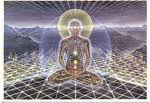
Re-connecting with ourselves and the world around us can be a struggle, especially with our hectic schedules. And yet, if we can take time out and find the space to re-connect it can greatly benefit us, as only when we consciously connect can we really undertake actions with our full potential.
In the words of Confucius,
He who is in harmony with nature hits the mark without effort and apprehends the truth without thinking.
Is that a goal worth striving for?
The mind and ego have a deep seated habit of seeking the fullness of life in the future ignoring the only true point of access to fullness – the present moment.
It reminds me of a phrase someone kindly passed on to me ‘the present will always seem insufficient, until we are sufficiently present’.
Ecological Thinking for Business Transformation
Most people in business subscribe to an out-dated worldview, a perception of reality inadequate for dealing with the volatile and globally interconnected business world. What is required for the health and vitality of our businesses and economies is a radical shift in our perceptions, our thinking and our business behaviour. We are witnessing a change in business paradigm from one suited for the industrial era to one suited for the interconnected era.
At the core of this paradigm shift is a perception shift from ‘seperatedness’ to ‘interconnectedness’

Just as in science we have discovered that no longer can the universe be viewed as a machine composed of elementary building blocks, so too organisations need not be viewed as atomised, silo’ed and tightly managed machines more they need to be viewed as vibrant, living organisms interacting within emergent, self-regulating and self-organising business ecosystems.

Likewise evolution is no longer seen as a competitive struggle for existence, but rather as a ‘cooperative dance in which creativity and the constant emergence of novelty are the driving forces’ (in the words of Fritjof Capra, founding director of the Centre for Ecoliteracy).
Ditto for business evolution and so business people need to shift perceptions from seeing isolated, competing aspects of the business environment to seeing the interconnected and emergent nature of the business reality ahead.
In fact, the more we understand how life works, the more we recognise how the organising principles of life can be applied to business. It is as if the challenging business environment we find ourselves in (this ‘perfect storm’) gives the perfect environment for us to shift our perceptions to see the business world for what it really is – a part of life.

Knowledge of the core principles of how life works becomes a critical skill for business leaders and change agents wishing to successfully transform their organisations in these volatile times. It is what BCI (Biomimicry for Creative Innovation) calls ‘ecological thinking for radical transformation’.
Here are some ecological principles of nature:
Networks: All living systems are interconnected and share resources across their boundaries.
Cycles: As a whole, an ecosystem generates no net waste, as one species’ waste becomes another species’ food with matter and energy transforming and cycling continually through the web of life.
Partnership: Life did not take over the planet by combat but by co-operation, partnership and networking.
Diversity: Ecosystems achieve robustness and resilience through the richness and complexity of their ecological webs. Increased diversity equals increased resilience.

Understanding the patterns and principles of nature can provide vital insight into how to best future-proof business for the unpredictability ahead.
To explore ‘business inspired by nature’ further, join the Face Book community here
Time to transform.
What lessons can organisational culture take from nature?
Business is on the cusp of a paradigm shift, moving from structures and hierarchies to networks and webs. Insights from nature can act as inspiration for this transition.

Thinking in terms of systems is difficult, but it is vital to operating successfully in the increasingly interconnected and uncertain business world. Observations from nature, which is made up complex systems, can yield important lessons.
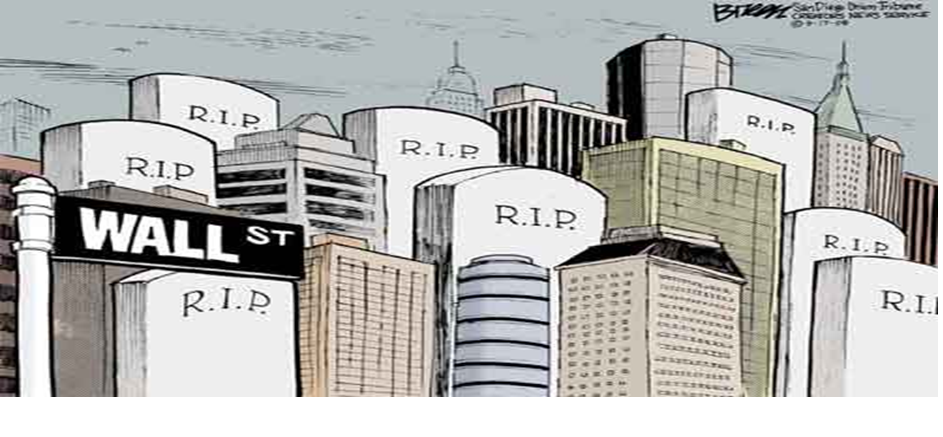
The concept of emergence is fundamental to how nature operates. Physicist and systems theorist, Fritjof Capra, noted that: “Throughout the living world, the creativity of life expresses itself through the process of emergence.”
The future of organizing?
What are the barriers to transforming beyond our current business paradigm? Do our organizations have to be apart from nature or can they be a part of nature? Can nature inspire how we re- organize?
Questions, questions…Patrick Andrews in a guest blog post for The Nature of Business provides some ideas and insights….I hope you enjoy them and find this post useful – now over to Patrick:
Inspired by some of Giles’ writings, I have been thinking about what we can learn from nature about the way we organize ourselves.
My first thought took me off at a tangent. I realized that the very question implies that we are somehow separate from nature. This is what our thinking has told us. Yet we really ought to know better by now. After all Charles Darwin showed long ago that we have emerged from the same evolutionary processes as spiders, orchids and the Alps. This implies that our creations are also products of the same evolutionary processes. So an Aston Martin, a marshmallow and a Tesco Express are all part of nature.
A New Business Paradigm
The Nature of Business explores how the increasingly unpredictable, interconnected and uncertain nature of business calls for a more emergent, dynamic approach to organisations and leadership.

Giles Hutchins, the author, explains through business insights, quotes and examples that a new business paradigm is emerging which challenge prevailing perceptions of business.
The prevailing business paradigm of maximization, monoculture and self-interest, he states, is weakening its own resilience and is no longer fit for purpose for the business world we now operate in. Our prevalent business concepts, values, perceptions and practices are being disrupted and systemically challenged; Giles Hutchins argues that they are ripe for a paradigm shift. What is called for is a ‘redesigning for resilience’; a new business paradigm, one that is inspired by nature.
Leading with Love
In 1986 the average knowledge worker carried in their heads 75% of the knowledge they needed to do their job. By 2006 the average had dropped to 8%, today it’s around 5%, and within 10 years the average will be 1%. (ref. Carnegie-Mellon rolling study by Robert Kelley).

This is a paradigm shift. To succeed as a 1% knowledge worker requires learning different capabilities to before, not just trying harder. This is hitting leadership roles hardest, soonest. Leadership today requires much that leadership used to require; and a lot more that is part of a different paradigm.
As Peter Drucker said:
in times of turmoil, the danger lies not in the turmoil, but in facing it with yesterday’s logic.
Open innovation catalysing transformation
Just as organisations seek out new ways to operate in challenging times, the approaches to innovation themselves are transforming. Traditional processes and models of innovation are no longer good enough on their own to assist organisational adaptation amidst such volatility and uncertainty.
 Paradoxically, this perfect storm of social, economic and environmental challenges our businesses now face is creating the perfect conditions for radical transformation to take root; new ways of innovating and operating are finding fertile environments, beginning to seed and flourish.
Open innovation and co-creation approaches are still in their infancy, yet emerging in all walks of business and social life to catalyse transformation. So what do we mean by ‘open innovation’?
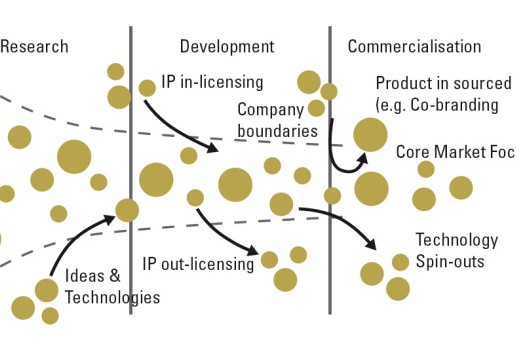
Put simply, open innovation is ‘internal/external co-creation’: where ‘internal’ stakeholders within an organisation (employees, designated intrapreneurs, innovation teams, product designers, change agents, etc.) engage with ‘external’ stakeholders connected to the organisation (partners, suppliers, customers, etc.). The ‘co-creation’ part of this engagement is important for it to be true ‘open innovation’. Co-creation is where people collaborate to create; for instance, customers share ideas and concepts for new products or services with each other and with the organisation leading to a new creation (new product design, upgraded service, new business process, change in cultural behaviour, etc.). Here are some examples to shed some light on this pioneering space:
GreenXchange – A platform bringing together companies and people to share ideas for sustainable transformational change
InnoCentive – An open innovation market place
Kraft First Taste – where consumers share views on product tastes
Threadless – a community based tee-shirt company where the community engages in design ideas
The way in which humans engage with, and respond to, the environment has undergone some significant developments in the last century. Major transformations in rapid industrialisation and urbanisation have continued to reinforce a sense of separation between society and nature, human and non-human worlds. It is arguably this sense of separation that has enabled society to capitalise on the fruits of science, industry and global economics. Conversely, it is also what underwrites the parallel dysfunction and destruction of our social and ecological systems.

The world’s ecological, social and economic crises are as much a crisis of spirit as a crisis of resources. Part of the crisis of spirit is because modern society and industry tends to perceive the Earth as a set of resources, and then values it as such. What scope is there for this paradigm to change in order to perceive the Earth as an animate, living system in which humans play a constructive, not destructive, part?
In 2010 The Royal Society of Arts coined its new strapline: a 21st century enlightenment. Matthew Taylor, the society’s director, proposes that the core ideals, values and norms that the initial Enlightenment enabled may no longer be adequate or fit for purpose for the challenges society faces. In order to live differently, he argues, we must think differently, and this relates to the way that we see ourselves in the world. Read more…
Waste = Food
A key aspect of a Business Inspired By Nature is transforming our view of waste.
Professor Mervyn King, Chairman of the Global Reporting Initiative, could not be more accurate when he said: “Since the days of the industrial revolution, companies have conducted business on two false assumptions, namely that the earth has infinite resources and has an infinite capacity to absorb waste. In fact, the earth has finite resources and the landfills from this ‘Take, Make, Waste’ philosophy, both on land and in the oceans, have resulted in the toxification of the land and waters of the earth. The planet is in crisis, as we have reached ecological overshoot, which means that we have used and continue to use the natural resources of planet earth faster than nature can regenerate them.”
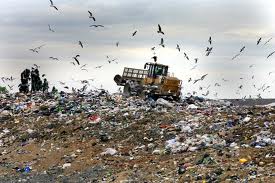
Guess what % of the natural resources used for making durable goods end up as waste in our efficient, high-performing, Western industrialised economies?
Over 90% of all inputs are wasted by the point of sale i.e. even before the product has been used! After six months of use, on average the waste is around 99%. Does that not mean our economy is at best 10% efficient it terms of material through-put? I think we know this is a problem, without even being reminded of the plastic island swelling in the Pacific Ocean (now much larger than the size of France and growing by the day). If that is not a warning sign, then what is?
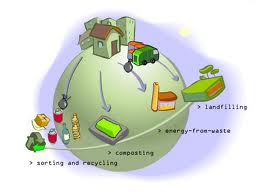
Waste is perhaps one of the most exciting opportunities facing business on the cusp of this new frontier. I ask you to think for a moment and ask yourself, how much waste do you find in nature?
Nature does not do waste. Waste of one is food for another. Ecosystems develop niches where each aspect of the material throughput is used. Nature is interconnected, collaborative, adaptive and locally attuned. Business ecosystems are currently a far cry from the effectiveness and resilience we find in nature. To have a hope in hell of hitting the targets our scientists have set for climate change, let alone the wider social or environmental sustainability challenge, we need to radically rethink our approach to manufacturing, to service provision, to business as a whole. Read more…
Nature in Numbers
Nature is inspiring in so many ways. If you are also inspired by numbers, you’ll enjoy this list of numbers inspired by nature – brought to us by Denise Deluca of BCI Biomomicry for Creative Innovation :
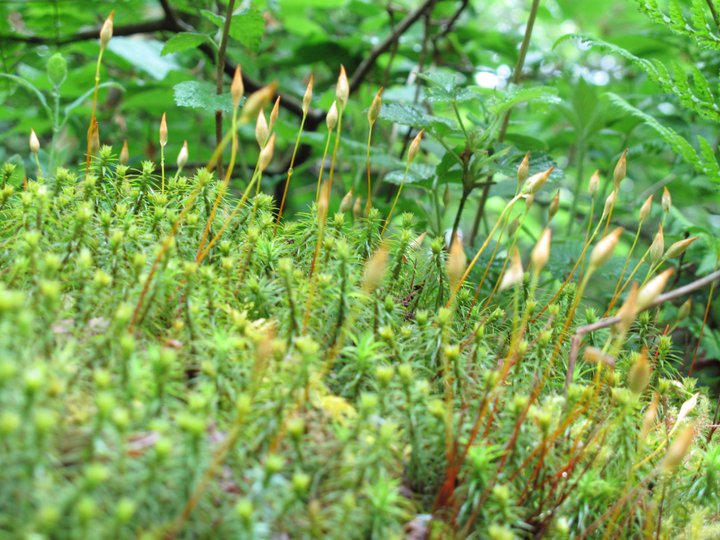
7,5000,000: The estimated number of different life forms on earth
1,200,000: The number of life forms that have been identified by science
99.9: The percentage of all species that have ever lived on earth that are now extinct
1: The number of species on earth that relies on fossil fuels
12,000: The number of species of ants that are known to exist
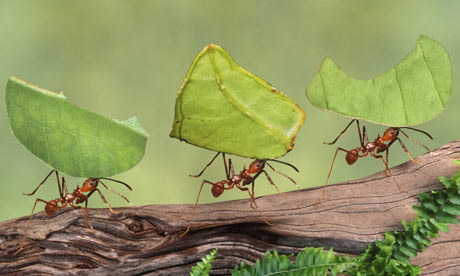 1,500,000: The number of ants on the planet for each human being
1 to 1: The mass of all ants living on earth compared to that of all humans
1,000,000,000: The number of bacteria in a teaspoon of soil
5,000: The number of different species of bacteria represented in that teaspoon of soil
4: The number of elements it takes to account for 99% of all biomass on earth (C,H, O, and N)
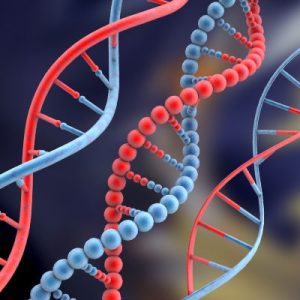 4: The number of base pairs found in DNA, which contains the instructions needed to create all of the complexity, biodiversity, and functionality of life on earth
10 sextillion: The number of atoms of air you take into your body with breath
1: The number of years it takes for you to breathe in oxygen molecules exhaled by every person alive, as well as by everyone who ever lived
1: The number of seconds since the industrial revolution started, if measured on a scale where one year represents the amount of time life has been on earth. On this scale, humans have been around for 6 minutes.
<7: The estimates number of days it would take to run out of food in the UK if petroleum supplies were cut off for some reason. We have no plans to address this potentiality.
>50: The percentage of cells in your body that are not human cells.
See here for more BCI blog posts
 The Nature of Business