The way in which humans engage with, and respond to, the environment has undergone some significant developments in the last century. Major transformations in rapid industrialisation and urbanisation have continued to reinforce a sense of separation between society and nature, human and non-human worlds. It is arguably this sense of separation that has enabled society to capitalise on the fruits of science, industry and global economics. Conversely, it is also what underwrites the parallel dysfunction and destruction of our social and ecological systems.

The world’s ecological, social and economic crises are as much a crisis of spirit as a crisis of resources. Part of the crisis of spirit is because modern society and industry tends to perceive the Earth as a set of resources, and then values it as such. What scope is there for this paradigm to change in order to perceive the Earth as an animate, living system in which humans play a constructive, not destructive, part?
In 2010 The Royal Society of Arts coined its new strapline: a 21st century enlightenment. Matthew Taylor, the society’s director, proposes that the core ideals, values and norms that the initial Enlightenment enabled may no longer be adequate or fit for purpose for the challenges society faces. In order to live differently, he argues, we must think differently, and this relates to the way that we see ourselves in the world. Read more…
Waste = Food
A key aspect of a Business Inspired By Nature is transforming our view of waste.
Professor Mervyn King, Chairman of the Global Reporting Initiative, could not be more accurate when he said: “Since the days of the industrial revolution, companies have conducted business on two false assumptions, namely that the earth has infinite resources and has an infinite capacity to absorb waste. In fact, the earth has finite resources and the landfills from this ‘Take, Make, Waste’ philosophy, both on land and in the oceans, have resulted in the toxification of the land and waters of the earth. The planet is in crisis, as we have reached ecological overshoot, which means that we have used and continue to use the natural resources of planet earth faster than nature can regenerate them.”
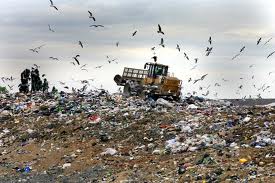
Guess what % of the natural resources used for making durable goods end up as waste in our efficient, high-performing, Western industrialised economies?
Over 90% of all inputs are wasted by the point of sale i.e. even before the product has been used! After six months of use, on average the waste is around 99%. Does that not mean our economy is at best 10% efficient it terms of material through-put? I think we know this is a problem, without even being reminded of the plastic island swelling in the Pacific Ocean (now much larger than the size of France and growing by the day). If that is not a warning sign, then what is?
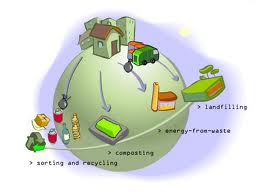
Waste is perhaps one of the most exciting opportunities facing business on the cusp of this new frontier. I ask you to think for a moment and ask yourself, how much waste do you find in nature?
Nature does not do waste. Waste of one is food for another. Ecosystems develop niches where each aspect of the material throughput is used. Nature is interconnected, collaborative, adaptive and locally attuned. Business ecosystems are currently a far cry from the effectiveness and resilience we find in nature. To have a hope in hell of hitting the targets our scientists have set for climate change, let alone the wider social or environmental sustainability challenge, we need to radically rethink our approach to manufacturing, to service provision, to business as a whole. Read more…
Nature in Numbers
Nature is inspiring in so many ways. If you are also inspired by numbers, you’ll enjoy this list of numbers inspired by nature – brought to us by Denise Deluca of BCI Biomomicry for Creative Innovation :
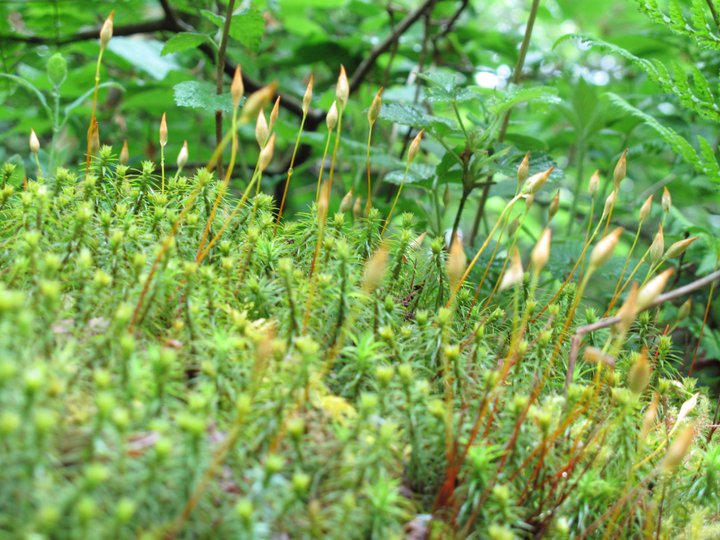
7,5000,000: The estimated number of different life forms on earth
1,200,000: The number of life forms that have been identified by science
99.9: The percentage of all species that have ever lived on earth that are now extinct
1: The number of species on earth that relies on fossil fuels
12,000: The number of species of ants that are known to exist
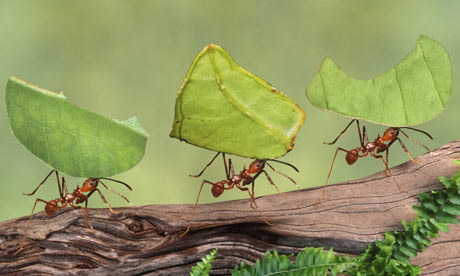 1,500,000: The number of ants on the planet for each human being
1 to 1: The mass of all ants living on earth compared to that of all humans
1,000,000,000: The number of bacteria in a teaspoon of soil
5,000: The number of different species of bacteria represented in that teaspoon of soil
4: The number of elements it takes to account for 99% of all biomass on earth (C,H, O, and N)
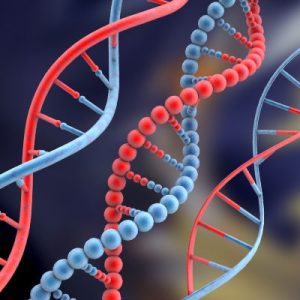 4: The number of base pairs found in DNA, which contains the instructions needed to create all of the complexity, biodiversity, and functionality of life on earth
10 sextillion: The number of atoms of air you take into your body with breath
1: The number of years it takes for you to breathe in oxygen molecules exhaled by every person alive, as well as by everyone who ever lived
1: The number of seconds since the industrial revolution started, if measured on a scale where one year represents the amount of time life has been on earth. On this scale, humans have been around for 6 minutes.
<7: The estimates number of days it would take to run out of food in the UK if petroleum supplies were cut off for some reason. We have no plans to address this potentiality.
>50: The percentage of cells in your body that are not human cells.
See here for more BCI blog posts
Emergent, Creative Business in Volatile Times
Business gurus rarely agree in unison on the way things are and going to be; yet one thing they do agree on is that we are facing increasingly volatile times economically, socially and environmentally. So, the question of the decade is: How do businesses redesign for resilience in these volatile times? The good news is we can take inspiration from nature which has been dealing with dynamic change for billions of years. Let’s take a look.
All biological systems have an emergent quality, as all living structures (including social and organisational) are emergent structures. Emergence has a self-generating quality, where individual parts of an ecosystem interact to provide an emergent order (an unfolding of events that are self-fuelled by the actions and interactions of the parts). Emergence is when an organised, complex and/or cohesive pattern or result arises – often unpredictably – from a series of individually simple component interactions. This is the nature of nature.

Conventional thinking suggests that if you want to accomplish something, particularly something complex, you need to fully articulate the desired result, analyse the situation, create a step-by-step plan, gather needed resources, and then execute the plan to completion. If all works well, you will end up with the desired or predicted result. While operating in volatile, dynamically changing environments, there is also a need for innovative and radical redesign, to drive towards as-yet-unimagined results, to accomplish things that have never been done before. How do you accomplish results you cannot even describe? How do you tick boxes that don’t yet exist? Like nurturing seedlings in fertile soil, if you put the right resources together under the right conditions, emergence just happens. It is what happens naturally when all players understand their context, and the speed, scale and scope of what is needed, being empowered to execute the collective vision through individual interactions and emergent behaviour.
A business metamorphosis
Business is learning to cross the threshold of transformation.

Crossing a threshold requires letting go of old ways of perceiving, performing, thinking, relating and behaving, while letting come new ways of operating. The metamorphosis is essentially about letting go to let come.
Leadership in these transformational times becomes about encouraging yourself and others to cross that threshold from old to new at a personal and organisational level. We each become our own leaders while helping co-create the conditions for ourselves and others to transform. Midwifery and alchemy become important aspects of the leadership toolkit, as do emergence and love.
The social and emotional dimension of the organisation can nourish or inhibit the transformation; it is the soul and culture of the organisation (and individual) that allows the transformation to take place successfully. The culture of the organisation is co-created by the whole and the parts – the organisation, its mission, its value-set, its collective behaviour and the relationships it forms with its business ecosystem. Likewise, it is the individual’s personal objectives, contributions, behaviours and relationships as part of the organisation that co-create the culture.
In helping ourselves and those around us transform by sharing stories and lessons learnt through listening and sharing, we transform the organisation through co-creation. The organisation may have a conscious understanding of the transformation ahead (for example, Unilever aiming to decouple environmental degradation from economic growth) yet it is the individuals (the leaders and team workers) that realise the transformation through emergence. The top-down dictate of the organisation’s mission intertwines with the bottom-up emergence of locally attuned teams adapting to the transformational path amidst an ever-changing business environment. This is the metamorphosis of the organisation: bottom-up emergence navigated by a cultural consciousness.

Complex, self-organising, emergent firms of the future recognise that change emerges in unpredictable ways, and that overarching bureaucratic mechanisms no longer assist emergent organisational evolution. The role of leadership is to actively participate in enabling and facilitating local change, by encouraging effective communications through clarity of understanding of how to behave, act and interact. Each and every one of us plays our part in leadership of the future by helping others to co-create towards positive outcomes. Each day challenges us to ‘walk the talk’; each day offers us opportunities to learn, grow and evolve.
Organisations that ‘get it’ are ones where sustainability is intrinsic to business behaviour
As our understanding of our interrelated nature becomes more apparent to us, we recognise that our values as individuals, organisations, communities and a Species are fundamentally what drive our ability to behave more sustainably and so embrace the transformational journey.

Organisations that ‘get it’ are the ones which appreciate that business is less about unethical short cuts in the name of profit, and more about value-creation through good business sense.
Organisations and individuals (leaders and employees) that begin to walk-the-talk of sustainability by believing in the holistic values and mission of the organisation shall be those organisations that embrace this next stage of sustainability maturity. It is a step beyond seeing sustainability as a business opportunity which can create value to realising it is the only appropriate way to do good business, and so becoming intrinsic to business behaviour.
This is about encouraging business activity which creates conditions conducive to life and no longer tolerating activity which is knowingly toxic to life. Unified visions, strong culture, corporate transparency and stakeholder dialogues ensure values-based sustainable business becomes everyday business.
This requires a transformation in business mentality, in business models and organisational culture.
As Norman Wolfe (author of The Living Organisation) rightly says
to function at the speed of today’s business environment, the corporate body must operate in a semi-autonomous fashion, much like the human body…the organisations that know their capabilities and their place within the total ecosystem will, like all living beings, outperform those that don’t
Our business paradigm is constantly changing and evolving as the times we live in change: mechanistic to humanistic to holistic – emergence from within the self, the organisation, the business ecosystem as part of the redesigning for resilience.
Hierarchies to Networks
The network has been recognised as the basic pattern of organisation in all living systems.

Ecosystems in nature are essentially networks of organisms. As Fritjof Capra points out, organisms themselves are networks of cells, and cells networks of molecules. An ecosystem is a flexible, responsive, ever-fluctuating network. Its flexibility is a consequence of multiple dynamic sense-and-respond feedback loops that keep the system in a state of dynamic balance. No single variable is maximised; all variables fluctuate in concert around a collective optimum.
Ecosystems in human nature are essentially networks of communication, social networks of relationships and business ecosystems of partnerships.
People are empowered by being connected to the network, where the success of the whole community depends on the success of each member and vice versa. Empowerment of individuals empowers the network; likewise empowerment of the community empowers the individuals.
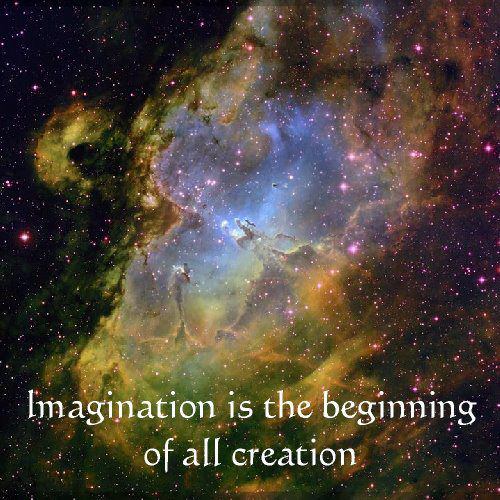
So often in today’s business and social paradigm, we perceive the world as parts, as mechanical, as inputs and outputs, linear chains and hierarchies; whereas life is actually about networks and interconnecting relationships. Manuel Lima talks of a mental shift to network thinking where hierarchical thinking is no longer adequate for the inter-connected complexity of today’s world. Alan Moore points to adapting in a non-linear world, where ‘companies become clubs or user groups of co-evolved customers’. In his book, No Straight Lines, Alan Moore explores the ‘law of the ecosystem’ where mutuality is what encourages a healthy, resilient ecosystem. He points to the Japanese mobile industry and its iMode ecosystem, Apple’s iTunes/iOS and Google’s Android platform as ecosystems that thrive based on principles of mutuality within content and service provision. He also explores how playfulness/experimentation and participatory/sharing cultures greatly help the emergence of healthy, thriving ecosystems; re-balancing our focus on metrics and output with more focus on experimenting and learning together.
Part of the transformation afoot is a paradigm shift in our thinking and perceiving:
Linear –> network
Dictate –> empower
Bureaucracy –> community
Predictability –> emergence
Mechanistic thinking –> ecological thinking

Neuroscientist Iain McGilchrist explores left-brain dominance in our Western culture. The left brain, according to McGilchrist’s findings, focuses on parts of the problem, decontextualising and abstracting the problem in a closed system. This, of course, helps us to analyse and find a solution to that problem. But this is a solution in its isolated closed system, not in a living, emergent, volatile business environment. The right brain is what interconnects, provides living world context, views things in an open system and develops a broad understanding. It is both the knowledge of the parts (left brain) and wisdom of the whole (right brain) that we need for complete and proper problem understanding and correct solution creation. To quote Einstein, “The intuitive mind is a sacred gift and the rational mind is a faithful servant”. For McGilchrist, “we have created a society that honours the servant but has forgotten the gift”
Core to the power of networks is an understanding of the world we live in as emergent and ever-changing nested networks of systems within systems working through interconnected relationships. The relationships are just as (if not more) important than the inputs and outputs.
The rational mind struggles to cope with complexity, but the intuition can do this quite effortlessly. Re-connecting with our intuition by creating silence and space for our minds to re-balance both left and right hemispheres is fundamental to realising transformational change (in business and beyond).
Patrick Andrews points out, in a blog for the Ellen MacArthur Foundation, that the governance processes in our businesses are not designed for systems-thinking and emergence, they have been designed for the Industrial Era, hence left-brain dominance prevails where the rational reductionist mind master’s over the intuitive, relational mind. To Patrick ‘It is time, to start experimenting with the corporate structure.’ As Margaret Wheatley put it, ‘Organisations of all kinds are cluttered with control mechanisms that paralyze employees and leaders alike… We never effectively control people with these systems, but we certainly stop a lot of good work from getting done.’
Part of the challenge we face is perceiving relationships in life in looking beyond the more obvious and tangible material component parts; this was examined in depth by Gregory Bateson, amongst others. Bateson, upon exploring nature and human nature, begun to realise that nature can provide immense depth of inspiration for humanity in understanding itself as well as understanding how best to live on Earth. A quote from one of his book’s Mind and Nature by way of example:
On the whole, it was not the most crudest, the simplest, the most animalistic and primitive aspects of the human species that were reflected in the natural phenomena. It was, rather, the more complex, the aesthetic, the intricate, and the elegant aspects of people that reflected nature. It was not my greed, my purposiveness, my so-called “animal,” so-called “instincts,” and so forth that I was recognizing on the other side of that mirror, over there in “nature.” Rather, I was seeing there the roots of human symmetry, beauty and ugliness, aesthetics, the human being’s very aliveness and little bit of wisdom. His wisdom, his bodily grace, and even his habit of making beautiful objects are just as “animal” as his cruelty. After all, the very word “animal” means “endowed with mind or spirit (animus).”
As our linear, competitive, reductionist thinking (which, alas, schools and colleges still in the main teach as being the best way to approach life) shifts to more networked, emergent ways of engaging and empowering ourselves, we start to see that everyone participates and contributes to the network, and we start to see inspiration all around us in ourselves and nature. Rather than a ‘dog-eat-dog’ approach to business and life, we start to realise that the spark of life is self-integrating divergent parts networking for a shared goal, this is the power of emergent networks; as Michelle Holliday says ‘divergence within convergence’ is what ensures life thrives.
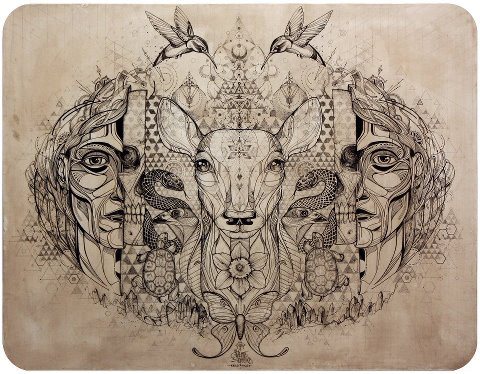
Whether it be facebook and pinterest or crowd-funding and co-innovation, new frameworks thrive by encouraging connectivity and community; hence transforming the old paradigm and out-dated ways of viewing life (power, competition and control) to new ways (empowering, collaborating and connecting).
Re-connecting with our authentic human nature and the natural world around us is one of the most joyous and yet pivotal actions we can undertake on our individual and collective journey towards sustainable living, working, doing and being.
I Think Therefore I am Not
Contrary to popular delusion, being in our mind can bring a disruptive state of consciousness. Put simply, ‘I am’ when I stop thinking and start being, hence ‘I am’ not because of my thought.

The ego-state of consciousness, if left unchecked, brings a dis-harmony to our lives and brings insanity to our collective human consciousness. The ego is our thought-based entity – the continual chatter of the mind, ever-searching to analyse and critique. There is of course nothing wrong with the ego and it serves a useful purpose in life. Yet, in our prevalent paradigm (in business and society) the ego state is encouraged, favoured and feed to the detriment and dis-harmony of our non-ego state of being (the awareness that is beyond, between and below the thought-chatter).
We realise our own conscious awareness upon first recognising this ego-state and then by becoming aware of the space between the thoughts, the silence between the chatter.
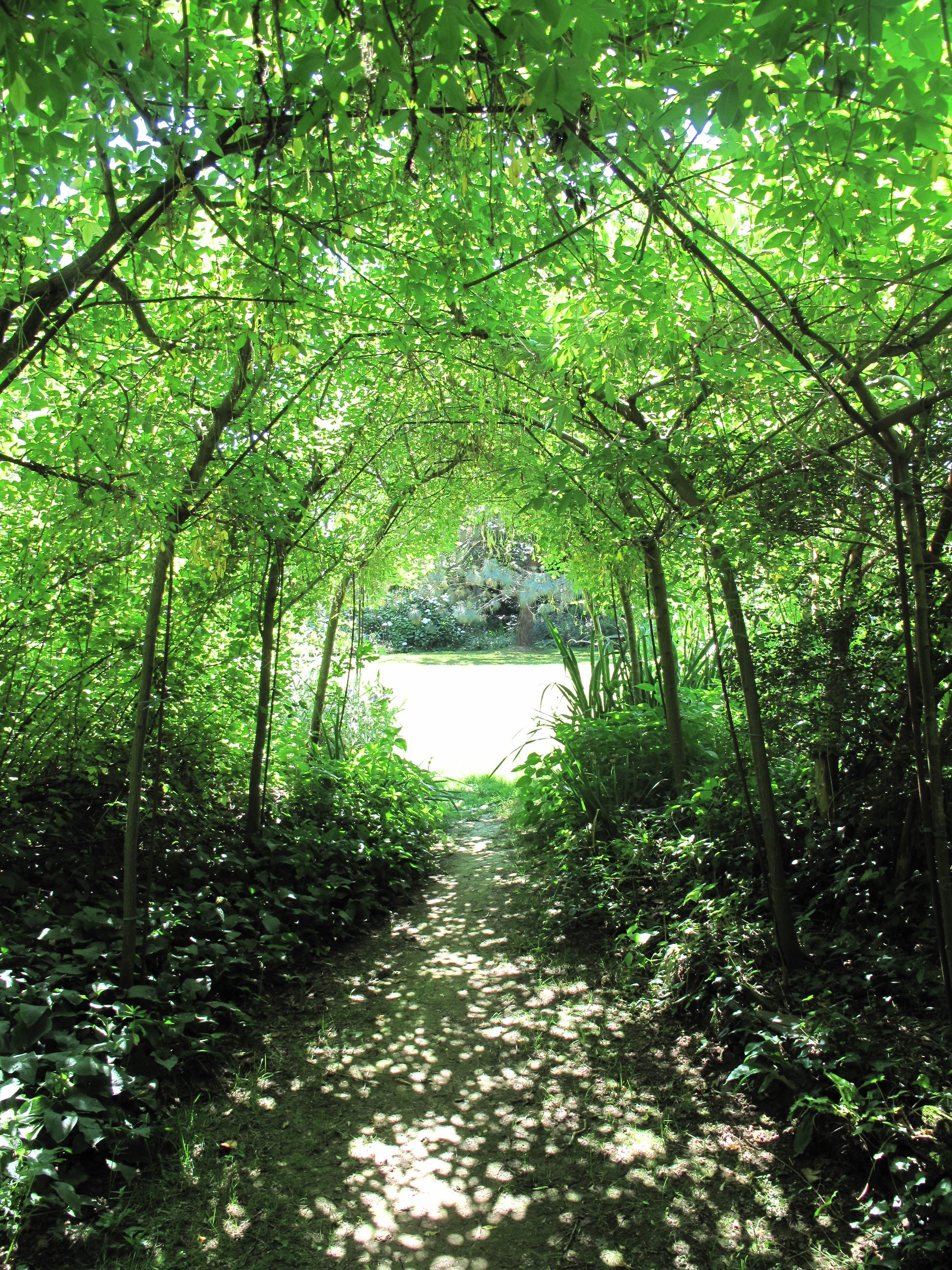
Hence, the profound expression ‘the movement of music happens not in the notes themselves, but between the notes, in the silences’.
The beauty of nature (a flower, snowflake or leaf, for instance) invites your presence, a connection, a raised awareness, alignment to the one consciousness. Sense the sacred sky at night, the grass in the wind, the mist in the morning, the forest at twilight. Hence nature can act as a powerful medium for raising awareness beyond the ego into alignment with ‘presence’; an unveiling of awareness as part of a re-connection bringing about inner harmony, that then leads to right feeling, thinking and doing, and so bringing about outer harmony of doing through being.
As soon as we try and rationalise and conceptualise nature, the inherent aliveness of nature becomes covered up, as if the a veil comes between us and nature and our true human nature. The veil lifts only when we become aware, embracing the space rather than the form, sensing the inner stillness between thoughts. Then, what thinking that germinates from this state of awareness becomes empowered by consciousness rather than a heavy, burdensome, endless chatter of ego-thought (which is usually fear-based).
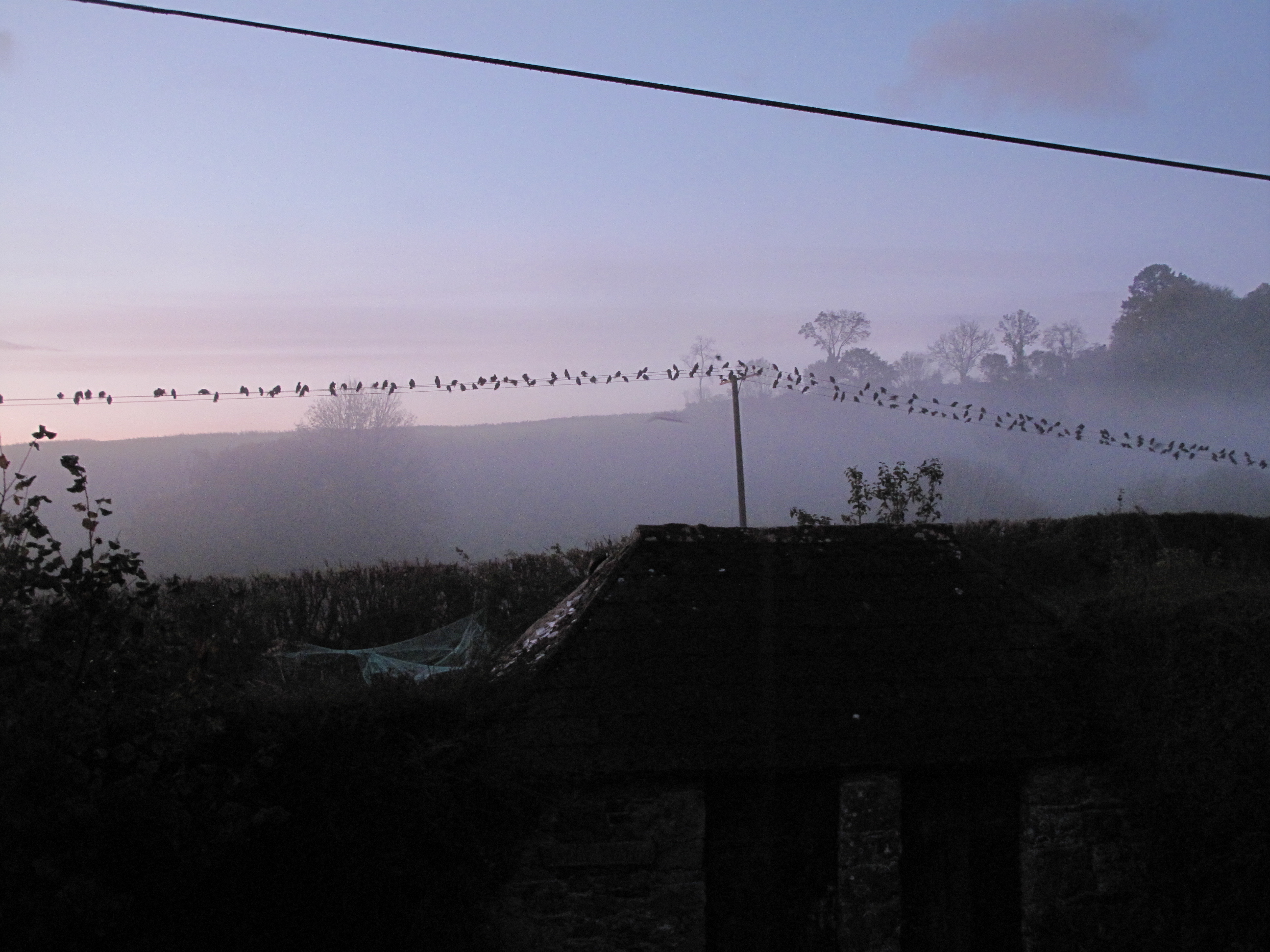
As we re-connect we see through the veil, life becomes revealed and re-enchanted through our awareness where upon we can manifest (not through struggle, competition and strife) but through the joyfilled, connection with life, re-enchanted and re-connected in order to reveal our true nature and destiny.
A short poem to ponder on: Know Thy Self
Know Thyself
To know others
See thy reflection
To see others
Internalise the externalities
To clarify the view
Picture the whole
To synergise the parts
Co-operate and collaborate
To educate and innovate
Dance with diversity
To create and communicate
Each day offers freely the chance
To place new steps of change
Actions speak louder than words
I’ll see you all at the dance said He
Know Thy Self – as Eckhart Tolle says, ‘thy self as the timeless subject of all experiences, the eternal ‘I am’ that underlies all manifestations’. The journey within is the only journey worth taking….
As the Tao Te Ching puts it: “True mastery can be gained by letting things go their own way” as explained in a section of his poem here:
In harmony with the Tao, the sky is clear and spacious, the earth is solid and full, all creature flourish together, content with the way they are, endlessly repeating themselves, endlessly renewed.
When man interferes with the Tao, the sky becomes filthy, the earth becomes depleted, the equilibrium crumbles, creatures become extinct.
The Master views the parts with compassion, because he understands the whole. His constant practice is humility. He doesn’t glitter like a jewel but lets himself be shaped by the Tao, as rugged and common as stone.
If we are to be truly sustainable, we need to be in harmony with human nature and all of nature. For that, we need to start with ourselves – free ourselves from the ego even if for mere glimpses of reality during our stressful daily routines. From these glimpses of reality spawn right action, right thinking, right relations. Then sustainability becomes second nature (rather than another ego-created seperation).
Giles Hutchins introduces The Nature of Business
‘The Nature of Business’ explores how the increasingly unpredictable, interconnected and uncertain nature of business calls for a more emergent, dynamic approach to organisations and leadership.

Giles Hutchins, the author, explains through business insights, quotes and examples that a new business paradigm is emerging which challenge prevailing perceptions of business.
The prevailing business paradigm of maximization, monoculture and self-interest, he states, is weakening its own resilience and is no longer fit for purpose for the business world we now operate in. Our prevalent business concepts, values, perceptions and practices are being disrupted and systemically challenged; Giles Hutchins argues that they are ripe for a paradigm shift. What is called for is a ‘redesigning for resilience’; a new business paradigm, one that is inspired by nature. The ‘perfect storm’ of social, economic and environmental factors mean organisations have little option other than to adapt and evolve to what Giles refers to as ‘firms of the future’ – businesses more akin to living organisms than mechanistic monoliths designed for the Industrial Era of the past.
Life itself operates within an environment of dynamic change and the more we challenge our prevalent assumptions to human nature and nature, the more we are able to bring fresh perspectives to help our organisations adapt and thrive in volatile times. Redesigning for resilience requires us to balance the benefits and simplicities of prevalent mechanistic, reductionist mind-sets and approaches to business with integrated systems-thinking; ecological thinking for business transformation. Business approaches and perspectives quite different from the current ‘take, make, waste’ paradigm are now called for. Industrial ecology, cradle-to-cradle, closed-looping, eco-literacy, natural leadership and biomimicry are at the heart of this business paradigm shift; new ways to deliver improved performance, not just incremental change but systemic change; business systems that work with the grain of nature and in harmony with life.

Our understanding of nature has evolved more recently, from viewing nature as a battle ground of competition to one of dynamic non-equilibrium, where an order within chaos prevails due to unwritten natural patterns, feedback loops, behavioural qualities, interdependencies, and collaboration within and throughout ecosystems. A ‘firm of the future’, Hutchins argues, builds resilience, optimises, adapts, integrates systems, navigates by values and supports life-building activities. It is a business inspired by nature.
Can business be a force for good, restoring society and the environment, providing solutions that genuinely help rather than hurt? Ought business to be striving for more than just limiting its negative impact? I think we intuitively know it can, it just requires courage to break rank from the current business paradigm of benefiting some at the expense of others.

In these challenging (yet pivotal) times for business and humanity, we must realise that to become truly sustainable, human and business life has to become scientifically inspired, emotionally connected and spiritually entwined with nature and Gaia. Nature and business (as with nature and humanity) must be symbiotic and operate in mutualism for there to be anything resembling a successful outcome. The sooner business realises the opportunities that come with being connected to and inspired by nature, the better for humanity, and for all species.
For the full and original posting of this blog please visit
http://greenbooksblog.wordpress.com/2012/08/07/giles-hutchins-introduces-the-nature-of-business/
Transformation requires a re-connection
It is becoming more obvious that we need to transform our ways of living and operating.

The biggest inhibitor to our transformation is our dis-connection with life/nature.
Nature is transformation for real. Everything naturally transforms through the cycles of life – so too with human nature. We only prevent our natural, emergent transformation by dis-connecting ourselves from nature – her ways, rhythms and wisdom.
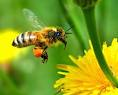 So often we strategise, envision, innovate and explore new ways of operating in the hope that they help us transform towards a more sustainable future for society, the economy and the environment. These good intentions, alas, often originate from a dis-connected perception of life. Hence, we innovate our way to incomplete solutions based on incomplete understandings of life and its inherently transformational way.
Rather than tuning into our soul and the soul of nature around us, we react logically to the challenges around us, often leading to more knock-on problems as side-effects from our incomplete solutions.
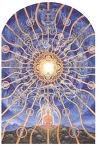 Transformation requires a re-connection; a re-connection with our true human nature and nature. It is that simple and yet we often grasp at ‘activity’ before undertaking this re-connection (at ‘doing’ before ‘being’). Perhaps this is because the re-connection flies in the face of what we have been taught, what has become so ingrained in our mental make-up; hence re-connecting challenges our sense of self-importance, our individuality (our ego) which we believe is so important for our ‘success’ in the world.
The more we see through the illusion of the world as a collection of things and see it as an inter-play of relationships and interconnecting networks, the easier it becomes for us to loosen the grip of our reductionist sense of scarcity and separated-ness and re-connect with the beautiful enchantment of the natural world around us.
Re-connect to tap into the abundant source of energy that permeates through all of life: nature & human nature, not seperate but interconnected. Then, and only then, will ‘success’ be sustainable and true, creating personal (and collective) wealth far beyond the ego’s wildest dreams.

