Discussing The Earth Charter, Regeneration and ‘Meaningful Disturbances’ with Fritjof Capra
This is a guest blog by Simon Robinson, editor of Transition Consciousness and Founder of Holonomic Education.
A couple of weeks ago I hosted a webinar with Fritjof Capra in which we discussed a number of themes related to The Systems View of Life. Fritjof Capra is one of the world’s leading thinkers in systems theory and the author of many influential books, such as The Tao of Physics; The Web of Life: A New Synthesis of Mind and Matter; The Turning Point: Science, Society and the Rising Culture; The Hidden Connections: A Science for Sustainable Living; and Learning from Leonardo: Decoding the Notebooks of a Genius.
I also invited Daniel Wahl who is the author of the book Designing Regenerative Cultures. It was a fascinating hour of conversation, with many people joining us live. However, if you missed the live broadcast, you can now watch again via these videos below:
Part One: The Earth Charter
I started the webinar by taking the opportunity to discuss the Earth Charter Initiative with Fritjof, who is one of the Earth Charter Council’s leading members. The Earth Charter was first considered in 1987 when The World Commission on Environment and Development (known as “the Brundtland Commission”) launched their report titled Our Common Future, with a call for a “new charter” to set “new norms” to guide the transition to sustainable development.
The Earth Charter is an ethical framework for building a just, sustainable and peaceful global society in the 21st century. It seeks to inspire in all people a new sense of global interdependence and shared responsibility for the wellbeing of the whole human family, the greater community of life and future generations.
https://www.youtube.com/watch?v=E9rKshEJESM
Part Two: Regeneration
It is interesting that many commentators are now discussing the way in which the word ‘sustainability’ is losing its meaning, and therefore usefulness. A word now being used in its place is “regeneration”. One example is Herbert Girardet’s article from the Guardian: Sustainability is unhelpful: we need to think about regeneration.
In this section I asked Fritjof if he could you talk a little about the need to shift from life-destroying to life-enhancing ways of doing business? And as one of the world’s most highly-respected ecological activists, is it indeed the case that we need to find new ways of framing the sustainability discussion? I also asked Daniel about his work over many years implementing regenerative projects, and he discussed the Regenerative Development to Reverse Climate Change initiative of the Commonwealth Secretariat in depth.
Part Three: Meaningful Disturbances
Many people nowadays are interested in how they can help change the collective consciousness of people inside businesses in order to evolve more life-enhancing ways of business. On Capra Course, Fritjof’s on-line course the module Life and Leadership in Organisations always generates many discussions, particularly the part where Fritjof discusses his concept of meaningful disturbances.
In our new book Customer Experiences with Soul: A New Era in Design we discuss Fritjof ‘s characterisation of living systems and the notion of both ‘meaningful disturbances’ and ‘networks of communication’. In our business consultancy work we find business leaders really respond to it when implementing programmes of profound organisational change. So in Part Three I took the opportunity to ask Fritjof to talk more about this term, asking where the inspiration come from and what are the implications for business leaders.
We closed our discussion talking about Capra Course. In the last few years many businesses have recognised a need to introduce systems thinking across their organisations, and Capra Course is an ideal way to scale up the understanding of systems thinking.
As well as offering twelve lectures which are introduced across a twelve-week period, what makes the learning experience so rich is the way in which participants are able to interact and converse with Fritjof on a daily basis. To offer one example, in a recent interview with Fritjof for Sustainable Brands, I asked him about the conversations he had had on Capra Course regarding the Earth Charter:
I love these discussions in my online course. I find them more substantial than classroom discussions, because the participants and I have much more time to prepare our comments, questions and answers. In our discussion of the Earth Charter, several participants expressed their admiration for the writing process of the Charter, in which many voices from around the world were heard over an extended period of time. “It seems to me,” wrote one of the participants, “that many authors and contributors of the Earth Charter experienced a great depth of listening with a whole lot of love and patience to the many voices they heard and they captured those voices to produce a holistic document.”
We also discussed the merits and problems of written documents in general, from Paolo Freire’s notion that literacy enables people to imagine the world differently, to the problem that such documents — the Earth Charter, the Declaration of Independence or the recent Paris Climate Agreement — represent the level of consciousness of the authors at a particular time and fixes the agreed-upon values in time and space.
In another lecture, I had discussed the nature of power, distinguishing between power as domination of others and power as empowerment of others. So, in our conversations I applied this important distinction to a “systems view of documents.” I argued that, whereas legal texts, contracts and media generally serve to dominate others, the purpose of joint manifestos and declarations, often composed through elaborate collaborative processes involving many individuals and communities, is to empower others.
These are just some examples of the extensive conversations we had on the Earth Charter.
It was wonderful to be able to converse with Fritjof and Daniel on such interesting topics, and I hope you have a chance to listen to our conversation. And if you yourself would like the opportunity to learn from Fritjof, registration is now open for the Fall 2017 edition of Capra Course. To find out more, please visit www.capracourse.net.
To explore ‘the new paradigm’ further, join the Face Book community here and for more on the Future Fit Leadership Academy visit www.ffla.co
It is now patently clear to many leaders and change agents in business that for our organisations to thrive in these times of fast-paced volatility, they need to shift their organisational consciousness.
This shift is from mechanistic separateness to living connectedness.

It’s a shift away from the logic of separation, control, domination, dog-eat-dog hyper-competition, power-based hierarchies, bureaucracy and win-lose relational dynamics where the organisation is perceived as a machine with assets to be sweated, and where ‘human resources’ are to be managed for maximum short-term output.
And it’s a shift towards the embodied awareness of interconnectedness, with personal and collective responsibility and empowerment, coupled with self-organising emergent team dynamics, heterarchy and synarchy systems, with synergistic relational dynamics of openness, authenticity and empathy. The organisation is viewed as a living system continuously inter-relating with the wider world. Employees are perceived as purposeful meaning-seeking contributors ignited and aligned by the purpose of the organisation as a force for good in the world.
This is not some far-off utopian dream to be dispensed with when the going gets tough. It’s the reality that each of us need to call forth now, in terms of how we show up, listen, share and engage in our organisations; we manifest our future through today’s actions and interactions.
This is the reality of the future of business spawning before our very eyes. By example, the B-Corp movement with now over 2,000 organisations around the world signing up to voluntarily change their legal constitution away from being beholden to short-term returns for shareholders to creating value for all stakeholders including society and the environment. Hand-in-hand with other for-purpose business movements such as Teal and Conscious Capitalism, this is testament to the emergence of business-as-a-force-for-good at the leading edge of a revolution in consciousness from separateness to connectedness, with profound consequences for ourselves, our organisational systems and our civilisation.
In order to shift this consciousness in our own organisations, there are a multitude of things we can do differently. Fortunately, there also some simple – yet profound – liberating structures we can embrace with ease amid the day-to-day thick of it, without the need for business case sign-off or complex solution implementation.
We can each take these simple steps as leaders and change agents today. All we need is a bit of courage to challenge the status quo. For more on some of these liberating structures and new ways of being-and-doing in business, see Future-Fit.
Here is one powerful yet simple technique we can bring into our decision-making dynamics and day-to-day meeting conventions, with a bit of courage and some light-touch facilitation: Way of Council.

Way of Council is an ancient indigenous practice of sitting in a circle and speaking and listening from the heart. There are some simple ground rules, to remind us to be present, to be in our hearts, to not judge what is said, and to empathically open to self/other/field, to really listen attentively and deeply, and to share authentically. This sharing activates the wisdom of the heart, a wisdom that is all-too-often skipped over in the busyness of our business, and yet without it authentic business is yet another ‘thing’ out there to be grasped at, rather than a ‘way of being’ to be embodied within each conversation, each inter-relation.
In applying Way of Council to business, we provide a space for exploration, open-hearted sharing and collaborative inquiry into the practicalities, challenges and opportunities related to the strategy and operations of the business. We can also use this dialogic practice in tandem with other exploratory activities such as future scenario planning and future search workshops to help us envision and embody our future today.
The learning style/atmosphere of the sharing circle draws on a blend of action research, appreciative inquiry, dialogue and non-violent communication methods.
In short:
Action research – every interaction, emotional response and relational tension is an opportunity for deeper learning through self-reflection, feedback and an intention to move beyond blame, projection, judgement, fear, scarcity, into a mind-set of openness, emergence, acceptance, compassion, self-inquiry and learning;
Appreciative inquiry – the intention here is to encourage the positives and go with where the energy is flowing, rather than focusing on the negatives or the blockages;
Dialogue and non-violent communication – ensuring we are listening and speaking with an open heart and open mind, empathising with others perspectives even if it feels challenging, being aware of how we are reacting (fear/defensive/offensive) versus responding (sensing/exploring/empathising). And its OK to be defensive/reactive, as long as we recognise it within ourselves and seek to learn and move beyond – it’s the self-awareness and intention to learn that enhances our ability to metamorphose.
What this simple Way of Council practice does is allow us to form a relational field within the circle. From this circle we seed a relational field within the wider organisation.
By holding a safe and sacred space where we can explore the day-to-day challenges while being present and focused on heart-based awareness, we help shift the relational dynamic between us and also within the wider organisational field: we seed a shift in the consciousness of the organisation’s culture.
In complexity theory this is referred to as setting up a new attractor-field. By embodying heart-awareness in an appreciative and constructive way, we help call forth the future potential of the organisation in manifesting a step change in its cultural consciousness.

This is difficult to describe in words, and yet pioneering scientific studies in social fields, quantum physics, living systems and complexity theory are beginning to prove what the ancients long understood – that we can better manifest the future we desire by spawning social fields here-and-now through the quality of our intention and attention. Our being in-forms our doing.
This sharing circle helps the organisation better adapt to the future (to become more ‘future-fit’) as the relational dynamics and heart-felt sharing uncovers insights that can be implemented more successfully due to a deeper buy-in and understanding of the problems and solutions. Also, the participatory social field created through the circle enhances the social intelligence of the group and with it the ability to sense synchronicities, sense into blockages and their root causes, remediate out-of-kilter areas and bring forward a more intuitive, empowering, forward-thinking, adaptive and responsive culture where we each take personal responsibility for how we are engaging through our relational dynamics. This leads to a more efficient and effective way of operating and organising, and allows the living system to thrive even amid increasing volatility and uncertainty.
‘Unlike the egoic operating system, the heart does not perceive through differentiation. It doesn’t divide the field into inside and outside, subject and object. Rather, it perceives by means of harmony…When heart-awareness becomes fully formed within a person, he or she will be operating out of nondual consciousness…where they will discover the resources they need to live in fearlessness, coherence, and compassion – or in other words, as true human beings.’ Cynthia Bourgeault, contemplative and priest.
Creating a synergistic social field opens us up to a more curious attentiveness, a less judgemental and more empathising, mutually enhancing relational dynamic. We shift from reactivity, separateness and complicated linearity to responsiveness, connectedness and complex synchronicity.
‘Leadership is about creating, day by day, a domain in which we and those around us continually deepen our understanding of reality and are able to participate in shaping the future. The capacity to discover and participate in our unfolding future has more to do with our being – our total orientation of character and consciousness – than with what we do.’ Joseph Jaworski, leadership specialist
Interestingly, pioneering sociological studies are indicating that as a threshold is crossed within the consciousness of the organisational living system, a shift occurs in the culture which enables the organisation to more easily move away from the traditional yet out-dated ways of management through dis-empowering control-based hierarchies and hyper-competitiveness, into a more alive, purposeful and altogether more-human approach to operating and organising. This organisational threshold can often be crossed with as little as 10% of the people in the organisation deeply resonating with the organisational sense of purpose while embodying mutually enhancing relational dynamics.
‘What is within us is within everything. Once we understand this truth, we step outside of the parameters of our individual self and come to realise the power that is within us. This shift in awareness is a very simple step that has profound consequences.’ Llewellyn Vaughan-Lee, mystic
Synchronicity – leadership specialist Joseph Jaworski refers to synchronicity as a powerful inner path of leadership. It is the experience of the generative order of life operating through us. This sense of ‘flow’ and knowingness comes when we allow our natural ways of knowing – intuitive, rational, emotional, somatic – to cohere within us while opening up to our emerging future, by ‘letting go’ of our mental judgements, and opening up to what is in the moment. This synchronicity or ‘emergent flow’ can be felt within social groups and team dynamics when the right soulful space is created for people to feel safe enough to open up to more of their ‘true nature’. This synchronicity is also heightened when our personal purpose finds resonance with the organisational purpose. A powerful field of shared intentionality along with our heightened quality of attention allows synchronicity to flow. It is here that we may begin to sense what the ancient wisdom traditions seek to convey – that all of life is innately interconnected and we participate in this living field of emergence through the quality of our intention and attention.
Living Systems Being – ‘Systems Thinking’ is being increasingly recognised as important for our leaders today. Systems Thinking is about learning to see the interconnections in our business and social environments, and apply this holistic interconnected perspective while making decisions. What is emerging at the vanguard of future business is ‘living systems being’ which takes systems thinking one step further, by recognising that all our relations, team dynamics and organisations are living systems intimately immersed (both locally and non-locally) within the living systems of society and our more-than-human world. And that through the quality of our ‘being-in-the-world’ we can better sense into the ‘inter-being’ of these living systems and allow the emerging future to flow in ways that tend towards harmony with life.
Way of Council as a meeting convention can help us embody our own quality of presence while discussing work challenges with colleagues, activating our ability to really listen to the other beyond judgement, to be more vulnerable, open and authentic while at work. From this heart-sharing we seed new levels of being-and-knowing within ourselves and within the social field of the circle, which can then seed new levels of consciousness within our organisational field. Hence, the circle can act as a super-conductor that enhances the coherence of those within the circle and also those beyond the circle in the wider inter-relational field of the organisation. It’s a simple yet powerful practice that helps enable our organisations to become future-fit.
‘The most exciting breakthroughs of the 21st century will not occur because of technology, but because of an expanding concept of what it means to be human.’ John Naisbitt, futurist
Author Giles Hutchins blogs at www.thenatureofbusiness.org and chairs The Future Fit Leadership Academy www.ffla.co
To explore ‘the new paradigm’ further, join the Face Book community here
‘The purpose of life is to live in agreement with Nature.’ Zeno, Greek philosopher, c500BC
‘He who is harmony with Nature hits the mark without effort and apprehends the truth without thinking.’ Confucius, Chinese sage, c500BC
‘Open yourself to the Tao, then trust your natural responses; and everything will fall into place.’ Lao Tzu, Chinese sage, c500BC
‘There is geometry in the humming of the strings, there is music in the spacing of the spheres.’ Pythagoras, Greek philosopher, c500BC
Scientific research into the dynamics of living systems has identified four distinct phases of development:
growth (G)
conservation (C or K)
collapse or release (R or Omega)
reorganization (O or Alpha)
In their pioneering work with the Resilience Alliance and in their book Panarchy, Lance H. Gunderson and C.S. Holling explore how these phases interact in living systems, including human organizations and communities. These phases form a continual looping round through a figure-of-eight cycle known as the ‘adaptive cycle’. This oscillating creativity, conservation, breakdown and breakthrough occurs naturally in all living systems, including our organizations, through interacting cycles nested at different levels (space and time scales: localized or more regional, short-term or more long-term).
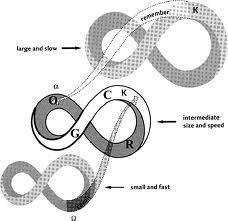
The first and second phases of growth (G) and conservation (C) – referred to as the ‘front loop’ – represent growth through an incremental process of increasing efficiency, learning and innovation resulting in incremental changes towards a state of conservation. The third and fourth phases of collapse (R) and reorganization (O) – referred to as the ‘back loop’ – represent a disruption of this conservation stage as breakdown (Omega or death) in existing structures. In the midst of this breakdown, radically new ways of operating begin to emerge and breakthrough (Alpha or birth). This is the way of life: birth, growth, conservation and death leading to new birth, or spring shoots leading to summer growth then autumn harvests giving way to winter decay providing fertile soil for new shoots to take root once again; each season has its place in this cycle of life.
Embodying Teal for Real – Part 3
In the first of this series of Embodying Teal for Real articles, we explored the importance of love rather than fear underpinning our thoughts, words and deeds, and also identified the importance of 1) self-awareness and 2) self-inquiry as we take small steps of love on our journey of embodying Teal.

Embodying Teal for Real – Part 2 explored self-awareness and self-inquiry. This Part 3 provides some tips for helping with self-awareness and self-inquiry as we go about our daily business.
- Somatic awareness – Our ‘soma’ is our body. The more we can be aware of the feelings within our body, of how we are standing or sitting, of our posture and any held constrictions or tensions, the more we bring our awareness into the body and out of the ego-chattering head. This provides two things simultaneously:
- It informs us of the quality of our ‘being’ at any given moment and so helps us be more attentive to being-within-the-doing
- It helps us become more present, more enlivened, as we sense into body sensations, and enhance self-awareness in being responsive rather than reactive to the situation unfolding around and within us.
- Breathing – Noticing our breathing, the quality and pace of breathing, is a great way to bring awareness back into the present moment even in the midst of a tense situation. This subtle shift allows our perceptual horizon and conscious awareness to widen in the heat of the happening. For instance, we can imagine the swirling spirally flow of air as it comes up through our nostrils and also as it swirls and flows down out of our nostrils again. The richer our imagination is in embracing the sensation and rhythm of breathing, the better. The more we practice this, the more we affirm that far from this body-awareness being a distraction, it actually enhances quality of relationality and presence.
We can also sense how deep our breathing is. Are we breathing deeply from the belly area, can we sense the belly and lower chest enlarging and contracting while breathing, or are we breathing more from the upper part of our lungs and upper rib cage? Deeper belly breathing not only improves oxygenation (improving attentiveness and ability to presence) but it also helps us de-stress, if only for a moment. So, we can create a mini-window for self-awareness through our breathing.
If we wish, we can go further in this exercise by miming (or vocalising, if the situation allows) the vowel sound AH on the outbreath. This can be done in a subtle way not noticeable to others. It is a very simple mantra that can be undertaken silently, with immediate benefit to the quality of attention and the coherence of brain waves.
- Tongue on roof of mouth – simply placing the tongue gently on the roof of the mouth while listening to someone does two things simultaneously:
- a) moving the tongue on the roof allows awareness of the sensations, which helps presence us with body-awareness while easing our ego-grasping intensity of the moment and b) it provides a preventative measure to our mouths opening and blurting out a reactive or impatient response or excited interruption, and so invites in spaciousness for deeper listening and attentiveness, rather than a hurried half-baked or overly-emotive reaction.
- Heart and gut awareness – The more we enhance our somatic awareness, the more able we shall be to sense feelings, sensations and constrictions within heart and gut areas. Pioneering neurobiology now confirms what mystics have known for millennia, that the heart and gut are powerful organs of perception directly involved in sensing-and-responding to the environment, and hard-wired to the brain. By sensing in to heart and gut during meetings or conversations, we allow access to more natural intelligence, and also can sense into any feelings before they provoke ego-reactions or unconscious bias reactions. This is a way to embrace each conversation as a continuous leaning into self-inquiry.
- Inquiring, questioning, listening – The art of effective dialogue is learning how to create a space for co-creative sharing. An important step in that direction is learning to listen effectively – not just to what is being said, but to all the body language of the other and also to our own body language and feelings germinating. To really open beyond our reactions and judgments, to be fully present for the other – this is an art, and like any art, the key is in practice, practice, practice.
The way we question and inquire can encourage the other to open up and share more, rather than closing them down, or trying to get them to agree to our view or position. This is a shift from an essentially ego-dominated conservation to a more soulful dance. This kind of questioning and listening can also help us slow down the urge to react, while paying attention to our projections and habituations before they take hold. The art with practice becomes mastery, with each conversation helping us practice, and so cultivate this mastery. Difficult situations (whether they be with a close family member of work colleague) can then be seen for the fruits of learning they may offer if we choose to see.
- Grounding – Often amid the busyness and stress of the day we become ‘ungrounded’ – not only off-centre, but not adequately ‘connected’ to the ground below us. Through the simple practice of bringing awareness into our legs, ankles, and feet and then sensing the ground beneath our feet, we allow our awareness to consciously ‘re-connect’ with the ground below, even when high up in a building.
We can deepen this sense of grounding by imagining roots growing out of the soles of our feet into the floor below and then through the structure of the building and its foundations, these roots radiate deep into the soil and Earth. This practice of enhancing awareness of connection with the ground has a noticeable effect, and hand-in-hand with enhancing our body-awareness in general, it stabilises us and helps us move out of reactivity and more into a centred responsiveness.
It is also good to take shoes off every so often – as the situation allows – and connect with the ground. Ideally, this would be placing feet (with or without socks) on the ground outside of the office or working environment at least once or twice a day. But we might not always be able to – or wish to – do this. Bringing awareness into the feet and imagining roots connecting into the ground is something anyone can do while sitting in a meeting or at a desk without needing to do anything that feels uncomfortable to do.
Neuroscience shows that lots of small practices every day are the best way to change neural pathways and habits. Short bursts of ‘centring’ – whether it be noticing posture or focusing on breath or sensing into the heart and gut or sensing the ground beneath us – say twenty times a day, a couple of seconds each time, will form the backbone of self-mastery.
These small steps transform ourselves, and in turn, transform our environment.
To explore ‘the new paradigm’ further, join the Face Book community here
Giles Hutchins is a thought leader and adviser on the future of business; his latest book Future Fit can be found on Amazon, see a short video about it here; he blogs at www.thenatureofbusiness.org and is Chairman of The Future Fit Leadership Academy
‘Plant seeds of happiness, hope and success and love; it will all come back to you in abundance. This is the law of nature.’ Steve Maraboli, behavioural scientist
‘What you think, you become. What you feel, you attract. What you imagine, you create.’ The Buddha
‘We cannot do great things, only small things with great love.’ Mother Teresa
There are several well-respected consciousness-based leadership and organisational development models that all point to a major transformation from one tier or level of consciousness to another: a shift in our attention, in our way-of-being-in-the-world. This is a shift from an essentially ego-centric consciousness rooted in fear, separation, scarcity, power-over and control to a soul-centric consciousness rooted in love, connectedness, abundance, power-with, synchronicity and emergence.
In order to become effective and authentic leaders in our future-fit organisations, we must learn how best to embrace this fundamental shift in consciousness.
The root word of ‘leadership’ is ‘leith’ which means to cross the threshold, to let go of old ways, mind-sets and logic in order to embrace the new. Every one of us has the ability to become leaders in myriad ways: managers and midwives, counsellors and CEOs, activists and administrators, entrepreneurs and engineers – the times we live in ask us to ‘know thy self’ so as to reach beyond an ego-centric self-maximising logic into a way that serves life-affirming futures.
With the right attitude and transformational path ahead of us, we can thrive in these volatile times. It is only our habitual ways of thinking and perceiving that hold us back. As leaders in these transformational times, we can-and-must learn to better provide the soul nourishment, head-space and catalytic sparks to activate this shift towards a more soul-centric mind-set through the relationships we influence.
Core to manifesting a life-affirming way of being in the world is a shift in mind-set from scarcity to abundance. This shift has been articulated elsewhere (for instance, many of us will recall Stephen Covey’s 7 Habits of Highly Effective People pointing to the importance of a shift in mind-set from scarcity to abundance, and organisational approaches such as Laloux’s Teal/Evolutionary, Barrett’s full-spectrum consciousness, Scharmer’s ego to eco-consciousness, Torbert’s action logics, and Eisenstein’s approach to inter-being, all explain this essential shift). By example, I have previously explored techniques Embodying Teal for Real and the importance of our self-awareness during our search for soulfulness.
This paper explores how we can best encourage a shift in ourselves from scarcity being/thinking to abundance being/thinking.
I say ‘being/thinking’ because first-and-foremost this shift in scarcity to abundance is a shift in our way of being, a shift in our attentiveness, a shift in our dynamic, in how we open ourselves up internally to more of our authentic humanity within us, and also externally in terms of how we relate to others.
This inner-outer attunement relates with living-systems theory and the concept of ‘supercoherence’ (as explored by the scientist Ervin Laszlo and others).
All living systems – from cells, to our bodies, to our organisations, to Gaia – seek coherence. It is inherent within life. Coherence happens when all the inter-related aspects of a living system (or organisation) are aligned with all the other aspects, acting as an integral and purposeful living system.
A friend of mine Simon Robinson and his wife Maria Moraes Robinson from Brazil have recently published their second book, a sequel after their first book Holonomics.
I first met Simon at Schumacher College some years ago while he was a Masters student and I was co-facilitating a course on Business Inspired By Nature. We met in the dining room as I recall and had a flowing conversation over lunch about the challenges and opportunities that lie before us regarding the need for a transition in consciousness. Back then (over six years ago) Simon was actively inquiring in to this necessary shift in consciousness required in business, and this inquiry has dove-tailed with Maria’s work, his wife. What a pair they are, championing at the front-line of helping business tend towards harmony with life.
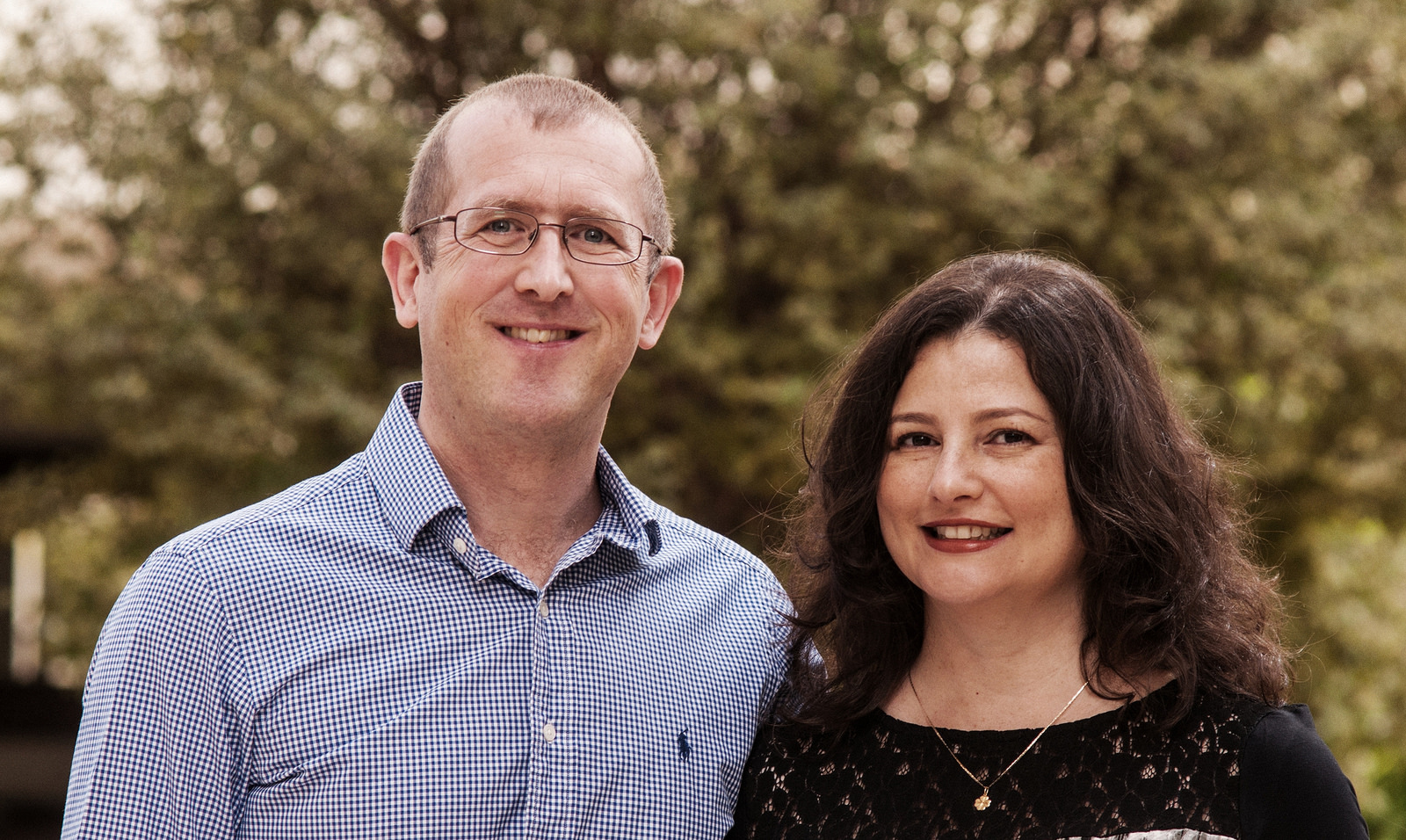
Over the subsequent years, we have shared not just our working concepts but also our connections and networks. It has been a real pleasure to see Simon’s work deepen and mature. I reference his and Maria’s work in my last two books as it is very much in the spirit of my own explorations – I feel a kindred soulful synergy through their work. It’s an honour to have been asked first to review Holonomics and now their latest book: Customer Experiences with Soul: A New Era in Design.
There’s an old saying ‘may you live in interesting times’. When someone said that to you it was seen as both a blessing and curse, because to live in interesting times means to deal with danger and opportunity, to embrace simultaneous breakdown and breakthrough. Which is exactly what this trilemma of social, economic and environmental crises is asking, is demanding, of us.

Our tried-and-tested modes and methods, our constructs and constrictions, the very habituations and acculturations we have become so inured in, are melting amid the alchemic heat of the moment. This metamorphic moment is now. This is humanity’s hour of reckoning. Each of us is being called to act as conscious conspirators, catalysts in this chemistry.
The ancient Greeks referred to such a time as Kairos, a supreme moment which is not adequately acted upon may pass us by.
The good news is, myriad disciplines at the forefront of Western science – such as quantum physics, facilitation ecology, depth psychology and neurobiology – are discovering with increasingly sensitive instruments and sophisticated experiments the innate inter-relationality of life, the weave-and-weft of the world, the intricate sacredness of nature. The hand of science is reaching out to shake the hand of spirituality once again.
This of course is not new. This discovery of inter-relationality is as fresh as it is ancient. The timeless prophets, philosophers, poets, seers and shaman throughout the ages have long understood this innate interconnectedness of life.
How to Embody Teal for Real – Part 2
In Embodying Teal for Real – Part 1, we explored the importance of love rather than fear underpinning our thoughts, words, and deeds, and also identified the importance of 1) self-awareness and 2) self-inquiry, as we take small steps of love on our journey of embodying Teal. In this article we will take a deeper look at self-awareness and self-inquiry, and describe how these practices of embodying Teal are especially suited for leaders developing from Green to Teal-consciousness.
The quality of ‘beingness’ resulting from the practices below is not new; it’s as fresh as it is ancient. Just as the ancient Greeks and Egyptians had the words ‘Know Thy Self’ over the doorways of their temples, so we find that embodying self-awareness and self-inquiry is the life-blood of today’s Teal organisations.
The reality of our human condition is that in a fast-paced working environment, we react to situations with well-trodden habit-paths. The more our behaviours are ingrained, the more difficult they are to acknowledge and transform. While these well-trodden behavioural paths might give a certain security and consistency in our persona, they can undermine our personal development. They can also undermine our relations, as our defensiveness, judgemental perspective, impatience, and reactivity actually undermine the potential for synergy that could result from relational tensions in our day-to-day life.
Hence, personal development is intimately entwined with organisational and societal development. And, to a large extent, our context influences and affects our own ‘beingness’. For instance, having just returned from a week of non-stop travel, including flights, airport hotels, speaking at conferences, running workshops and sleeping badly in stuffy and noisy hotel rooms, it is easy to revert to well-trodden habits or reactive behaviours of frustration at train delays or long queues. So the ‘small steps with great love’ become more challenging, as beingness becomes more uncentered.
Hence, the first step in mastery is ‘self-awareness’
This means that actually taking notice of when we are getting frustrated, impatient, tense, reactive, distracted, or overly-excited is the all-important first step. We take notice, pause, sense into these feelings arising, and observe them.
Without this first step of noticing the feeling emerging, we are but lost in the reaction—trapped, enslaved by our own personas. Our reactions manifest in our outer behaviour or we merely suppress these reactions while providing an artificial façade of acceptability. As a result, the situation unfolds in a manner that is no longer coming from love, but rather from control, fear, frustration, impatience, or inauthenticity, and some variant of passive/aggressive emotional reactivity. This reaction pollutes our environment in varying degrees, rather than enhancing it; we dance out-of-tune with life. Synchronistic pathways dissipate; we grasp and grab rather than flow-into and participate-with. We become life-denying rather than life-affirming.
Yet, this slip-up is learning in itself, if we have the self-awareness to notice our reaction and the effect it has on our environment. Perhaps we might pause and reflect, sensing into what happened and the feelings that welled up. This can provide the insight for real transformative learning to take place.
In this regard, each day and each tension provides our learning forum for embodying Teal.
To summarise, self-awareness is a vital tool; we cultivate this tool by regularly sensing into how we are feeling in our body, and gaining insight—rather than judgment—on the feelings. We notice and sense into any feelings of tiredness, distraction, aggravation, fear, impatience, judgment, frustration, or anger, within our body.
The more we’re able to sense coming from a place of loving responsiveness, the more we can learn to notice the difference from when we are being reactive rather than responsive. The more we practice sensing into the body, the more our self-awareness enhances.
A tip here is not to try to suppress feelings of impatience, constriction or frustration, but rather open up awareness into them, noticing and embracing them, like a friend. This way, the feeling will not subsume us into the reactive behaviour it provokes (no matter how mild it seems on the outside, e.g. interrupting someone hastily, or projecting our own fears or needs for acceptance on to the other person, snapping at someone with a barbed comment, positioning ourselves with an egotistical edge, etc.).
Loving self-awareness shows the way we get trapped by our fears, desires, ego-whims, and angers, then we are able to make conscious steps to learn and develop.
Then comes the second step – ‘self-inquiry’
Cultivating self-awareness by learning to pause, sense-in, feel, and reflect throughout the daily busyness, we start to notice our habitual reactions, and our patterns of conditioned behaviours.
Some of these will have been cultivated through past experience of life, perhaps for good reason to start with, for example, to defend and stabilise us during harrowing times at school or at home as a child, or as we embarked on our first career steps. All of these habitual reactions will contain a blend of fear and love within them, for example, a fear of being alienated or thought of as ‘a loser’ is blended with a need to be loved and accepted.
Spending time at the end of each day—say ten minutes in bed before sleep, or ten minutes on the journey back from work—we can start to get used to self-inquiring into difficult interactions and tense moments that arose
The more relaxing and natural the space for this self-inquiry the better, as then we can be more gentle, nurturing, and open with ourselves, as we inquire deeply into the feelings of the day and what lies beneath these reactions. Nature has been proven to relax body and mind, enhance inter-hemispheric brain integration as well as head-heart-gut coherence, so a walk in Nature can aid reflecting and self-inquiring.
Remember, this is about love: learning to love ourselves, foibles and all. As we inquire, it’s best to hold an attitude of gentleness and openness as we sense into the tensions, emotions, and trials we have experienced.
In this way, we learn to become gentle and open not just with ourselves but also in how we perceive others and their challenges. We recognise that we all are struggling with fears, concerns, and frustrations, each in our own way, whether consciously or unconsciously. We are all learning to love.
This practice of reviewing the day just gone is in-and-of-itself very powerful. It helps us practice self-awareness. While we are scanning through the day’s events from morning to evening, we might sense in our body when certain relational exchanges and situations create constrictions and emotions.
We can then inquire into the feeling, what is triggering it, and sense when we are seeking to judge or blame the other or the outer situation and then sense deeper into the feeling beyond blame with loving insight. Here in this deeper self-inquiry are golden nuggets that provide insight about our own learning, about our habituations, and deep-seated fears. Within our base-emotions, we can reveal gold, to help cultivate compassion and wisdom.
Self-awareness and self-inquiry enable greater self-agency and responsibility, enhanced relational authenticity, and deeper embodiment of life-affirming service and purpose. This transforms ourselves, our relationships, our team dynamics, our organisations, and the world; it is this that our humanity needs now more than ever.
How does this love-based beingness help Green-stage leaders and organisations reach beyond into Teal?
At the organisational and personal levels, within the Spiral Dynamics framework Green is characterised by empowering self and others through ways of relating, and a widening of perceptual horizon from the narrow Orange focus on specific goals such as task-outputs, profit and shareholder value. This comes with an increasing recognition of the value and impact our activities and relationships have not just within our immediate sphere but also through the wider eco-system of inter-relations (human and more-than-human). Cultivating a more empowering, equalitarian, and stakeholder-value-based culture is central to Green, moving beyond the narrow goal-oriented focus of Orange.
Teal moves beyond Green by recognising the importance of the individual’s self-realisation (or ‘individuation’ to use Carl Jung’s phrase).
Wholeness of the individual and the community through more soulful, purposeful, compassionate, and wise relations with self-other-world is all-important here. Hence, a connection with soul or ‘higher Self’ comes hand-in-hand with the ‘taming of the ego’, along with a strong resonance between the individual’s purpose and the organisation’s purpose. This allows for a coherence within the organisation’s living-field to cultivate so that the burdensome hierarchic structures, rules, and values charters of the Green stage can be let-go of.
A more soulful wisdom emerges in Teal-consciousness, within individuals and through their relationships. People can viscerally sense when an interaction is out-of-kilter. This dissonance is not then ‘judged’, but seen as an opportunity to learn, to take responsibility for our own learning journey while also contributing to collective learning. We sense into the synchronicities as we learn to follow the flow of life, the ‘Way of the Tao’.
The metaphor for the Green organisation is ‘family’, and the metaphor for the Teal organisation is ‘living system’. A key characteristic of the living organisation is ‘emergence’. Emergence spawns from the ‘divergence’ of empowering self-organising ways of working balanced with the ‘convergence’ of an evolutionary sense of purpose that seeks to serve life. What enables this to work in practice is a spirit of love, openness, authenticity, and wisdom. Through love, our very being transforms the world around us. It is here that the living organisation becomes regenerative; it tends towards harmony with Life.
It is in this shift from Tier One consciousness (including Orange and Green) into Tier Two consciousness of Teal, that we open up more deeply to our true nature as human beings within an innately interconnected more-than-human world. Whereupon we realise that
‘What is within us is within everything. Once we understand this truth, we step outside of the parameters of our individual self and come to realise the power that is within us. This shift in awareness is a very simple step that has profound consequences’ ~Llewellyn Vaughan-Lee, mystic
Part Three of this series on Embodying Teal for Real will explore some tips to help us walk this path of love.
To explore ‘the new paradigm’ further, join the Face Book community here
Giles Hutchins is a thought-leader and adviser on the future of business. His latest book, Future Fit, can be found on Amazon; see a short video about it here. He is Chairman of The Future Fit Leadership Academy
Meditations on Metamorphosis, Soul & Spirit – Finding our True Nature & Letting it Flow
‘There is a soul force in the Universe, which if we permit it, will flow through us and produce miraculous results.’ Mahatma Ghandi, activist
‘The seat of the soul is there where the inner and the outer worlds meet’ Novalis, poet
‘The true ground of all being is the infinite, intangible, spirit that infuses all living beings’ David Bohm, physicist
‘This divine ground is within and all around us. We need to create a sanctuary within ourselves to listen to its guidance’ Anne Baring, psychologist
‘Beyond our day-to-day world, beyond our usual human experience, lies a vast and fathomless world. Sometimes we call this the Tao, sometimes Source, sometimes Consciousness. But, whatever we call it, we find it wise, powerful, deeply intelligent, compassionate, and loving. The spiritual journey is about gaining access to this vast world, harking to it and finding it, and about what it entails in our everyday life.’ Professor Brian Arthur, Stanford scientist and Santa Fe Institute Founder
The Great Spirit, Tao, or That Which Cannot Be Named, flows within and all about us. We each have souls, intelligent apertures that open up our psyche to this Spirit pervading reality.
Within our psyche lies the ego, which orientates and polarises much of our daily awareness.
Sigmund Freud defined the ego as a ‘reality function’ in that it brings our awareness into the sharper space-time dimension from the more intangible, fluid depths of the largely unconscious imaginal realms, where our soul, as the source of our essence, resides.
Carl Jung refers to this soul as the Self, the unconscious depths that the ego brings to light in our everyday consciousness as it seeks to comprehend our deeper perturbations, intuitions, imaginal dream states, reveries, mythopoetic images, emotional sensations, heart and gut knowing’s and other somatic and soulful sensations. And yet the ego often seeks to grasp, control, manipulate, repress or split-off from these unconscious depths within us due to a combination of fearing historic wounds and insecurities, desiring certainty and security, planning for what hasn’t happened yet, and seeking conformity to cultural norms and daily routines. We may notice how much of our daily interactions are pervaded by projections, judgements and perspectives that filter what is deemed useful or what ought to be resisted. This filtering is an important part of what makes us human, and a well-developed ego is a useful part of good leadership, and yet we need to ensure the ego is readily open to and informed by the insights and wisdom of the deeper soulful Self.
A central aspect of advanced spiritual leadership development is the cultivation of a healthy ego-soul relationship, where we learn to sense into our soulful depths and bring this insight into our everyday experience. This allows us to manifest our dharma – our right path – and become authentic leaders while realising our destiny.
Transformative times can invoke fear, a desire for control and a search for certainty and security. And yet such times can also be emancipating as they can provoke us to open-up, dig-deep and reach beyond the limiting norms of the day while pioneering into the future.
Frederic Laloux’s timely and important work around Teal gives us guidance on the style and tenor in which we can embrace the future for those of us courageous enough to break-rank and prototype the new in these times of change.
The three principles of Teal can act as guidance for us as we learn to transform ourselves and our organisations amid these choppy VUCA waters:
- Evolutionary purpose – what is our purpose at personal and organisational levels, and how do we best allow this sense of purpose to deepen and evolve as our context and learning-journey inevitability deepens and evolves?
- Authenticity and wholeness – how do we create the conditions, both inside ourselves and within our organisations, for a deeper quality of authenticity and wholeness to emerge within us and through our relationships with others?
- Self-management – as our relations and organisations become more purposeful and authentic, we are required to transform our command-and-control mechanisms into governance dynamics that empower and ignite rather than control and predict. How do we best embody these self-organising methods within ourselves while deepening our personal responsibility, sense of purpose and wholeness, and bringing this into our inter-personal relations and team dynamics during day-to-day tensions and emotionally charged situations?
These are challenging questions, and are the body of our learning journey towards Teal.
In my experience as a field practitioner engaging with all sorts of different shapes and sizes of organisations embarking on this ‘path beyond paths’, I often witness how easy it is to unwittingly apply the very same logic to our learning-journeys that created the very challenges we are trying to move beyond. Einstein’s well-hackneyed insight about being unable to change systems with the same consciousness that created them is all-too-pertinent here.
In our desire to get-on with making Teal our new reality, we look for tools, frames of reference, methods and structures outside of ourselves – cultural values charters, mission statements, decision making protocols, holacratic methods, for instance. This has its place of course, and yet there is often an overly eager tendency to find solutions to our problems ‘out there’; that with the right toolkit we can ‘fix it’. This is part of the inherent problem of our current paradigm, an imbalanced focus on the ‘outer’ at the expense of impoverishing the ‘inner’. And then, we ‘show up’ with this impoverished ‘inner’ while attempting to make hip-and-cool ‘outer’ initiatives work well in the midst of our daily stresses-and-strains. The business world is now littered with examples of wounded organisational cultures that have embarked on painful out-of-kilter paths of transformation. We can take learning from this.
First, we need to recognise this tendency to seek solutions ‘out there’ to our problems. This can encourage too much of a focus on fixing the symptoms downstream from the underlying causes, while often leaving the root causes inadequately addressed. We see this tendency manifesting in all areas of our socio-economic system from leadership and organisational development, political activism, management education, health and well-being, combating climate change, corporate responsibility, you name it.
 The Nature of Business