Flourishing beyond sustainability
If you had to choose between two verbs to describe life ahead of you, which would you choose?
1) To Flourish
2) To Sustain
We know sustainability is an important aspect of business viability, yet our current focus on sustainability is likened to applying the brakes to a bus going in the wrong direction if we do not also seek to transform business (and society) towards positive, wholesome outcomes. Yes, applying the brakes to a vehicle we know is doing damage is sensible, yet we ought not to allow the focus on applying the brakes become singular as to exclude focus on what we can evolve into.
Yes we need to measure, monitor and reduce the negative impacts business has on life, yet we must not think that this is it. Business does not need to be solely about reducing its harm; it can and must be a force for good, not simply doing less bad.
The profit motive of business has become separate from the purpose motive. Companies that flourish in volatile times must have a sense of purpose. The purpose, not the profit, needs to be maximised. As we move beyond carrot and stick approaches of old, we move into a new business paradigm where business creates conditions conducive for life, where our actions and interactions enhance life.

The current business paradigm does not need to be sustained as it is life-damaging; it needs to evolve to one that is wholesome for life. Let’s thrive in business; flourishing beyond sustaining.
A call for ‘redesigning for resilience’
We are patently aware that we live on a finite planet, yet are currently consuming more than what one planet can sustainably handle with stressed natural resources causing volatility to our economies and societies. That said, over 90% of extracted resources fail to reach the customer.

Systems that perform at 10% efficiency are not well designed systems. Our ‘take, make, waste’ approach to industry is no longer fit for purpose in a world reaching ecological limits.
Reductions of 75-90% are now needed within carbon-based energy use and many material flows. This radical reduction is needed quickly while delivering the same (or improved) value.
It is time to start asking the challenging question ‘is less bad good enough?’
Making the business case for sustainability without fundamentally redesigning the business is like applying the brakes to a bus going in the wrong direction – a helpful first step, but not the answer.

A radical transformation of our business paradigm and industrial system is urgently needed.
We now need to ‘redesign for resilience’ through new approaches quite different from the current ‘take, make, waste’ paradigm. Industrial ecology, cradle-to-cradle, closed-looping and biomimicry are at the heart of these new approaches to business; new ways to deliver improved performance not incremental changes but systemic changes; business processes and industrial systems that mimic nature and are restorative of the natural world – giving more that they take.
‘Reaching zero’ is certainly ambitious and an admirable goal. Ought business to be striving for more than just limiting its negative impact? Can business be a force for good, restoring society and the environment, providing solutions that genuinely help rather than hurt? I think we intuitively know it can, it just requires courage to break rank from the current business paradigm of benefiting some at the expense of others.
 Paul Polman, CEO of Unilever, says:
‘Too many people think in terms of trade-offs that if you do something which is good for you, then it must be bad for someone else.
That’s not right and it comes from old thinking about the way the world works and what business is for: Milton Friedman’s optimisation of short-term profits. We have to snap out of that old thinking and move to a new model.’
Professor Michael Porter when presenting to leading business in New York, said:
‘The old models of corporate strategy and capitalism are dead. We are shifting from a business paradigm of hurting to helping where the externalities become opportunities’

Times they are a changin’ . How exciting it is to be part of this transformation.
The age of co-operation, not competition
Why is ‘competition’ viewed as a key driver in business behaviour? We so often hear business leaders say that they embrace sustainability or new ways of operating because it provides ‘competitive advantage’. Is business life all about competition?

‘Competition’ as a word used to mean ‘striving together’ yet now it seems to refer to working against each other, separation and self-interest.
‘Cooperation’ refers to working together and forming relationships where each can benefit. Is this not what business is about, working together for mutual interest? Are not successful business models ones that work with partners, suppliers, customers, stakeholders and the like? We all know the importance of healthy relationships in business, yet overly-competitive self-interest can undermine the relationships we need to survive and thrive in these turbulent business times.
It would seem our prevailing business mindset has become rather unbalanced in its focus on competition at the expense of cooperation.

Perhaps this unbalanced view of competition goes hand-in-hand with our unbalanced view of what business and the economy is for. Traditionally business was about value-creation – creating value for others and so benefiting oneself: mutual interest and self-interest working together in balance. These days, with the focus on ‘maximisation of short term shareholder returns’ it would seem that ensuring ever increasing returns becomes the goal rather than value creation for customers, hence self-interest becomes the over-riding factor rather than how business contributes to the wider economy and society.
So often we hear of business goals to ‘become Number 1’ or to ‘beat the competition’ or to ‘increase market share by x%’. While these may be useful targets, they are not exactly missions to galvanise people to work together, especially in challenging times.

As Satish Kumar says in Resurgence ‘The purpose of the economy is not just making profit for one group at the expense of another but to create the personal, social and cultural wellbeing of all’. Working for an organisation ought to enhance the organisation, the individual and the people it seeks to serve, not simply ‘maximise the return for the shareholder’.
Business relationships are enhanced through reciprocity, mutuality and cooperation. In fact, many insightful business people have correctly pointed out that it is collaboration (not competition) that helps organisations succeed in these challenging times.

Just as we need to balance economies of scale with economies of scope, it is sensible to balance competition with cooperation.
The prevailing business paradigm of monoculture and self-interest is weakening its own resilience; hence the time is now ripe for more diversity, cooperation and reciprocity in business to help a ‘redesigning for resilience’ in business and beyond.
Make no mistake, the transformation from a firm of the past to a firm of the future is challenging, especially while operating amid of a perfect storm of social, economic and environmental volatility.

Successful transformation requires courage, not fear. The more we understand and explore our own business environments and wider business ecosystems (as well as our own inner motives and values) the more we find pathways for success – learning through doing, growth through experience, success through failure. Looking around us in nature and human nature, we find enablers to assist us; catalysts which aid and optimise the transformational journey. Four primary catalysts for transformation are: collaboration, innovation, education and inspiration.

Let’s explore each in turn:
Collaboration
There has been much written recently about collaboration and co-operation. In fact, this coming decade has been referred to as the decade of co-operation, a time when business executives recognise the power of collaboration and co-operation over competition. It is a myth that nature has evolved over millions of years of combat and competitive struggle; more its evolution is down to networking and partnerships.
Of course there has been, and always will be competition in life, yet evolution benefits far more from collaboration than it does from competition. So does our business environment. We are witnessing a shift in mentality and behaviour from the past approach of “dog eat dog” competition between businesses, business units, and employees to the future approach of collaboration across multi-functional teams, departments, organisations and business ecosystems: interconnectedness rather than separateness, collaboration rather than competition.
Collaboration encourages the transcending of traditional boundaries used to atomise and separate teams, departments, business units and organisations; it interconnects artificial separations in business, encouraging sharing, creativity, empowerment and innovation.
The more we recognise the interconnectedness of the business environment – viewing it as a web of interdependent relationships within interconnected business ecosystems – the more we realise that collaboration (not competition) is key to our resilience and survival in these volatile times. In nature, which has been dealing with dynamic change for over 3.8bn years, we find it is the species that collaborate and interconnect more with their respective ecosystems that are more resilient to changes in their environment; the ecosystem they live in becomes more resilient the more interconnected the stakeholders are within that ecosystem. Ditto for business.

“Cooperation is the architect of creativity throughout evolution, from cells to multi-cellular creatures to anthills to villages to cities. Without cooperation there can be neither construction nor complexity in evolution.”
Martin Nowak with Roger Highfield, Super Co-operators.
An example to illustrate this shift in business mentality is the evolution of supply chain management to value chain management to business ecosystem resilience. Rather than treating an organisation as a supplier that needs managing and controlling, we treat the organisation as a partner within an ecosystem where synergies are created that benefit the whole as well as the parts. Rather than viewing supplier management as a linear chain, we view it as a web of interconnected relationships within a vibrant business ecosystem.
Another example to illustrate this shift is the evolution in approach of human resource management to employee engagement to stakeholder empowerment. Rather than treating the employee as an asset to be managed and controlled, we treat the employee as a stakeholder within a community of differing, interdependent stakeholders empowered to create synergies through mutually beneficial relationships with other stakeholders.
Such collaboration between stakeholders significantly improves creativity enabling sharing between people with diverse perspectives on a problem. This helps embed a culture more open to dynamic change. It is the openness of connections across, within and beyond the organisation that drive the opportunities for value enhancement and builds strategic resilience from the ground up for the organisation and the business ecosystem within which it thrives.
If any stakeholder seeks to undercut, exploit or compete in some way, the value of the relationship is undermined, in turn reducing the opportunity for synergies and the resilience of the business ecosystem and so the resilience of the contributing stakeholders within that ecosystem. Of course, such collaboration requires trust, mutual understanding and shared values.
Innovation
Increased market volatility brings with it the need to create, develop and adapt new products and services under time-pressured conditions. In short, innovation is a critical success factor for the future – organisations able to innovate effectively, time and again shall win out over organisations that struggle to adapt. Innovation is fundamental to evolution in all walks of life, not just in business, but for all living species. The good news is human nature is opportunistic and curious by nature; it is in our genes to seek out new and better ways of operating.

The firm of the future creates the conditions conducive for creativity by building a culture that facilitates, empowers, unlocks and supports people’s creative potential; an organisation that encourages people to overcome fears and inhibitions, where the work dynamic is of constant evolution, where failure is not criticised but embraced for what it is – an opportunity to learn, adapt and evolve.
Of course, collaboration greatly helps innovation by sharing the burden across a wider group of stakeholders. In nature, organisms evolve best within diverse groups of interconnected specie and likewise, in business an organisation’s ability to innovate improves with collaboration amongst a diverse stakeholder group. While economies of scale may bring the benefits of lower unit cost of production, economies of scope bring benefits of increased synergies through greater connections, hence improved innovation. Balancing the benefits of economies of scale with the benefits of economies of scope is crucial for the survival of the firm of the future.
Education
Embracing new approaches to ways of operating is facilitated through an understanding and trust in what, why and how change affects the stakeholders and their respective communities. Ensuring all stakeholder communities are engaged, aware and educated in this transformational journey will greatly optimise the transformative process. A deeper understanding and a greater sense of belonging is needed, rather than just being aware of the upcoming changes we need to empathise with what it means, why it is happening and how it affects the ecosystem of stakeholders involved.

This deeper understanding not only helps the transformation within the department or wider organisation, but also across the interconnected network of stakeholders which the organisation is part of – its business ecosystem.
By educating individuals to a level where there is a true understanding of the values and direction of the transformational journey, these individuals become proponents for change. They are able to educate the other stakeholders they interact with as part of their daily business. The understanding of the transformation, the why and how of it, becomes viral if it is grounded in trust and truth. Hence, the values of the organisation need to deeply resonate with the stakeholders, to strike a chord of belief beyond the goal of short term profit maximisation.
Keeping stakeholders in the dark or only partially aware will only come back to haunt and in turn water down the effectiveness of the transformational journey. This does not mean to say that complete clarity of where the organisation shall be in one or two years time from now is needed, it is more that people truly understand the reasons for change, the drivers for transformation and the value-set of the organisation.
The transformation is more about the journey than the destination, with plots on the course helping to steer a path through choppy water, whilst remaining open and flexible to changes in wind, swells and tide. A firm of the future has a culture that is rooted in values, where leadership is values-based and where the awareness of right and wrong behaviour is second nature. Organisations that encourage the right mentality, by living and breathing their values, ensure that openness, awareness, acceptance and motivation for transformation follow.
Inspiration
We are entering uncharted waters. We are on the cusp of major transformative change, socially, economically and environmentally. Few business leaders have witnessed volatility of the likes we are now faced with. It is as if we are walking in a dark forest at night with only candle light to illuminate a path ahead of us. The candle light allows for vision which brings comfort that our steps ahead are not too perilous, keeping us moving forward even if we are weary and fearful.

Inspiration can come from any and all of us – whether it a visionary CEO committing to zero-emissions by 2020, a new sustainable product line exceeding revenue expectations, a neighbouring plant successfully implementing new sustainable technologies, or a colleague taking time out from a pressing schedule to brainstorm with another in a time of need.
We do not have to be inspired by visionaries or great leaders. In these transformational times, we need to inspire ourselves and the ones around us by simply walking-the-talk and being true to the values of the organisations and communities we serve.

The more we look for examples of inspiration within our own business ecosystems, the more we find, and in turn the more we inspire ourselves to be the change we want to see.
Business has historically operated a ‘take-make-waste’ philosophy, but a radical transformation is now needed

Whatever form business takes as it negotiates out of the current conundrum, it must operate within the limits of a finite world. While relatively cheap labour in the developing world may fuel growth and feed increasing rates of consumption, pressure on natural resources means manufacturing (and the economies that flow from it) need to radically transform be fit for purpose today and in the future.
Earth Overshoot Day is the point in the year when we have already consumed the amount our planet can provide for sustainably. In 2010 it was 21 August, and it’s getting earlier each year. Unlike the debt of a sovereign nation or bank, the debt we are accumulating with nature cannot be restructured or diluted through administration. There is no debt default with nature, no financial loophole or escape route, we must pay our dues.
In the words of professor Mervyn King, Chairman of the Global Reporting Initiative: “Since the days of the industrial revolution, companies have conducted business on two false assumptions, namely that the Earth has infinite resources and has an infinite capacity to absorb waste. In fact, the Earth has finite resources and the landfills from this ‘take, make, waste’ philosophy, both on land and in the oceans, have resulted in the toxification of the land and waters of the Earth.
“The planet is in crisis, as we have reached ecological overshoot, which means that we have used and continue to use the natural resources of planet Earth faster than nature can regenerate them”.
The current ‘take-make-waste’ philosophy still prevalent in global manufacturing is rampantly inefficient and wasteful. More than 90% of all natural resources that go into the production of durable goods are wasted by the point of sale. This is not fit-for-purpose; it needs to change and fast. The good news is that many industry figures are conscious of this, with some recognising the immense challenge and opportunity this brings their businesses and the wider global economy. One well-publicised example is Unilever’s plan to double output by 2020 and halve its environmental impact at the same time.
The question of the moment for forward-thinking businesses, like Unilever, is how to decouple economic growth from environmental degradation.
The challenge is to innovate through sustainable products and services while reducing resource and energy intensive production methods. This requires optimisation alongside innovation and transformation; not for the fainthearted.
Industrial ecology is an approach that challenges the over-exploitative nature of the current ‘take-make-waste’ paradigm. It uses inspiration from nature in exploring how systems can be less linear and more interconnected, where waste of one part of the business ecosystem is input for another. It questions the need for wasteful emissions of any kind (whether gas, liquid or solid waste).
Today, there are many organisations embracing the core principles of industrial ecology in seeking to ‘reach zero’ in their waste emissions and radically improving resource efficiency. Unilever, Johnson & Johnson, Nike, AT&T, Novo Nordisk and are just some of the better known businesses exploring industrial ecology.
Focusing on reaching zero emissions brings win-wins (and often synergistic multiple wins) of reduced long-term costs, as well as improved value creation through innovation and collaboration across the business ecosystem.
In order for organisations to radically reduce waste emissions, they need to rethink and redesign their products and production lines, from upstream design and input sourcing to downstream product use and end of life disposal. Redesign at this scale is facilitated by the collective intelligence that emerges from collaboration within business ecosystems, across organisational boundaries and amongst traditionally silo’ed departments within organisations.
This is a positive evolution in the paradigm of business, adapting it to that which is more in harmony with nature, where waste is food and where economies of scope balance economies of scale.
Values-led leaders help create emotionally and mentally healthy organisations, where business goals are met without sacrificing personal values.

Organisations need to continuously adapt if they are to survive and thrive in an increasingly volatile business environment.
Ensuring successful adaptation against a backdrop of increasing uncertainty and complexity means leadership becomes less about directive structured approaches seeking predictable outcomes and more about empowering others to make effective and timely decisions.
The ‘new norm’ of dynamic non-equilibrium in business requires a shift in conventional management thinking from over-reliance on top-down, hierarchical, risk-based approaches to managing within complexity. This style of management juggles and combines varying styles and techniques. It encourages bottom-up ideas and thinking to flourish; establishing an all-pervasive values-led work ethic whilst guiding and coaching.
Complex, adaptive, resilient businesses of the future recognise that change emerges unpredictably, and that over-arching bureaucratic mechanisms no longer assist emergent organisational evolution. The role of leadership is to actively participate in enabling and facilitating local change, by encouraging effective communications with clarity of understanding of how to act and interact. Each and every one of us plays our part in leadership of the future by helping others to co-create towards positive outcomes.

Leaders of the future unleash human potential by instilling trust through authenticity, clarity of purpose and openness to continual learning. Leaders are the learners, the ones who seek ‘personal mastery’ (as Peter Senge puts it) whilst remaining interconnected to the collective whole. Leaders are people who understand who they really are, aspire towards greatness and inspire greatness in others (not egoic greatness but soulful greatness). Leaders become teachers, taking time to assist and empower others to lead themselves. The quest for optimal leadership is about encouraging a creative tension — balancing personal mastery with openness and a deep sense of belonging amongst a diverse community of stakeholders.
You can see the original full blog article here
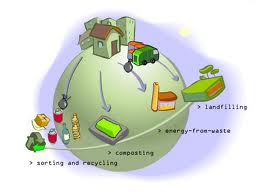 Business has historically operated a ‘take-make-waste’ philosophy, but a radical transformation is now needed
Whatever form business takes as it negotiates out of the current conundrum, it must operate within the limits of a finite world. While relatively cheap labour in the developing world may fuel growth and feed increasing rates of consumption, pressure on natural resources means manufacturing (and the economies that flow from it) need to radically transform be fit for purpose today and in the future.
Earth Overshoot Day is the point in the year when we have already consumed the amount our planet can provide for sustainably. In 2010 it was 21 August, and it’s getting earlier each year. Unlike the debt of a sovereign nation or bank, the debt we are accumulating with nature cannot be restructured or diluted through administration. There is no debt default with nature, no financial loophole or escape route, we must pay our dues.
In the words of professor Mervyn King, Chairman of the Global Reporting Initiative: “Since the days of the industrial revolution, companies have conducted business on two false assumptions, namely that the Earth has infinite resources and has an infinite capacity to absorb waste. In fact, the Earth has finite resources and the landfills from this ‘take, make, waste’ philosophy, both on land and in the oceans, have resulted in the toxification of the land and waters of the Earth.
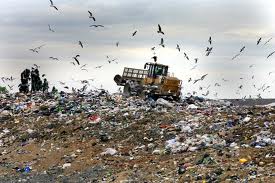
“The planet is in crisis, as we have reached ecological overshoot, which means that we have used and continue to use the natural resources of planet Earth faster than nature can regenerate them”.
The current ‘take-make-waste’ philosophy still prevalent in global manufacturing is rampantly inefficient and wasteful. More than 90% of all natural resources that go into the production of durable goods are wasted by the point of sale. This is not fit-for-purpose; it needs to change and fast. The good news is that many industry figures are conscious of this, with some recognising the immense challenge and opportunity this brings their businesses and the wider global economy. One well-publicised example is Unilever’s plan to double output by 2020 and halve its environmental impact at the same time.
The question of the moment for forward-thinking businesses, like Unilever, is how to decouple economic growth from environmental degradation.
The challenge is to innovate through sustainable products and services while reducing resource and energy intensive production methods. This requires optimisation alongside innovation and transformation; not for the fainthearted.
Industrial ecology is an approach that challenges the over-exploitative nature of the current ‘take-make-waste’ paradigm. It uses inspiration from nature in exploring how systems can be less linear and more interconnected, where waste of one part of the business ecosystem is input for another. It questions the need for wasteful emissions of any kind (whether gas, liquid or solid waste).
This is a positive evolution in the paradigm of business, adapting it to that which is more in harmony with nature, where waste is food and where economies of scope balance economies of scale.
For the complete version of this blog please visit:
http://www.guardian.co.uk/sustainable-business/blog/redesigning-business-resource-constrained-world
Inspiration found in nature
Inspiration for the current pressing challenges is all around us in nature. Nature has been dealing with dynamic change for over 3.8 billion years, and the more we explore and connect with nature’s ways, the more we find inspiration for operating in a dynamically changing business environment.

Our understanding of nature has evolved over the last few decades, from viewing nature as a battle ground of competition to one of dynamic non-equilibrium, where an order within chaos prevails due to unwritten natural patterns, feedback loops, behavioural qualities, interdependencies, and collaboration within and throughout ecosystems. Nature adapts within limits and creates conditions conducive for life.

Recent discoveries in microbiology and quantum mechanics uncover the importance of cellular membranes in the adaptation and evolution of organisms. Likewise, the perceptions and beliefs of the individual, organisation and ecosystem can affect their ability to sense, respond, adapt and evolve to volatility in their environment.

The more we grapple with the challenges our businesses now face in these volatile times, the more we realise that nature’s patterns and behaviours can inspire approaches for our own evolutionary success in business and beyond. The more we build a bridge between business and nature, the more we realise what good business sense really is.
Biomimicry and its role in business evolution

Bios – life
Mimicry – to copy
Throughout our existence, we humans have been copying patterns and forms found in nature.
Leonardo Da Vinci and Pythagoras are just two of many well-known inventors who took inspiration from nature.
Einstein famously once said ‘Look deep into nature and you shall find the answer’.
More recently in 1997 Janine Benyus coined the term biomimicry in her book Biomimicry: Innovation Inspired by Nature. This book led to the term biomimicry becoming popularised over biomimetics or bionics, particularly in the US. In the UK and Europe, the term biomimetics is still widely accepted in scientific realms; however, biomimicry is creeping in via popular media. Benyus went on to set up the The Biomimicry Institute which focuses on innovation inspired by nature.

In 2010, a group of specialists in the UK set up a collaborative called BCI: Biomimicry for Creative Innovation on the following premises: business models and practices need transforming to become fit-for-purpose for the world we now live in; the knowledge, understanding and tools we need for business transformation can be found in nature; and business can create the conditions conducive for life (not just reduce its negative impact on life) and so business can ‘sustain’ and also ‘thrive’ in our lifetime and beyond. BCI’s strap line is ’ecological thinking for radical transformation’.
Time to transform?
It is becomes patently clear to many that business is undergoing a metamorphosis. Due to a perfect storm of social, economic and environmental factors organisations have little option other than to seek out opportunities in these volatile times, adapt and evolve to what BCI refers to as ‘firms of the future’ – businesses more akin to living organisms than mechanistic monoliths designed for the Industrial Era. These firms of the future can take inspiration from nature at all levels within their strategies and operations. For instance:
Places: intelligent buildings that sense and respond to their environment are effective, vibrant and healthy places to work.
Products: biomimicry is already well established in assisting the designing of sustainable products – just Google ‘biomimicry’ to come up with many examples.
Processes: industrial ecology and symbiosis, business ecosystem mapping, systems thinking, eco-literacy, circular processes, closed loop economics and cradle-to-cradle are part of a growing list of approaches applied to shaping business processes based on insights from nature.
People: traditionally the domain of humanists and psychologists, more and more we find nature’s inspiration positively influencing how we engage, empower and encourage our people to build resilience within their diverse stakeholder group. For example eco-psychology and natural leadership are emergent approaches to help business people deal with complexity and unpredictability
Purpose: as organisations recognise the need to have a higher purpose beyond ‘short term profit maximisation’ in order to galvanise themselves for the stormy seas ahead, many in business question whether it is ‘good enough’ to focus on becoming ‘sustainable’ by focusing on reducing negative social and environmental impacts. Some forward thinking businesses are realising that ‘reaching beyond zero impact’ means becoming restorative and net positive, where business creates conditions conducive for life, rather than merely reducing the harm inflicted.
As Professor Michael Porter recently stated when addressing business leaders in New York, ‘we are witnessing a paradigm shift in business from hurting to helping’.

Again, such forward thinking businesses look to nature for inspiration. Collaborative, innovative, networking, emergent, dynamic firms of the future are more akin to living organisms hence gain great inspiration from how nature builds resilience to thrive within dynamic change.
‘Business Inspired By Nature’ (see www.businessinspiredbynature.com ) explores how the answers to many of our pressing business challenges lie all around us in nature. Take a couple of points by way of illustration:
- Nature has been dealing with dynamic change for over 3.8bn years
- Successful species and ecosystems in nature are ones that are resilient, where living beings collaborate, forming niches within diversity.
- Whilst the strongest man-made material is Kevlar which is made at around 1000 centigrade in a complex chemical and energy intensive process, spiders make webs which are stronger than Kevlar at room temperature with no pollution.
- Waste and pollution is an immense problem for us. In looking to nature we realise that nature does not have waste – waste for one part of the ecosystem is food for another.

Confucius, in 500BC, profoundly noted that:
‘He who is in harmony with nature hits the mark without effort and apprehends the truth without thinking’.
Are you ready to start engaging with nature for the answers to our many pressing challenges?
Change is Inevitable
Not many things in life are inevitable. Even though we often fear it, change is one of the few things guaranteed in life.

In fact, many business gurus argue that businesses now face increased levels of dynamic change (change upon change upon change) due to stresses in our economies, societies and natural world leading to increased volatility in the business environment.
Often we see the world through threat-tinted glasses – fearful of stepping into the unknown beyond comforting predictability. This fear can cause rigidity and reduce our natural ability to innovate, transform and positively adapt (qualities fundamental if we are to survive let alone thrive in these volatile times).

Some organisations, teams of people and individuals seem better able to embrace change while others remain stubbornly resistant to change. Why is this?
Psychologists tend towards it being part of our way of viewing ourselves and the world around us. This is, on the one hand, affected by our inner conditioning based on past experiences which cause perceived barriers to or enablers for change; and on the other hand, affected by our relationships with the world around us: how our bosses, team members, family and friends embrace change, for instance.
If we would like our organisations (small or large) to be best suited to dynamic change, we need to set about creating the conditions conducive for change for the individuals and the organisation as a whole (within the context of its business ecosystem).

There are a multitude of tools, techniques, processes and ways to encourage an environment that is conducive to change.
Simple is sometimes best. In the words of Einstein ‘an intelligent fool can make things bigger and more complex, it takes a touch of genius and a lot of courage to move in the opposite direction’.
Here are some simple guidelines to create conditions conducive to change (visit www.businessinspiredbynature.com if you would like to explore any of these guidelines further)
Engagement: For the level of change required, we need everyone fully engaged, working together and contributing fully and with energy.
Trust: In times which require performance under pressure, only teams with deep trust will thrive. When times get tough, knowing that your team is truly
‘on your side’ will get you through. Yet so often we know that organisations make short-sighted decisions in times of hardship that damage organisational trust.

Making Each Other Look Good: Just as nature thrives with diversity, so too do organisations. Operating from a ‘make each other look good’ mind-set ensures everyone contributes their diverse viewpoints and experience to assist the organisation as a whole as well as the parts.
Collaboration: Collaboration allows a combination of talents and energies to move forward and create realities that individually may not have been conceived of. Collaboration also encourages local attunement (decisions made effectively at a local level) which enhances the organisation’s agility and resilience.
Listening: How can you respond to a dynamic and complex environment if you don’t listen to everyone in the team and to the business environment you are operating in? Deep listening to the diverse inputs of the environment is key to successfully adapting to change.

Responding and Adapting as Changes Unfold: Plans don’t always unfold as expected. Being able to adapt in real time and respond to change as it unfolds instead of being rigidly stuck to ‘your plan’ is crucial.
Yes And: A simple technique you can try out for yourself today when interacting with colleagues or friends is starting each response with ‘Yes, and…’ rather than ‘No, but….’ Often we find ourselves engaging in discussion and sharing ideas with colleagues only to find ourselves feeling like we are competing for air-space or battling at cross purposes. The collaborative atmosphere seems to quickly convert to a competitive one – which is not great for encouraging positive adaptation to take root. Sense what happens when you listen and respond in a conversation. Often we respond with ‘no’, then follow up the ‘no’ with ‘but’. The ‘No, but’ response can immediately make the other person feel deflated and defensive as they can feel their viewpoint is negated and criticised. If, instead, we were to say ‘Yes, and…’ then the other is more open to listening to what you have to say and be open then to weaving/co-creating with your opinion (constructively critiquing and adding). The conversation pulls in positive energy, the defensiveness eases and the creative potential improves. A simple, yet very effective technique for creating the right conditions – it costs nothing and often results in less energy being wasted on defensive, competitive ego struggles.

Simple is best. Please try out the ‘yes and’ technique today when chatting with colleagues, friends and family…see how it works compared with the ‘no but’.
The more we become consciously aware of how we are engaging with others and how others respond to our engagement, the more we steer engagement and interaction in a positive way, enlightening ourselves and others and so helping a culture of change to take root – after all it is courage we need (not fear) and courage comes from being ‘en’couraged.
 The Nature of Business