Five years ago last week, BNP-Paribas kick started the mother of all recessions.

Unprecedented fraud, mindless greed and reckless gambling in the financial sector (and lets be honest, among certain sections of the public too) fed an incredible turn of events with banks failing, currencies sliding and in Europe, entire nations going tightening their collective belts.
The financial crisis is just one of many drivers that Giles Hutchins, author of The Nature of Business, sees ushering in a new era for business.
His message for leaders is clear. It’s time to learn from the natural world. You evolve or you die.
Hutchins is a management consultant, formerly of KPMG, who specialises in applying lessons from nature to help businesses boost their sustainability through practices like biomimicry and cradle-cradle production patterns.
“The downturn has been very positive in the long run. We need these shocks,” says Hutchins. “Quite a lot of corporate social responsibility (CSR) was shutdown because it wasn’t core to the business, those activities needed to change. These transformational times are forcing people to change.”
“The economy as it was is not coming back. The changes are needed.”
The result is that big business is now in a position where it wants to change. Companies like Unilever and Nike are held up as good examples by Hutchins.
see full blog post here:
http://www.rtcc.org/business/why-a-new-business-era-inspired-by-nature-not-greed-can-benefit-us-all/
The Phoenix Economy – Breakthrough Beyond Breakdown
Out of the ashes of Economic Armageddon rises a new way.

We are amidst an economic breakdown – that much is now obvious. For instance:
- European and UK debt is now at unsustainable levels and rising fast.
- EU break-up is now becoming a real possibility, if that happens the UK government would take the unprecedented step of nationalising the banking system and would inject a massive £1 trillion through ‘quantitative easing’ into the economy to avoid catastrophe, and yet pushing the UK economy beyond serviceable debt levels.
- The US economy, previously thought of as being on the up, is now back in the doldrums and seems unable to kick-start itself even with massive levels of quantitive easing and fiscal stimulus. Any growth in the US economy is looking increasingly more fragile and unsustainable.
- Tawain and South Korea, seen as Asian bell-wether economies, are starting to flat-line on growth
- India and China, the mighty engines of global growth, are slowing with China now reversing policy on fiscal/monetary tightening to one of increased stimulus in order to prevent further economic slowdown which now seems all but inevitable.
- China’s fiscal stimulus is having less and less of a material effect on the long term viability of the Chinese economy. Now less that 50% of the spending actually has a material effect on GDP.
The world economic system is cracking. The current ‘take-make-waste’ short-term focused, rampant consumerist, debt-laden economic paradigm is dying as we speak. 2012 bears witness to the end of an old, corrupt world economic order. Unfortunately, as it dies it continues to suck in more debt to our economies, our societies and our planet. Yet, 2012 also bears witness to the emergence of a new way.  The time is ripe for a paradigm shift.
As the saying goes ‘adversity reveals genius, prosperity conceals it’. The very conditions we need for a paradigm shift are now upon us. It is time for a breakthrough.
While the prevailing mind-set is out-dated it still rules the show, all around us are examples of inspiration for new ways of operating. Whether it be big business embarking on radical transformation (the likes of Nike, Unilever, Danone, etc.), small business delivering value through values (Patagonia, Ecover, Weleda, etc.), or social entrepreneurs bringing new innovations to life (Pavegen, Transition Towns, Bike CIC, etc.), or charities partnering with businesses to deliver social and environmental value (WWF, WaterAid, Forest Stewardship Council, etc.) the metamorphosis is happening in numerous ways. Business people are questioning whether they wish to remain part of the problem or become part of the solution!

As Volans recently reported in its ‘Pheonix Economy’ report ‘out of the ashes of the existing order will become a new reality’
Business can (and must) enhance society and the environment. It is a fallacy to think business behaviour has to be about benefiting some at the expense of the many and to the detriment of the wider fabric of life. The breakthrough paradigm is about business behaviours and mind-sets that help rather than hurt, where life (human and non-human) is benefited as a result of good business behaviour.

The paradigm shift we witness is about transforming toxic business to vibrant life enhancing business.
To quote Richard Branson:
Those businesses that do well by doing good are the ones that will thrive in the coming decades. Those that continue with ‘business as usual’, focused solely on profit maximisation, will not be around for long (and don’t deserve to be).
Bring on the paradigm shift, bring on the breakthrough. This is about each of us choosing to place new steps of change; each interaction, each transaction, each step offering chances to be the change you wish to see. Whether it is cycling to work, buying fair trade, going to a charity shop or changing jobs to one more in-line with your true values, each of us can allow the phoenix within us to rise so we become part of the solution rather than continue to sleep-walk along as part of the ever-more-obvious problem.
Business as usual is dangerous
The argument goes that globalisation has helped bring millions of people out of poverty and provided less inequality to the ‘rest of the world’; that global economic forces help drive equality and substantial increases in ‘wealth’ worldwide.
Yet is it heading in the wrong direction? Are the inequalities it is meant to be alleviating actually becoming more extreme due to it? Are the costs to our planet and people higher than the benefit to our economies?
The question of the moment is ‘Are we facing a paradigm shift in business and the economy, or are we to continue with our consumption-fuelled, debt-laden approach to business?’
It is worth noting that the vast majority of economic stimuli worldwide (with the notable exceptions of South Korea and in part Japan) has encouraged old ways of economic growth through ‘take-make-waste’ industry and short-term profit maximisation for some at the expense of the many.
Time to transform? Are you ready to transform? Are you part of the problem or part of the solution?
The rather sobering reality is that the status quo is a delusion and business as usual is dangerous as it is toxic economically, socially and environmentally; it destroys life. We are heading in the wrong direction with wrong pricing, wrong focus and wrong beliefs.

Enter a new business paradigm rooted in a higher purpose where collective human ingenuity is applied to deliver ‘the good life’; a shift from ‘me to we’ and from separated-thinking to interconnected-thinking; where business enhances life and we become one with life: this is not the dream, this is the reality we need to embrace sharpish.
All it requires is each of us to wake up out of the celebrity-slumber and embrace ‘the good life’, voting through our daily actions.
Beauty Inspired By Nature
People often ask me for examples of ‘businesses inspired by nature’.

While there are many examples of organisations with aspects of applied nature’s inspiration, for example: InterfaceFLOR taking inspiration from nature for product design, Marks & Spencer taking inspiration from nature for process design (industrial ecology), and HOK taking inspiration from nature for place/structural design (architecture); the current reality is that there are few examples of organisations working in harmony with nature and applying nature’s inspiration to all aspects of the organisation (purpose, people, process, product & place). Fortunately, the appetite in businesses (corporate and non-corporate) for embracing nature’s inspiration at all levels is growing as organisations increasingly realise the benefits of transforming to models and mind-sets more in harmony with life on Earth.
Let’s take a peek in an unlikely place to find examples of what good business inspired by nature can look like: the beauty industry. As any wise person knows, beauty is more than skin deep. A recent article in ‘Green Parent’ magazine titled ‘More Than Skin Deep’ by Alex Fisher, explores how two companies Weleda and Dr. Hauschka took inspiration from nature in starting their organisations many years ago, and to this day still take inspiration from nature aiming to work in harmony with nature as best they can. Both companies align their purpose to caring for people and the planet through applying the principles of what is called anthroposophical medicine.
Dr. Rudolf Steiner and Dr. Ita Wegman in the 1920’s came up with anthroposophical medicine due to their strong belief that medicine should stimulate the body’s own healing powers and treat the body, mind, soul and spirit. In essence, anthroposophical medicine is about helping solve the cause rather than treating the effect. So often in today’s busy, all-consuming world we seek solutions to the effects rather than going deeper to tackle the under-lying cause. So often in today’s anxious and anthropocentric environment the under-lying cause to many of our ills is our dis-connection with nature, hence our dis-ease emanating from dis-harmony with our living and working environment.

Both Weleda and Dr. Hauschka apply their purpose to all aspects of their business. For instance, all aspects of the manufacturing process are conducted with respect for nature and the human being. Hence, both companies have created biodynamic farming methods which use natural methods to encourage fertility and growth rather than artificial stimulants and controls. These farms are open to the public (for instance, Ryton Gardens near Coventry) to share nature’s inspiration and help people re-connect with nature while offering a lovely day out as well as good public-relations. All product ingredients and design approaches are based on holistic principles and inspired by working with the grain of nature. Likewise with the two companies’ places of work; toilets use grey water, roof surfaces are planted where possible and the rain water collected for the gardens, and underground warehouses to assist natural cooling.
So often, in today’s confused corporate world, the purpose of the business is ‘to maximise shareholder returns’. Dr. Hauschka saw this growing mono-cultural approach in business and sought to protect the integrity of the organisation from such. The parent company (Wala) created a foundation (Wala Foundation) in 1986 which holds 100% of shares. All profits belong to the foundation and so investments in the future viability of the organisation, along with profit share for its employees, are met without fear of fickle shareholders focusing on short-term profits for their own benefit at the expense of the purpose, people, processes, products and places inherent in such a business inspired by nature. And so these organisations continue to perform well in increasingly challenging market conditions and continue to remain true to their purpose, working solely on ethical and environmental products and helping stakeholders harmonise with nature.
There are other examples of such values-led businesses in the beauty industry. For example, MuLondon (organic, cruelty-free products for people who care about people and the world around them) and Dr Bronner’s (free from synthetics and giving between 30%-70% of profits to charities).

And so in answering questions like ‘is there hope for humanity?’ and ‘is business inspired by nature too idealistic and unrealistic?’ I say the answers are all around us in nature and in the essence of human nature. It is up to you and me, each day, to decide whether we feed greed, jealousy, fear and selfishness or whether we feed love, compassion, wisdom, beauty and harmony. I know what I choose, yet no one said life was easy and I make mistakes daily. It is a fallacy to think that business (corporate or not, shareholder-owned or privately-owned, for profit or non-profit) has to be about benefiting the few at the expense of many. As Paul Polman (Global CEO of the world’s largest consumer goods company, Unilever) knows when he recently set about purging Unilever’s shareholders of ones only interested in short-term profits and bringing on shareholders interested in the long-term health and vitality of the organisation.
Many in business are moving to a new model. This blog seeks to explore the transformation to that new model, bringing to light examples and stories of inspiration. The Nature of Business book explores just this in detail. The future of business is ‘business inspired by nature’, and the future is bright.
watch this short 2min video to find out more…..
Real Sustainable Business – whole and parts
As the world becomes ever more globalised and inter-dependent so too must businesses interconnect the value-creation potential of social, environmental and economic factors.

This holistic approach to value ensures two important aspects are dealt with correctly for the firm of the future :
- 1. The values of the organisation are congruent with the value creation objectives of the organisation (social, environmental and economic). This means values and value reinforce each other and so a values-led culture drives the value creation potential of the organisation. This is fundamental to enabling local attunement, agility, empowerment and creative freedom governed by values and value focus, not by hierarchical command and control.
- The value creation potential of the organisation is realised for the short, medium and long term through a deep understanding of all relationships and resources within the organisation and wider business ecosystem. By rooting value creation in holistic value, the organisation can walk the talk; no more need for defensive protectionism or hidden exploitation, ensuring encouragement of mutually beneficial business activities for all stakeholders.

It is this awareness of the whole, the interconnected parts and the respective limits within which we operate that is at the heart of sustainable business. Creating the conditions conducive to life through values-led business is the bright future of business.
Firm of The Future
Due to a ‘perfect storm’ of economic, social and environmental factors, our business landscape is becoming more and more volatile.

The pace of change, too, is increasing. To succeed in business we must be agile, creative, alert, spontaneous and responsive – often operating in completely new ways. Today’s rapidly changing business environment calls for businesses that thrive in rapidly changing environments: businesses more akin to living systems. These ‘Firms of the Future’ can learn and adapt; they aren’t structured and silo’ed, which stifles learning and agility. These firms are also bottom-up, decentralised, interdependent, multifunctional, emergent, self-organizing units–not the centralised, top-down, hierarchically-managed monoliths of the 20th century.
Put simply, the business models and management approaches that served us well in the past, are no longer fit for purpose in a business context where dynamic change is the new norm.
Please visit here for the full post of this blog at 2Degrees
Also watch this video to find out more…..
The Nature of Business – A New Business Paradigm
Due to a number of business drivers, organisations now need to ‘redesign for resilience’ if they are to succeed in these volatile times, transforming to organisations that are more emergent, inter-connected, values-led, organic and inspired by nature. Ecological principles act as guidelines for how nature works and how ecosystems develop resilience. These same ecological principles can help reshape our businesses and economies, in fact they will become the foundational principles for any new ‘Green Economy’ that has a chance of being resilient in these volatile times.

In the book ‘The Nature of Business’ (and subsequent BBC documentary of the same title), we explore how organisations of the future, of all shapes and sizes, are ones that:
1. Drive transformation through values-led leadership and stakeholder empowerment using the catalysts of education, innovation, inspiration and collaboration;
2. Encourage synergies across their business ecosystem, engaging with multiple stakeholders in an open, transparent way; where common values create connections enabling mutualism;
3. Harness the power of social networks and the “pull” media; use crowd sourcing, co-creation, open source collaboration platforms and transparent branding for differentiation;
4. Evolve ecological thinking for new ways of operating; where waste equals food and nature inspires the people, processes, products and places.
Over the last 3.8 billion years, nature has survived and flourished through times of radical change and disruption by dynamically networking and collaborating among species and throughout ecosystems. Competition and constraints help shape nature, yet it is collaboration and synergy – not competition – that are responsible for nature’s sustained success. The species most able to survive and evolve are those most able to sense and respond, adapt and align, and work in partnership with and within their ecosystems. Diversity, flexibility and collaboration, we find, is core to the interwoven evolutionary journey of life – the driving forces that provide resilience within species and ecosystems.
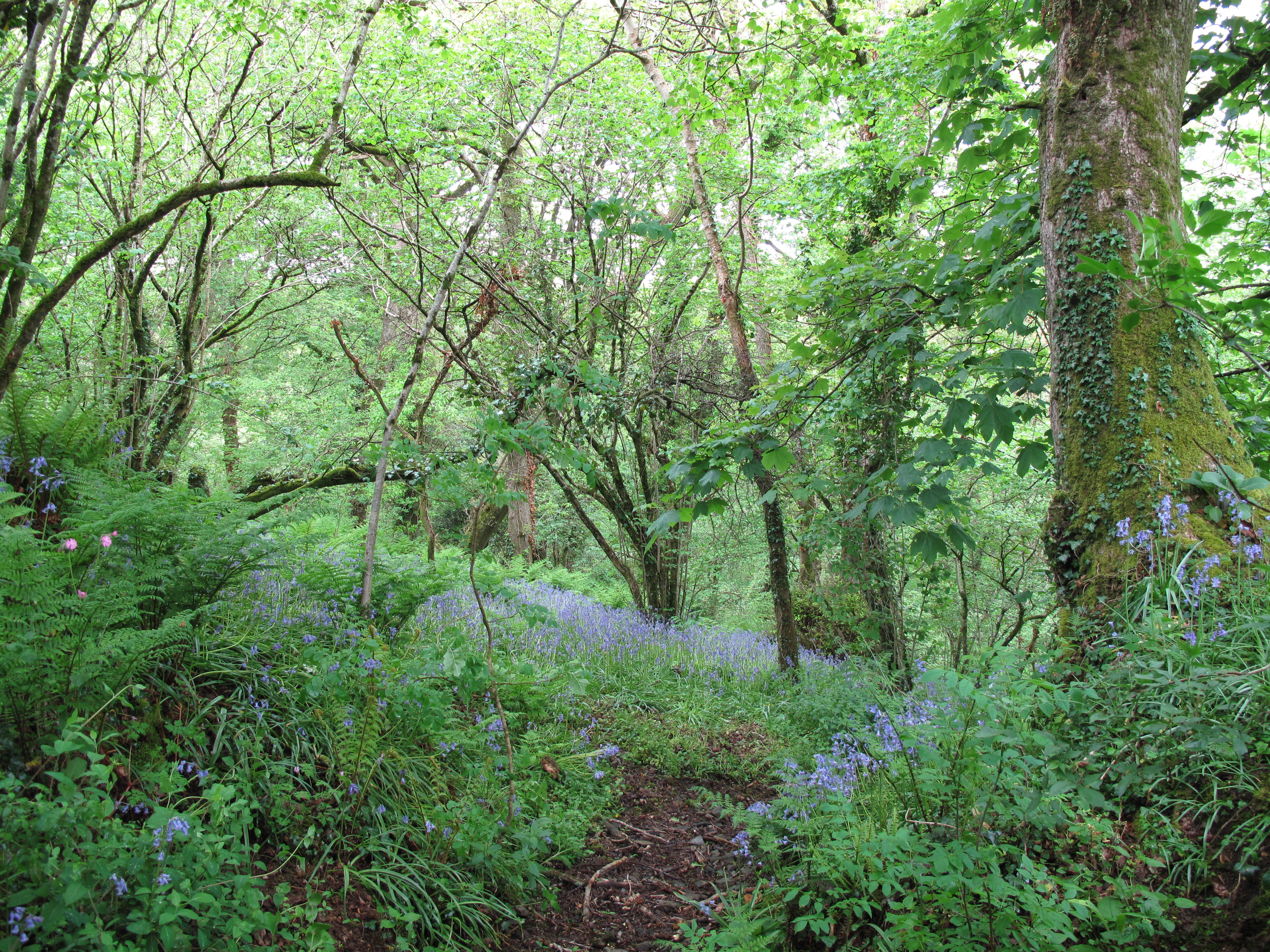
The more we explore nature’s wisdom the more we find insight for the transformation our organisations need. Industrial ecology, for example, challenges the over-exploitative nature of the current ‘take–make–waste’ industrial paradigm. It uses inspiration from nature in exploring how systems can be more interconnected and less linear – where waste of one part of the ecosystem is input for another, and hence there is no need for wasteful emissions of any kind (whether gas, liquid or solid waste), as long as the right interconnections are in place.
Biomimicry as a school of thought suggests that we can learn to play by the rules of nature, which offer a very rich source of inspiration to challenge our current unsustainable business practices and invent new strategies based on ‘nature’s business principles’. A Business Inspired By Nature is one that is resilient, optimising, adaptive, systems-based, values-led, and life supporting – these are ‘nature’s business principles’.

These principles do not seek to reduce organisational behaviour to biology, rather, they suggest a set of behaviours and qualities that simply echo the law of the system – Earth – upon which our lives and our businesses depend. They recognise the complexity of human nature and nurture, and are neither a model nor a theory, but rather a philosophy that reminds us that while humans are a special species on Earth, we are still part of nature and subject to its law. If we do not conduct our business within the constraints of the system, we will inevitable go out of business.
Core to a ‘Green Economy’ or for that matter a new business paradigm is our relationship with ourselves (our human nature) and our human relationship with nature. The wise words of Confucius, 500 BC, speak volumes ‘He who is in harmony with nature hits the mark without effort and apprehends the truth without thinking’.
In these challenging (yet pivotal) times for business and humanity, we must realise that to become truly sustainable, human and business life has to become scientifically inspired, emotionally connected and spiritually entwined with nature and Gaia. Nature and business (as with nature and humanity) must be symbiotic and operate in mutualism for there to be anything resembling a successful outcome. The sooner business realises the opportunities that come with being connected to and inspired by nature, the better for humanity, and for all species.
The Nature of Business video clip:
http://www.youtube.com/watch?v=n2LN3rrkiW0&feature=youtu.be
Some endorsements
‘Giles Hutchins has taken a big idea, and in nine easy modules, peppered with examples and checklists, takes the reader on a journey to a resilient firm of the future, starting today.’
Catherine Cameron, Director of Agulhas & Senior Associate at the University of Cambridge Programme for Sustainability Leadership
‘The Nature of Business’ is not just a very entertaining read, but also a redoubtable sparring partner. A must read for everyone involved in the business of the future…. and aren’t we all?
Mick Bremans, Chairman, Ecover
‘Giles takes us through this remarkable world of business seen through the eyes of nature. Finally a guide to take this to the next level!’ Gunter Pauli, Founder of ZERI & The Blue Economy
This is a brave book and a must read for those seeking to make positive change happen in business and beyond. Hunter Lovins, President of Natural Capitalism Solutions & Co-Author of Natural Capitalism
‘This book is important for anyone seeking a roadmap to the future.’ Tim Smit, Founder of The Eden Project
‘There is an energy, a pulse, a reverberating urgency that calls us to reflect and then take action in this book…. This book scores a line in the sand and invites us to step across, raise our voices, become visible, and engage.’Tim Macartney, Director of Embercombe & author of Finding Earth, Finding Soul
To pre-order your copy of The Nature of Business please visit www.greenbooks.co.uk/natureofbusiness. or google ‘giles hutchins’ on Amazon
Nature as Capital? Or Nature as Inspiration?
Many sensible, forward-thinking people know that the ‘Green Economy’ is at the heart of the next stage of our world and regional economies, helping us out of the economic pit we find ourselves in while also helping us out of the social and environmental mess which make-up our reality.
Many sensible, forward-thinking people also know that our current political world leaders are not a reliable driving force for change – hence the ‘damp squib’ of Rio +20 Summit being over-shadowed by the encouraging ‘emergent shoots’ of green economics from diverse Summit fringe groups full of social entrepreneurs, business change agents, thought leaders and innovators.
The United Nations Environment Programme (UNEP) released a report ‘Towards a Green Economy’ to help provide structure to the emergence of this ‘green economy’ concept. An important component of this concept is ‘nature as capital’. In other words, ecosystems of non-human life rationalised as capital assets defined in terms of the value they provide humans.
As Nick Robins explains in Resurgence Magazine (‘Rescuing the Economy, p16 Issue 272) “natural capital is profoundly different from capital stocks as understood by economists and financiers. First, its depreciation can be irreversible; second, it’s difficult if not impossible to replace a depleted natural asset with another; and third, ecosystems can collapse abruptly.”
Nick Robins also points out a deeper more philosophical differentiator – nature and its ecosystems are not here purely for human benefit. We all too often in today’s prevailing business paradigm see the world around us through anthropocentric eyes. We view the world as a collection of things to be utilised for human consumption. Nature and the ‘ecosystem services’ that flow from nature are viewed in terms of the value they provide us. Often, within ‘sustainability programmes’ biodiversity is valued in terms of how it benefits the human stakeholder groups involved. This rather incomplete view of nature and life (encouraged through reductionist, mechanistic world views) rather overlooks the deeply important truth that life is an interconnected web of life; where ecosystems are systems of interconnected life with humans a strand within this diverse and rich fabric of life. 
This recognition does not in any way attempt to belittle humanity or down play our human specialities; rather it brings to the surface a simple truth that is often overlooked in our desire to fix human-centric problems with human-centric solutions without acknowledging (and deeply understanding) that we are part of a rich tapestry of life. Our actions and interactions have repercussions and interconnections with life. If we ignore this simple truth then we seek incomplete solutions by seeing only incomplete problems.
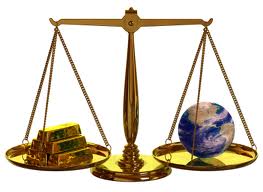
I hope that plans for a ‘Green Economy’ do not apply the same faulty, incomplete logical in finding solutions as the logic we applied to the current ‘take, make, waste’ economy that led us into the current plethora of crises. That would be a shame for humanity and life on Earth.
Hence, the core to any ‘Green Economy’ must be rooted in a deep understanding (a knowing) of how life on Earth works and so how we can benefit ourselves while helping rather than hurting the rich tapestry of life to which we form part.

Understanding nature has (until recently) been largely confined to science, and only limited bridging with sociology, psychology and economics. Many sensible, forward thinking leaders of the future know that we now need a holistic, all-encompassing understanding and approach to our economies, societies and natural world as it is all interconnected and inter-related.
Ecological principles act as guidelines for how nature works and how ecosystems develop resilience. These same ecological principles can help reshape our economies, in fact they will become the foundational principles for any new ‘Green Economy’ that has a chance of being resilient in these volatile times.
- Diversity instead of monopoly
- Multi-cultures of shared interest instead of mono-cultures of self-interest
- Economies of scope to balance economies of scale
- Emergence interwoven with management
- Holism harmonised with reductionism
- Interconnectedness beyond seperatedness
- Nature as inspiration on top of nature as capital
Often, we become overwhelmed and all-consumed by the very real human problems facing us in these challenging times ranging from climate change to poverty. Yet these challenges bring opportunities – opportunities to change our prevailing view of the world and life itself. If we seek to solve the plethora of human and non-human challenges with anthropocentric thinking, then we may do well in solving some of our current challenges yet only to find they have been replaced by other challenges as this incomplete thinking leads to incomplete solutions.
The core to a ‘Green Economy’ or for that matter a new business paradigm is in our relationship with ourselves (our human nature) and our human relationship with nature.
The wise words of Confucius, 500 BC, speak volumes ‘He who is in harmony with nature hits the mark without effort and apprehends the truth without thinking’.
Let’s have hope and faith that humanity shall apply at least as much effort into understanding nature as it does into understanding the value of nature to humanity.
Are you ready to TRANSFORM?
No amount of quantative easing is going to get us out of the debt-laden society, economy and environment we now inhabit.

It is now all too apparent that we need a transformation to deal with the economic, ethical and ecological crises we now face. Time to transform; but to what – to a world full of austerity and rationing or more debt-fuelled consumption?
Can we learn from our mistakes? Are the economic, social and environmental conditions we now face just the right conditions to stimulate our transformation? The wise phrase rightly states ‘adversity reveals genius, prosperity conceals it’ and it is genius we now need to innovate and transform us beyond this perilous conundrum we find ourselves in.

All around us we see shoots of hope, of new ways, of transformative actions spawning from the innate human genius within each of us. Rio +20 was flat and disappointing in terms of courageous leadership from current establishment politicians; yet at Rio +20 there was a vibrant plethora of exciting, ground-breaking, courageous initiatives emerging forth. We find many more of these examples of budding transformation in our local communities and organisations. These initiatives are not fuelled by the desire for ever more austerity or ever more debt (the only two levers our current politicians seem capable of grabbing for). They are fuelled through the ‘power of giving’ the synergistic energy that comes from getting involved and making stuff happen which improves the lot of the individual and the collective. This is core to how humans behave.
We may have been taught at school that economics is all about competition and leadership is about power and delegation; yet we innately know life is more than that. Far from humanity being ‘red in tooth and claw’ we see (in times of strife and plenty) that humanity is hardwired for cooperation.
Likewise, we may have been taught at school that nature is all about ‘survival of the fittest’ and yet the closer we look, the more we realise that nature evolves through a cooperative dance of vibrant diversity; flourishing within the limits of life.
As our world transforms, we transform ourselves and our organisations, yet fundamentally we transform our perceptions. We are witnessing a transformation of perceptions from seeing the world through threat-tinted glasses, through competitive, individualistic eyes to seeing the world through collaborative eyes seeing the world for what it truly is – an interconnected web of life.
Leadership becomes less about power and more about empowering. Business becomes less about profit and more about value. Society becomes less about competing and more about cooperating.
All around us spring up new ways through local initiatives and emergent networks to innovate our behaviour; some will take root, others will not, yet still yield seeds of change and vital learning through their failing. It is exciting times to live in for those who are courageous enough to shift perceptions and see opportunity in challenges, to change competition into cooperation, to transmute fear into love, converting failure into success and shattering the illusion of scarcity to reveal the clarity of abundance. Here is a short YouTube clip about this: http://www.youtube.com/watch?v=mWJkhxrrnH4&feature=plcp Are you ready to transform?
Chaos is not order; it is the highest form of order
All living systems (including our own human systems, as much as we may deceive ourselves to the contrary) emerge naturally, with chaos as the over-riding organising force.
Many intelligent humans have built complex computer programs to model chaos within human systems (for example, the stock market). While we have become aware of operating principles, rules, patterns and order within nature, it is chaos that is the over-riding organising force in life, eluding predictability – ordered yet spontaneous, one of life’s beautiful paradoxes. Societies and economies are emergent, beyond control. Though predicting the future may be appealing, it is through understanding and aligning ourselves with the basic rules of nature that we can navigate optimal pathways for future success. Self-organisation, complexity and chaos operate the ecosystems within which we live and work.

We must admire the special aspects of the human species that have allowed us to temporarily transcend some of nature’s constraints and organising forces. Yet for all the knowledge and experience of human civilisation, it would be prudent also to draw upon our wisdom to respect the primacy of these organising forces – like learning to write software in the right language. How might humans readapt to what some may view as our huge evolutionary success in habitat colonisation and population growth? How might we come to terms with the notion that we are still subject to nature’s laws and operate within these?

It would be a good start to understand the principles of life itself – after all, nature has been dealing with dynamic change for over 3.8bn years. Understanding the patterns and principles of nature can provide insight into how best to future-proof business for the unpredictability ahead.
 The Nature of Business